T.I. Kill the King Review: A Crown-Tossing Flex That Still Sweats


 See more Architeg Prints stories on Google.
Album Review: Kill the King by T.I.
Kill the King isn’t a retirement lap—it’s T.I. checking the “King of the South” myth for cracks, then rapping through them anyway.
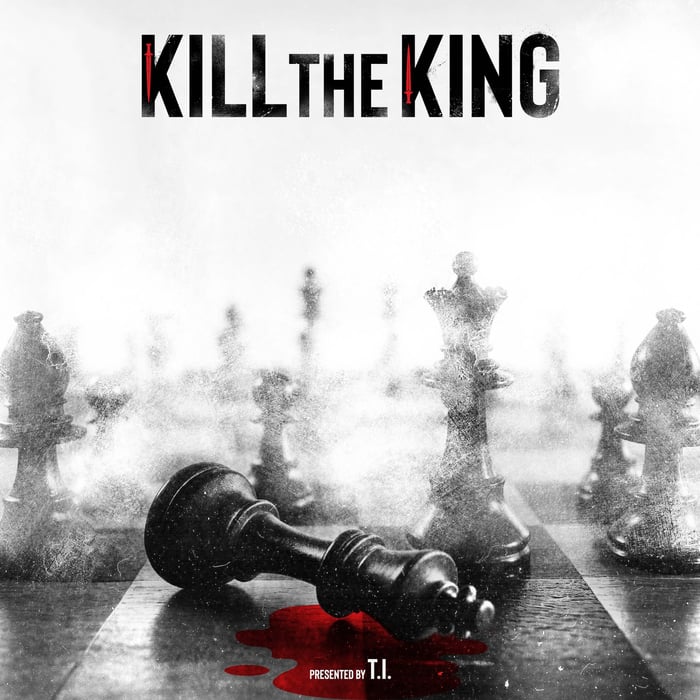
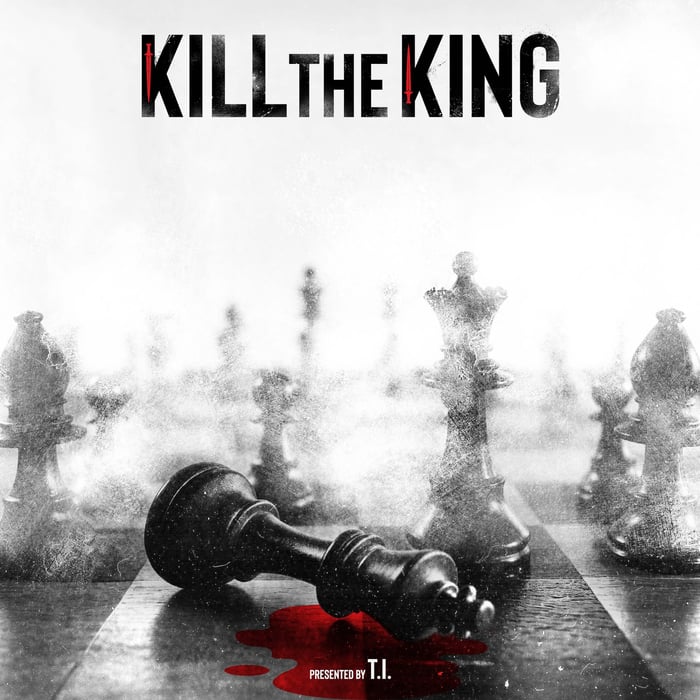
Image credit: Grand Hustle LLC / EMPIRE.
This album isn’t here to win—it's here to keep the seat warm
If you press play expecting polite legacy-artist nostalgia, Kill the King corrects you fast. This is T.I. staring at his own mythology like it’s a mirror he doesn’t fully trust anymore—then rapping anyway, because that’s still the only way he knows how to take inventory.
The “King of the South” thing has always worked like a dare. Not a cute nickname. A challenge sitting out in the open, waiting for somebody hungry—or stupid—enough to grab it. And T.I. has lived inside that dare longer than almost anybody. He’s carried it through hits, through cases, through stretches where even saying his name felt loaded. That context is all over this record, even when he swears he doesn’t care.
What’s clever (and a little ruthless) is the title: Kill the King. I hear it as a chess move and a personal strategy at the same time. The crown is the target, sure—but the real thing he’s trying to kill is the ego that grows around the crown like mold. The album even stages that question plainly through his daughter Heiress flipping the word “king” back at him—like, what does that even mean if it costs this much? From there, the whole record turns into T.I. walking back through his own life, checking what’s still standing.
I’m not totally sure the album fully escapes the crown obsession it claims to interrogate—but that tension is kind of the point.
First, he goes back to the dirt—and the writing tightens up
The moment T.I. starts talking about where he’s from, the album stops posturing and starts snapping into focus. He’s always been most dangerous as a storyteller with a map in his head, and Kill the King knows it. The “roots” tracks are where his lines get compact—less talk, more pressure.
“Where I’m From” is the record’s real spine
“Where I’m From” lays out a world shaped by the cocaine economy and the basic understanding that calling the police is pointless. He drops images that land because they’re not trying to be poetic—they’re just specific. The kind of detail that makes a place feel closed-in:
- the gun purchase sitting right next to the everyday food run
- the sense that survival is a local business
- the idea that the streets don’t reward effort, they reward exceptions
And then Anderson .Paak slices through T.I.’s steady delivery with a hook that’s squeaky in a way that works—like a bright blade. It keeps the song from turning into a hard lecture. .Paak’s voice brings motion; T.I.’s delivery brings weight. A reasonable listener could say the hook steals the song, but I think it saves it from becoming a speech.
The last picture he paints is the town itself—the wreckage left behind, the street scam as atmosphere. It’s not sentimental. It’s not even nostalgic. It’s just… accounted for.
“See Wh’am Sayin” and “Continental” turn memory into a victory lap
“See Wh’am Sayin” stays in that same world but flips the camera angle. Now he’s not rapping from the bottom of the throne—he’s rapping from the top of it. He pushes his words ahead of the rhythm, like he’s trying to outrun the beat by half a step. He calls himself “TIP the Bankhead kid,” the prodigal son who grows into a king out of felony math. It’s brash, but it’s also him narrating his own origin story like it’s scripture.
Then “Continental” closes the long walk as a travelogue of distance: from prison yards to present-day Beverly Hills, from bus stops to massive shows. It’s a flex, obviously. But it’s also him marking the absurdity of the range—like he’s still slightly shocked the road actually led here.
Arguable take: these three tracks do more to “prove” the crown than any of the pure brag songs, because they explain the cost.
The production roster is huge, but T.I. refuses to vanish
One of the most interesting tricks on Kill the King is how T.I. stays the reference point even while bouncing between very different producers. He’s the constant. The beats change outfits; his voice stays the center of gravity.
Pharrell gives him negative space to punch through
When Pharrell shows up, you get that spare bounce—rubber and snap, with empty space built in like breathing room.
- “Let ‘Em Know” rides a bright hook with a springy rhythm sitting underneath it.
- “Mr Him” turns colder and more coiled, leaving gaps that are basically invitations for T.I.’s vocal jabs.
If you don’t like T.I.’s delivery, this part of the album won’t convert you. He’s monotonous on purpose sometimes—like he’s trying to sound unbothered even when he clearly is. But on Pharrell’s beats, that steadiness becomes a weapon.
DJ Toomp, The-Dream, and the subtle genre drift
DJ Toomp’s work on “How It Went” lays a heavy floor—solid enough for The-Dream to stretch something smoother and more melodic across it. Then “Big Dog” almost wanders out of rap entirely, trading sub-bass for midrange and a loose swing The-Dream seems to enjoy leaning into.
Here’s the thing: no matter who “built” the beat, T.I.’s voice sits on top like it owns the deed. The bottom holds, he plants his feet, and the song becomes his. That’s not even praise—it’s control.
Arguable take: the album’s real flex isn’t the lyrics; it’s how hard it is for anyone else to pull focus from him unless he lets them.
When the boasting ends, the grief shows up and doesn’t act polite
The album gets sharper when it stops pretending swagger fixes everything.
“LLOGCLAY” turns trap into an elegy
After the loud self-myth stuff, “LLOGCLAY” hits like a room going quiet. It’s trap-based, but it’s basically an elegy dressed in hi-hats.
The second verse is the rawest writing on the record. He’s beside someone dying in hospice, the doctor calling it, and T.I. fires back with pure refusal—
“fuck your diagnostic”
—like anger can renegotiate reality. He talks to the dying man like a brother, tries to keep him tethered with voice alone, and when that doesn’t work, the song turns into a wet-road spiral: grieving, drunk, speeding in the rain. He reaches for a comparison and lands on the bluntest one he’s got—life feeling like TV until it doesn’t.
NBA YoungBoy opens the track strained and volatile, and it feels intentional: a younger voice with damage in it, like T.I. is handing off something ugly but real.
I’ll admit, on my first listen I thought the song was going to be melodrama wearing street clothes. On second listen, it felt more like a guy trying (and failing) to stay functional while the world removes a pillar.
Arguable take: “LLOGCLAY” is more convincing than the album’s biggest bangers, because it’s the one place he stops performing toughness and just shows the bruise.
“Represent a Time” and “Trauma Bond” turn legacy into a warning
“Represent a Time” keeps that handoff energy, dropping into Organized Noize’s warm Southern pocket. T.I. and Young Dro trade verses about a code—back when your word was all you had. And the song ends on a line that answers the title in plain language: the next generation doesn’t want to be king, because the last one got killed and everyone watched.
Then “Trauma Bond” stages its whole message like a procession. The Marching Crimson Pipers turn “Major is my youngest son” into something ceremonial—like family pride being marched down the street with drums behind it. Meanwhile, T.I. aims at clout-chasers who traded morals for a mention. The oldest voice in the room still has the most to bury, and he sounds like he knows it.
Arguable take: the marching-band framing isn’t just “Southern flavor”—it’s T.I. forcing his private grief into a public ritual, because he doesn’t know any other way to make it feel real.
The crossover moments are glossy by design—and sometimes that’s the problem
After all that weight, the album takes a few side roads into cleaner, more radio-shaped territory.
“Gorgeous” is the straightest line to mainstream comfort
On “Gorgeous,” Usher basically walks through the hook with effortless polish—beauty, self-acceptance, the clean version of intimacy. T.I. plays supportive, offering mountain-climbing devotion and tossing in his opinion about her hairstyle. It’s smooth. It also feels like the album briefly pausing its own therapy session to put on a nice shirt.
Arguable take: Usher makes this track work in spite of how safe it is, not because safety is interesting.
“And Won’t” gives Summer Walker space… and then T.I. crowds it
Summer Walker brings real emotional distress here. The best moment is her hurting pre-chorus—where the song actually trembles a little. T.I., meanwhile, flexes domestic imagery: “Georgia peach,” sweet like cobbler, castles and carriages—the fantasy of stability.
And then the ending takes a weirdly funny left turn into the law catching up again—getting locked up again, and even dragging “Tiny” into the punchline. It’s tonal whiplash, like the song can’t decide if it wants romance or real life, so it does both and lets the seam show.
I’m not even sure that clash is accidental. It plays like a confession: even in the soft songs, the consequences show up and start talking.
Arguable take: Summer Walker’s pain is the actual hook; T.I.’s verse feels like him trying to decorate over a crack in the wall.
The one that genuinely stumbles: “Pistol on the Dance Floor”
“Pistol on the Dance Floor” is the weak spot. The hook keeps lunging for one image after another and missing—trying to be outrageous, but landing strained instead. Lines about camels and candles don’t sound wild; they sound like someone trying to sound wild.
And yet—even here—one simple line cuts through: “My name Clifford, I done always been a big dawg.” For a second, the guy behind the persona slips through the club mannequin.
These crossover tracks are fun detours, but the “king” energy only shows up for a minute, and then it’s back to the real record.
Arguable take: this song proves that shock lines don’t equal charisma; when T.I. stops being specific, he gets less dangerous.
The bravado can’t patch the paranoia—and the album admits it
The album’s most revealing moments are where T.I. contradicts himself in public. Not by accident—by compulsion.
“Rant” says he doesn’t care… then spends the whole song caring
“Rant” opens with sarcasm—basically, the biggest misconception is that I care. And then the rest of the track is him doing the opposite: calling himself mentally unstable, admitting paranoia, saying he needs help, tracing it back to childhood, and talking like God promised him endurance.
It’s messy in a human way. Boasting can’t heal disbelief. The song doesn’t resolve the tension; it just documents it.
Even “Mr Him,” which is built like a flag-planting moment, leaves room for a shout to Cap—someone who got life and didn’t beg for a pardon. For a guy who stomps on rivals in half his catalog, he keeps making space here for the things that swallowed people around him.
Arguable take: Kill the King isn’t about killing rivals—it’s about trying to stop the inner spiral from crowning itself.
He sounds best in a crowded room, not alone on the throne
For all the king talk, T.I. is at his most alive when other voices are in the track with him. He sharpens in company.
“Dope Boys Academy” is a reunion that turns trap into a classroom
On “Dope Boys Academy,” he turns trap into a school—literalizing the idea that the street taught him. The room fills with familiar voices:
- T-Pain helps lock the hook in place
- Jeezy talks cooking with that blunt authority
- 2 Chainz drops lines like he’s reclining, flipping a Monte Carlo into a Rolls-Royce without breaking a sweat
T.I.’s own verse doesn’t just brag—it toasts the dead, naming money after dealers who could’ve had bright futures if they quit sooner. That’s the album in miniature: ego sitting next to mourning, neither one fully winning.
For all the “kill the king” talk, the ego survives—just quieter, maybe more honest. The closest thing to peace on this record happens at a table full of people, not on a throne by himself.
Arguable take: T.I. doesn’t actually want to be king alone—he wants witnesses.
Final thoughts: the crown is heavy, and he stops pretending otherwise
Kill the King works because it’s inconsistent in a revealing way. The album keeps switching between dominance and doubt, sermons and jokes, family processions and club misfires. That’s not “range.” That’s a guy trying to hold two self-images at once—legend and Clifford—and occasionally dropping one.
If I have to land it plainly: this is closer to “great” than flawless. When it hits, it hits because the writing gets specific and the emotions don’t get cleaned up for company. When it misses, it’s usually because the hook-writing reaches for shock instead of truth.
What surprised me is how often the record circles back to the same quiet conclusion: being king isn’t the victory—it’s the burden you carry after you’ve already won.
FAQ
- What is the core idea behind Kill the King?
It plays like T.I. aiming at the ego that forms around power—the “king” as a persona that starts eating the person wearing it. - Which tracks feel most rooted in T.I.’s storytelling?
“Where I’m From,” “See Wh’am Sayin,” and “Continental” feel like him mapping a whole life with specific street-level detail. - Where does the album get emotionally heaviest?
“LLOGCLAY,” especially the hospice verse and the grief spiral afterward—it’s the least performative moment here. - Do the crossover features work?
Usher on “Gorgeous” works because the hook is effortless; Summer Walker shines on “And Won’t,” though T.I.’s verse sometimes crowds her mood. - What’s the album’s weakest moment?
“Pistol on the Dance Floor” has a hook that reaches for outrageous imagery and doesn’t quite land, even if one honest line cuts through.
If this album’s crown-and-consequence vibe got stuck in your head, a poster of your favorite album cover can be a surprisingly nice way to keep the obsession on the wall instead of in your brain. You can browse prints at https://www.architeg-prints.com.
 | DISCOUNTGET 30% OFF*Use code on your next order:
|
* This post may contain affiliate links, meaning we earn a commission if you make a purchase through these links, at no additional cost to you.