Nectar Woode’s Naturally Mixtape Is Quiet on Purpose (And That’s the Point)


 See more Architeg Prints stories on Google.
Nectar Woode’s Naturally Mixtape Is Quiet on Purpose (And That’s the Point)
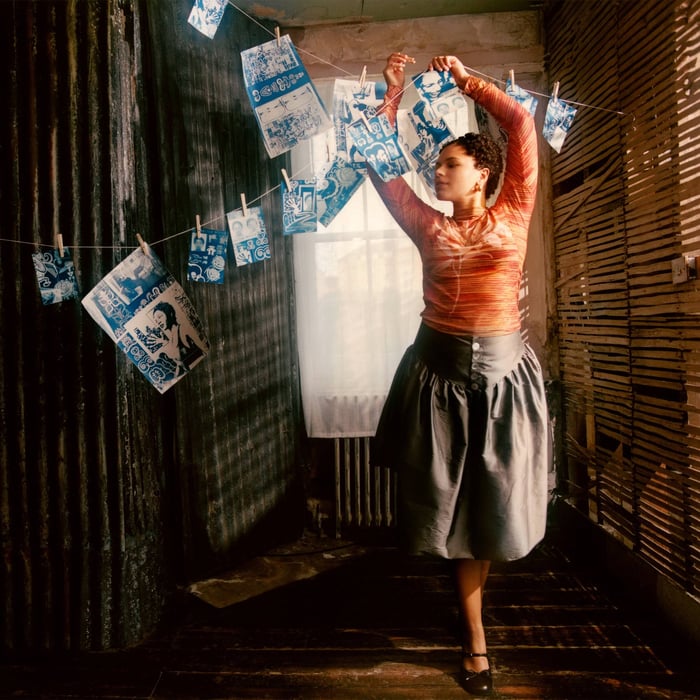
The Naturally mixtape doesn’t try to “wow” you—it tries to corner you. Nectar Woode sings low, lets bass do the heavy lifting, and dares you to sit with it.
A mixtape that refuses to audition for your attention
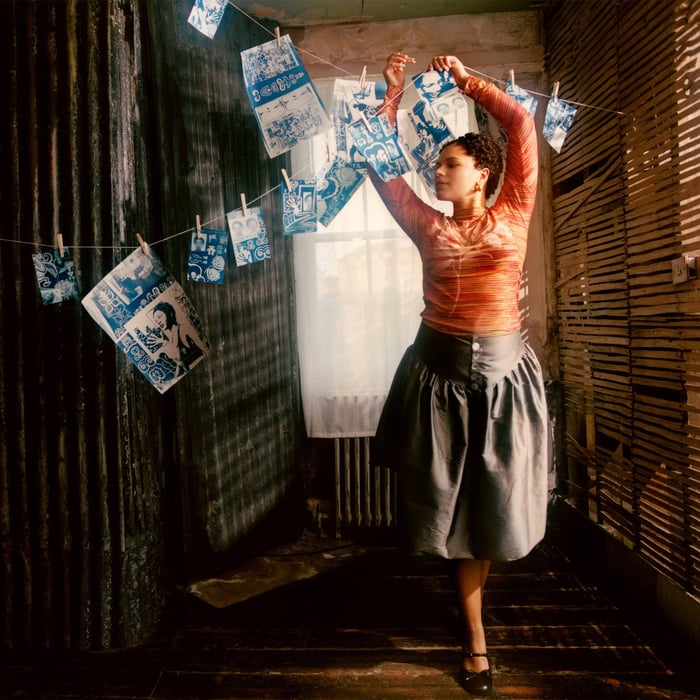
Most singers from London with serious pipes seem engineered to win the room—big notes, big drama, big “look what I can do” energy. The Naturally mixtape goes the opposite direction, like Nectar Woode heard the whole “belt your soul out” tradition and decided it wasn’t worth the neck strain.
She sings at something close to speaking volume, staying right up against the instrumental like she’s trying not to wake the neighbors. And I don’t mean that as a cute aesthetic choice. It feels deliberate: the quieter she gets, the less room there is to hide. This mixtape isn’t really angled toward an audience at all—it’s angled inward, toward the only person she can’t successfully ghost: herself.
That alone is an arguable move. Some people will call it subtle. I think it’s closer to controlled. She’s not being small; she’s making you lean in.
“Lights Off” and the bass that could swallow louder singers
The first thing that really lands is how the low end behaves. On “Lights Off,” the bass doesn’t just sit there warmly—it rumbles with the kind of weight that would flatten a more theatrical vocalist. Woode’s voice doesn’t fight it. It threads through it.
That’s the trick of this mixtape: the band plays like a live unit, but they’re not there to “shine.” They’re there to keep the space shaped, like furniture you don’t notice until someone removes it and the whole room feels wrong. The drums feel human, not programmed to chase a hook. The bass feels like the emotional narrator.
At first, I thought the restraint might be a limitation—like maybe she’s saving herself for later. On second listen, it’s obvious she’s withholding on purpose. She wants the songs to sound like thoughts you didn’t mean to say out loud.
“Naturally” sounds sunnier—until you realize it’s still a self-interrogation
“Naturally” (the title track) has a bounce to it, a slightly brighter melodic posture. The rhythm moves like it’s trying to convince you the day is going fine. But Woode doesn’t let it become glib—not even for a second. She floats on top of the groove in this near-whisper, an almost-audible hum, like she’s testing whether she believes herself.
The band pulls back at smart moments, but they never vanish. That matters, because if the instruments disappeared completely, the whole thing might feel like a diary entry recorded into a laptop mic. Instead, it stays musical—quietly physical.
The real antagonist across this song (and honestly the whole project) isn’t a person. It’s the internal critic that keeps showing up, tapping the shoulder, reminding her she’s still in the room with herself. If you came here for romance-as-plot, you might get impatient. If you’ve ever replayed one sentence in your head until it turned poisonous, you’ll recognize the tone immediately.
“Stick Fight” turns anxiety into percussion—and somehow makes it livable
If there’s a track where the mixtape’s mission statement becomes unavoidable, it’s “Stick Fight.” The percussion bubbles and drives, and Woode finally vocalizes the mental loop without dressing it up:
“Playing with my own mind”
“Think twice / Then think another couple times”
That’s not poetic abstraction. That’s just Tuesday.
What surprised me is how the song doesn’t collapse under that weight. The rhythmic push-and-pull keeps her afloat. When she hits the compromise—“Chipping away till I lose / I’d rather be painted a fool / In this stick fight”—it doesn’t sound like victory, but it doesn’t sound like surrender either. It’s closer to a ceasefire you sign because you’re tired.
A reasonable listener could argue this is too internal to be satisfying. I’d argue that’s exactly why it works: she’s not performing pain, she’s negotiating with it in real time.
When the mixtape answers itself: “Rivers End” and “No Chains on My Soul Right Now”
The inward spiral doesn’t stay purely spiral-shaped. “Rivers End” pushes toward self-affirmation with the line: “To the river’s end / I’m gonna be my best friend.” It’s a simple statement, almost suspiciously simple—like a phrase you’d write on a sticky note and pretend it’s a personality.
And yet it sets up “No Chains on My Soul Right Now,” where the can-do monologue starts sounding less like a motivational poster and more like a real decision. Not a cure, not a breakthrough—just a moment where the internal critic doesn’t get the final word.
I’m not totally sure whether she believes the affirmations all the way through. That uncertainty actually makes it more convincing. When an artist sounds 100% healed on record, it usually means they’re selling you something.
Love songs as self-incrimination: “Roses In the Dark”
Here’s where Woode gets sharper. Her love songs don’t turn outward into blame-the-ex. They turn inward into “why am I like this,” which is a much more dangerous genre if you’re trying to stay likable.
“Roses In the Dark” feels like laying a bouquet at the altar of a text message she keeps sending anyway—each morning, like a ritual she hates but won’t stop. And she doesn’t even frame herself as the victim. She drops a line that’s so blunt it almost startles the softness around it: “You hit the blunt and killed the vibe / A fuck you might have crossed my mind.”
That’s not a tidy heartbreak lyric. That’s a real-time irritation breaking through the polite sadness.
If there’s a mild criticism here, it’s that the song’s emotional precision almost makes you wish she’d be messy for a second longer. She’s so controlled that sometimes I want one moment where the vocal slips—where the mask cracks. But maybe that’s my own addiction to catharsis talking.
“Plasticine” makes young love sound like a bad craft project
“Plasticine” is where self-doubt turns into narrative. The image is perfect: something moldable, something you shape with warm hands, something that also breaks if you squeeze too hard. The song treats attraction like a thing two young people keep reshaping until it doesn’t resemble anything stable.
And then she lands the line that turns it from “sad relationship song” into “quiet personal indictment”: “It’s crumbling in our hands / But maybe we deserve it.”
That’s a lot to take ownership of in any track—especially a breakup-adjacent one. Most people outsource that kind of guilt. Woode picks it up and holds it like it’s her job.
You could argue this makes the music feel emotionally heavy even when the instrumentation stays light. I’d say that’s the whole tactic: she keeps the sound hospitable so the lyrics can be brutal without sounding theatrical.
The one outward glance (and why it feels lighter)
There’s a moment in the mixtape where the writing points outward more than usual, and it’s noticeably lighter—like she briefly steps away from the mirror and lets the room’s natural sunlight do some work.
It doesn’t hit with the same inward pressure as the self-focused tracks. That’s not automatically a flaw, but the contrast is telling: when Woode stops interrogating herself, the words get breezier, closer to a seasonal daydream. It’s the kind of writing that hopes a groove and a hook can carry the emotional load.
And maybe that’s intentional too. When she looks outward, she sounds less threatened. When she looks inward, she gets specific enough to make you uncomfortable. Pick your poison.
“Wine Into Water” is plain grief, and the piano won’t let you escape
Then the mixtape strips down to its most ballad-shaped moment: “Wine Into Water.” Piano-led, slow, steady, and unshowy. The vibe almost feels like an old classic songwriter briefly possessing the track—not in a copycat way, more like Woode stepping into a simpler, older grammar of sadness.
The sentiment cuts straight to aging and grief: “Wish I was a child again.”
No clever detours, no romantic wreckage as distraction—just the quiet fact that you can’t go back. The piano hum counters her voice like a hand on your shoulder: not dramatic, not comforting, just there.
The snapshot of the next morning is the part that really sticks: “like a flash of light / I saw myself grow up overnight.” That’s the death of a former self, stated plainly, without arguing for sympathy. It doesn’t ask for applause. It just sits there.
A lot of artists fake depth with slow songs. This one doesn’t feel like cosplay. It feels like she meant it.
“Message to London” turns the city into a lover, a threat, and a mirror
Once the piano fades, the low end comes back with force on “Message to London.” And finally—finally—Woode stops talking only to herself and addresses the place she’s living inside.
“Blue city lights surround me, / Where do I turn when you hurt me unexpected?”
That’s the line where the song clicks. London becomes a figure she can’t fully trust. The melody oscillates between attraction and unease:
- “You’re tall and bright, hypnotizing”
- “But is this home? I need reminding”
She measures the city against origin and memory—“Louder than my Grandma’s highrise”—and watches it get swallowed by construction: “There’s more and more cranes, / Tearing the sky.” That image is so clean it feels like standing still on a street while everything gets rebuilt around you.
Then she names the emotional mixture she’s been swallowing across the whole mixtape: “How do you pour such a mixture / Of anxiety? At the same time, I miss ya, / A cocktail of all my broken dreams.”
As it closes, she concedes: “Blaming my pride anymore, / I’m yours.” It’s the most committed she sounds anywhere here—and the commitment is to a landscape that still scares her. That contradiction feels honest. Plenty of people stay loyal to the thing that stresses them out. Cities, jobs, relationships, versions of themselves.
So what’s the Naturally mixtape really doing?
This mixtape isn’t chasing the loudest moment. It’s chasing the moment after the loudest moment—when you’re alone again and the internal critic returns to its favorite seat.
If you want the takeaway in plain terms, here’s what I heard Woode doing, track by track:
- Keeping her voice close so the listener has to meet her halfway.
- Letting bass and drums carry weight so she doesn’t have to over-sing.
- Turning love songs into accountability traps instead of exit interviews.
- Making place (London) the final character once the self-dialogue gets too tight.
Is it “great”? Yeah, in the sense that it commits to its approach and doesn’t blink. It doesn’t try to win everyone. It tries to be accurate.
And if you need a shortlist of where the mixtape hits hardest, I keep coming back to:
- “Roses In the Dark”
- “Stick Fight”
- “Wine Into Water”
This is what happens when an artist refuses to shout and still expects to be heard. The Naturally mixtape doesn’t broaden itself for the room—it narrows itself until it hits nerve.
Our verdict: People who like introspective R&B/soul that’s more “internal monologue” than “main-character montage” will eat this up. If you need big choruses, big belts, and obvious emotional fireworks, you’ll get bored and start checking your phone like it wronged you personally.
FAQ
- What is the core vibe of the Naturally mixtape?
Quiet, bass-heavy soul where the vocals stay close and the emotions stay specific—more self-talk than spectacle. - Is this a mixtape for casual listening or focused listening?
Focused. It can play in the background, but it keeps trying to pull your attention back like a persistent thought. - Which tracks hit the hardest emotionally?
“Wine Into Water” for plain grief, “Stick Fight” for anxiety-as-rhythm, and “Roses In the Dark” for self-incriminating romance. - Does Nectar Woode ever sound outward-facing on this project?
Yes—most clearly on “Message to London,” where the city becomes a complicated character instead of a backdrop. - What might not work for some listeners?
The restraint. If you want vocal fireworks or a big pop payoff, this mixtape is intentionally stingy with that kind of satisfaction.
If this mixtape put a specific image in your head—city lights, cranes tearing the sky, a bouquet left on read—framing that feeling helps. If you want, you can shop your favorite album cover poster at our store: https://www.architeg-prints.com
 | DISCOUNTGET 30% OFF*Use code on your next order:
|
* This post may contain affiliate links, meaning we earn a commission if you make a purchase through these links, at no additional cost to you.