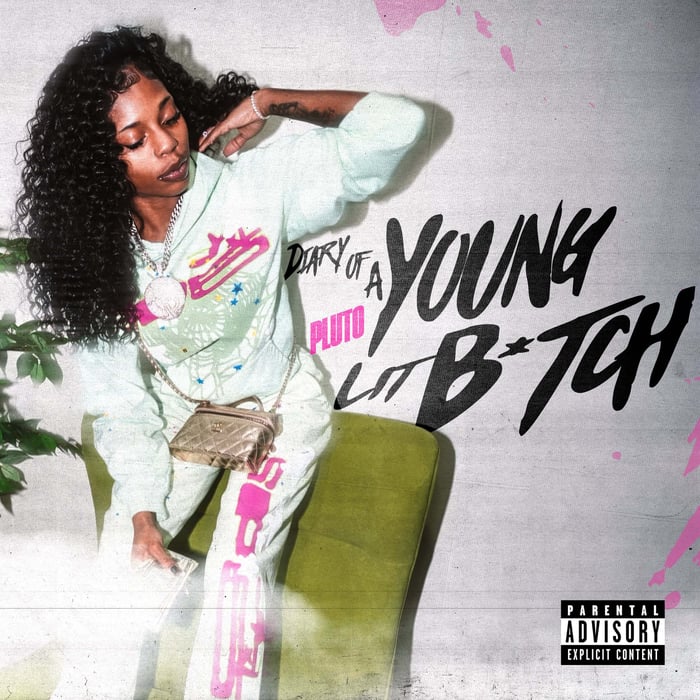
PLUTO Mixtape: Diary of a Young Lit B*tch Is a Cash-First Sermon


 See more Architeg Prints stories on Google.
PLUTO Mixtape: Diary of a Young Lit B*tch Is a Cash-First Sermon
PLUTO mixtape energy flips strip-club rap: she pays herself first, auditions men, collects women, and only gets shaky when violence is the whole point.
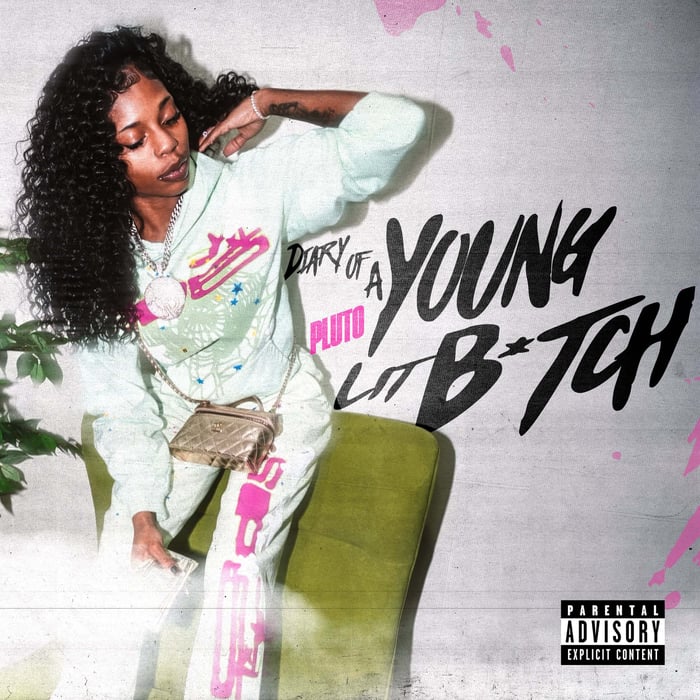
Let’s be honest: this tape isn’t flirting with power—it’s issuing invoices
Strip-club rap usually runs on a pretty obvious economy: the money moves, the room reacts, and whoever’s holding the cash gets to pretend they’re the director. Diary of a Young Lit B*tch yanks that little fantasy right out of the velvet rope.
This PLUTO mixtape opens with a blunt reversal—she’s not waiting to be “funded” before she talks slick. She’s already counted her own money. That changes everything. It means the men aren’t “choosing” her with cash; they’re applying for her time like they just walked into an interview wearing borrowed shoes.
And yeah, I expected the usual brash flexing at first—another mixtape where the hook does the work and the attitude fills the gaps. But the more I sat with it, the clearer it got: this thing is basically a series of transactions where PLUTO sets the terms before anyone else can even clear their throat.
The “strip-club” setting becomes a casting call—because she says so
Here’s the part people might miss if they only hear the talk and not the structure: PLUTO doesn’t use money as decoration. She uses it like a bouncer.
On Diary of a Young Lit B*tch, she’s not impressed by men who “look rich.” She keeps narrowing the requirements until the room feels smaller. She wants specifics: a trap guy who can teach her to flip a brick, a rich guy “in double figures,” a dope boy with a fast car who pays all cash—no note, no monthly payments, no little financing fairy tale.
The whole point is that most don’t qualify, and she enjoys saying it out loud.
“Where Dey At” turns The Candler—this upscale Atlanta marker—into an audition room. The hook plays like a clipboard checklist. The line that really sets the tone is the one that kills the influencer hustle in one breath: she hates a guy who’s rich on Instagram but broke in real life. That’s not just a diss; it’s PLUTO telling you which currency counts in her world.
And she says the quiet part loud: you can’t “court the queen” without “green.” Hit the bank before you hit her—otherwise keep it moving. No apology, no softening, no “I’m just playing.” It’s a price list.
“Can’t court the queen without no green / Hit the bank before you hit me… or keep it movin’.” — PLUTO, on “Where Dey At”
That’s the mixtape’s real engine: not romance, not vibes, not even lust. It’s leverage.
“I Ain’t Pay Nan” is the cleanest flex: not paying is the point
A lot of rappers brag about what they spent. PLUTO brags about what she refused to spend. That’s colder, honestly.
On “I Ain’t Pay Nan,” when a man asks what she paid to sleep with him, the answer lands like a slap because it’s so plain: she didn’t pay anything. The implication isn’t just “I’m better than you.” It’s “you don’t even get to frame this like you’re the prize.”
It’s also where you can hear how she wants her circle to operate. She’s got money in the safe and money in the bank, and she’s not interested in being dragged into some messy situation where her own resources become the group’s emergency fund. There’s a line of control running through the tape: my money stays mine, and my time is rented at my rate.
If you’re looking for softness here, you’re going to keep waiting. I kept waiting, at one point, for a track to blink—some little moment of “but sometimes I…”—and it mostly doesn’t. PLUTO stays on-message.
She audits women too—because desire isn’t gendered, it’s managed
The mixtape doesn’t stop at screening men. PLUTO negotiates with women in the same direct, unromantic way, which is exactly why it works. She’s not performing “scandal.” She’s performing authority.
“Tippy Toes” starts the negotiation immediately: bend it over, spread it wide, climb on top. Then she escalates it like it’s nothing: bring your best friend if you’re on that. The threesome isn’t teased as some male fantasy add-on—she’s the one calling for it, like she’s booking the room and choosing the package.
And then she hits you with the kind of line that makes the whole thing feel weirdly domestic in the middle of all this explicit talk: she’s deep in it, “it feel like Thanksgiving.” It’s absurd on purpose—the mixtape keeps dragging sex and money back into everyday language, like this is just Tuesday.
On “Dats My Bitch,” she flat-out takes someone else’s woman: if that’s your ho, make her my bitch. And she doesn’t frame it as heartbreak or drama. It’s more like a territorial signature. Even the “hungry women” line—“heard you starvin’, let me feed you”—comes off less like seduction and more like someone handing out meals while staying in charge of the kitchen.
There’s a moment mid-bar where bail for a stranger gets paid without her missing a beat. That’s a specific kind of flex: not “I donate,” not “I’m generous,” but “money moves when I say it moves.” Reasonable people can disagree, but I think that’s the thesis of the tape more than any one hook.
She’s funniest when she’s already paid—comedy as a byproduct of security
The humor on this mixtape isn’t stand-up humor. It’s the casualness. It’s the way she says wild things like they’re grocery items.
“I Fell In Luv” is where you catch her being slick in a way that’s almost throwaway. There’s a Jeffrey Dahmer reference that blurs past—can’t eat off his plate, no Jeffery—buried inside a hook where she “falls in love” with a list that keeps shifting: her wrist, then a woman, then blue cheese mixed with green salad, then an empty plate.
The real sting is the line underneath the joke: she loves that people knew she was poor, and now she’s chilling even when rent is due. That’s not just a victory lap. That’s her telling you she remembers exactly how it felt to be counted out—and now she’s enjoying how uncomfortable that makes everyone.
On “What You Know,” she shrugs off a ridiculous accomplishment like it’s background noise: rapping for fun and making a mil before the new year. Then she cuts a broke man out of the frame—he’s too busy being broke while she’s stuffing racks in her purse. It’s harsh, sure, but it’s also consistent: anyone without motion is a distraction.
Even the “pick-me-ass ho” situation gets brushed aside with a beach flex: she’s in Jamaica with your guy. Again—no drama, no explanation, just a clean theft presented like a travel update.
I’m not totally sure whether the tape wants you to laugh with her or just stare at the audacity, but either way, it’s intentional. The jokes only land because she never sounds like she’s asking permission.
The “Big P” name isn’t branding—it’s a refusal to be erased
A lot of artists say their name like a logo. PLUTO says hers like a verdict.
There’s a repeated insistence that she was doubted and she’s not letting anyone forget it. On “Never Been,” she raps about the people who counted her out and thought she was finished—then snaps back with the whole point: she’s back, on everyone’s neck, messing up the city. And then she plants the flag: “Big P the biggest in this shit.”
This is where the mixtape turns from “rich talk” into something more personal. Because if you’ve ever been doubted, you can hear the specific energy here: it’s not confidence; it’s retaliation with receipts.
“Right Now” ties the boast to geography—Zone 1 to Zone 6—and claims stepping on stuff like it’s policy. Then she paints the scene: pulling up thirty strong in a red Corvette, calling herself a renegade, “off the Don,” like she’s minting her own phrase in real time and daring the world to repeat it.
“Shake Something” keeps that same chin-up posture. She brags about the face card—your guy loves this face—then throws in “fuck 12” right above the toll it takes to be let back in. That contradiction is the point: she’s both the one who gets adored and the one who doesn’t care about your institutions.
On these big-persona tracks, she sounds unshakeable. Like the whole mixtape is her making sure the mirror reflects what she decided it should.
Where it wobbles: when violence becomes the whole meal
Here’s my one real hang-up: when the mixtape goes pure menace, it sometimes loses the special thing that makes PLUTO feel like PLUTO.
“Push Up On Me” has that taunt energy—push up or shut up, scary bitch—and it’s almost enough. But when the song is mostly threats, her sharp economic sorting (rich men vs broke men, real money vs Instagram money) fades into a more generic drill posture. And she’s too specific everywhere else to sound best when she’s being broad.
“Take Um Down” is more serious, and it’s detailed in a way that feels like she’s reading violent revenge out of a storybook without pausing for air: his body, wanting his head, eating his face for dinner, the guy going down thirty, the body splashing into the river. It’s cinematic, but it’s also where I started to miss the wit—the sense that she’s enjoying the power rather than just describing it.
And then, right in the middle of that blood-soaked scene, she snaps back to herself with one line: she’s not a stripper. That quick identity correction—almost annoyed—makes her sound the most alive in the track. Like even when she’s threatening someone, she still won’t let the room label her incorrectly.
That’s the twist: the violence hits hardest when it’s interrupted by her personality. When it’s only violence, it starts sounding like she’s borrowing a mask.
“Waga Waga” is the mixtape in one room: desire, cash, revenge—no pauses
“Waga Waga” feels like a final scan of the environment. She’s clocking who’s attractive—fine brownskin, the pretty red one with the “body tea”—and she’s still assessing who wants the queen.
Then the turn happens fast: a gun in her skirt, a fifty in her purse, revenge in the air. She sends “lil’ twin” for get-back—because she took someone’s man and now the other woman’s hurt. The way it’s delivered makes it sound like all these things live in the same pocket: lust, money, violence. Not separate chapters. One thought.
And then she caps it with the core boast anyway: these girls are mad she’s the biggest. The impressive part is that the mixtape can hold those three impulses at once without one flattening the others—at least when she’s writing like she’s still in control of the narrative.
By the end, I didn’t hear this as “club rap” so much as a rulebook. A petty one, a funny one, a ruthless one—but a rulebook.
Favorite tracks (because they show the real trick)
If you want the PLUTO mixtape at its clearest, these are the cuts where the concept is sharpest:
- “I Ain’t Pay Nan” — power as refusal, not spending, not begging
- “Where Dey At” — the audition/casting-call energy is the whole point
- “What You Know” — the shrug-flex that turns success into background noise
PLUTO doesn’t ask to be chosen on Diary of a Young Lit B*tch. She chooses, invoices, and occasionally threatens—then laughs because the money already cleared. The tape works best when her personality is doing the flexing, not just the volume.
Our verdict: People who like rap that treats romance like a business contract will love this album—especially if you enjoy a main character who never “learns a lesson.” If you need vulnerability, moral growth, or even a tiny apology, you’re going to feel like you showed up to a bank wearing flip-flops.
FAQ
- Is this PLUTO mixtape more about money or relationships?
Money, easily—but relationships show up as negotiations where cash sets the rules. - What’s the main vibe of Diary of a Young Lit B*tch?
It’s an audition room disguised as a party: she’s screening people while everyone else thinks they’re socializing. - Does the mixtape ever soften up emotionally?
Not really. There are funny lines and lived-in details, but it mostly avoids sentimental detours. - Where does it feel weakest?
When it leans too hard into straight threats, it can start sounding less specific—like the persona steps out for a second. - What tracks best show what PLUTO is trying to do?
“Where Dey At,” “I Ain’t Pay Nan,” and “What You Know” lay out the rules without getting distracted.
If this tape left you thinking about imagery—queen energy, cash talk, that “casting call” atmosphere—you can always put it on your wall too. Shop your favorite album cover poster at our store: https://www.architeg-prints.com/
 | DISCOUNTGET 30% OFF*Use code on your next order:
|
* This post may contain affiliate links, meaning we earn a commission if you make a purchase through these links, at no additional cost to you.