Mare Becoming Album Review: Feelings, Avoided Like an Unpaid Parking Ticket


 See more Architeg Prints stories on Google.
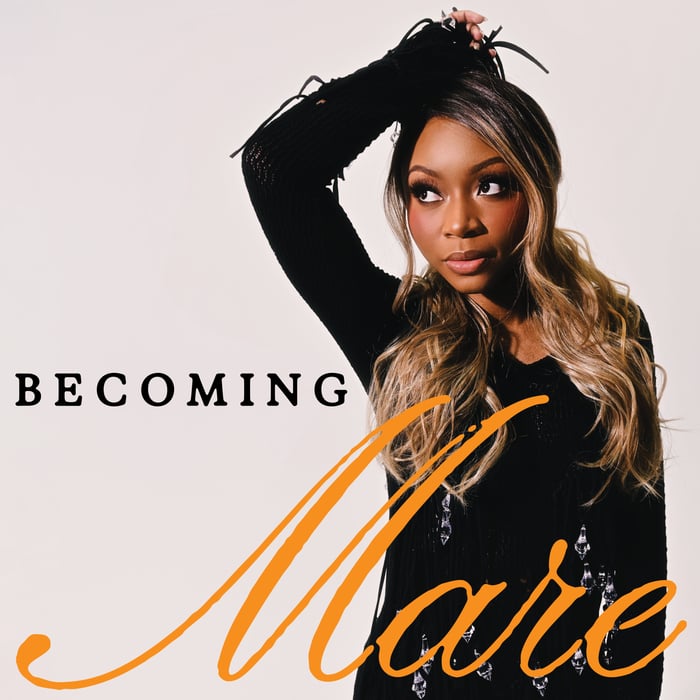
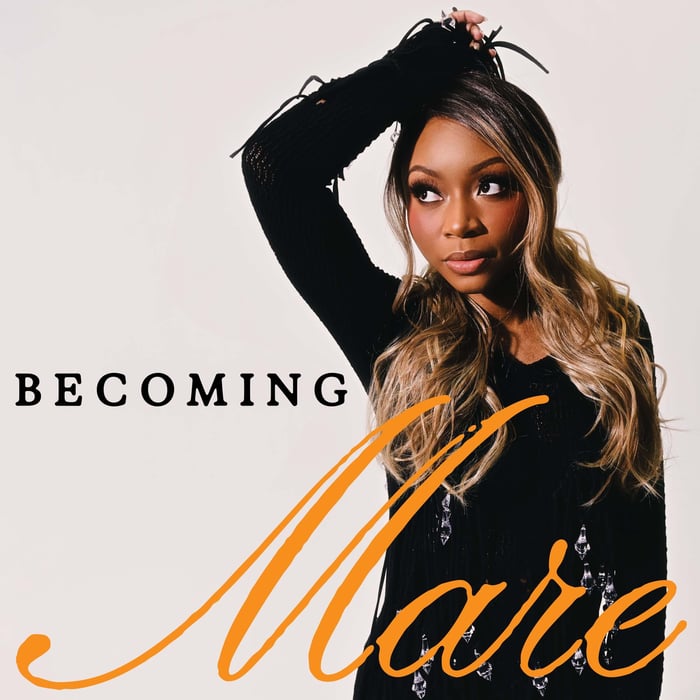
Album Review: Becoming by Mare
An honest exploration of emotional avoidance and subtle self-expression in Mare’s latest album.
Courtesy of InMareLand Music.
Let’s be honest: this album is about dodging the moment
Mare’s Becoming isn’t built around big declarations. It’s built around the pause before one—when your mouth stays shut, your face goes blank, and your phone becomes a guilt object. The whole record feels like she’s using songs to do the job her everyday self keeps refusing to do: put an actual sentence on an actual feeling.
And yes, I’m calling it: Mare Becoming isn’t “vulnerable” in the neat, inspirational way. It’s vulnerable in the frustrating way—like watching someone reorganize their kitchen drawer instead of replying to a message that matters.
The real instrument here is restraint (and it’s not always pretty)
Here’s what hit me early: Mare keeps choosing smaller imagery when she wants to sound convincing. Not big metaphors, not sweeping diary entries—just the physical, the domestic, the “I did this, then this, then this,” like she’s narrating her own avoidance out loud because it’s the only way she can admit it.
I’m not totally sure if that’s a conscious artistic strategy or just her natural writing reflex. But either way, the effect is the same: you’re not listening to someone confess; you’re listening to someone circle the confession like it might bite. And honestly, that’s more believable than most “open-book” singer-songwriter posturing.
“Heart On My Sleeve” turns avoidance into choreography
This is where the album tells you what it’s really doing. A text message arrives. And instead of answering—simple human act, right?—she runs a whole mini-life montage: smoothie, face mask, emails, walking the dogs, grabbing keys… and suddenly she’s gone without writing back.
And she doesn’t frame it like a cartoon villain move. She insists she’s not avoiding the sender, just stuck, unsure what to say. That’s the point: the song treats indecision like gravity. It pulls her into errands, rituals, and motion.
The contrast she draws between them is blunt:
- the other person grew up “in so much affection” and leads with “a poetic confession”
- Mare’s version of that origin story is colder and cleaner: “Most of my days I was locked in my room”
A reasonable listener could argue she’s oversimplifying the other person to make her own shutdown feel justified. But I think she’s doing something sharper: she’s showing how unequal emotional training turns into unequal emotional labor.
“Bad Habits” admits the problem—and still can’t fully fix it
What surprised me is how direct she gets without actually becoming “open.” On “Bad Habits,” she basically hands you a list of her limitations:
- “Can’t articulate when I miss you”
- “My face is a blank stare”
That’s not poetic, it’s clinical. It’s the kind of line that makes you think she’s tired of herself.
And then she offers what sounds like a compromise instead of a promise: “Let you hold a half of me,” with the idea of taking thirty days to break the worst habits. I kept waiting for the song to turn that into a clean transformation arc. It doesn’t. It’s not a redemption plan; it’s a negotiation. Some people will find that refreshingly honest. Others will want to shake her and yell, “Just text back.”
Even “Pearl” can’t keep the confidence mask from cracking
“Pearl” is the closest thing here to self-affirmation—except it doesn’t stay stable. It breaks right where she admits, “I’m hoping I’m not broken.”
That line matters because it’s not dramatic. It’s almost tossed off. Like she’s saying it while rinsing a dish. And that’s the album’s whole trick: it keeps dropping the emotional truth in the middle of ordinary motion, as if intensity would feel suspicious.
If you’re looking for bold catharsis, you might call this timid. I don’t. I think Mare’s whole thesis is that catharsis isn’t her natural language—survival is.
“Peace” is domestic realism with one sharp metaphor—and then she eats dinner
“Peace” lays out a night so specifically it feels like a camera following her through the house. She drives home after being run ragged. She parks in the yard. Clothes off at the door. Something gets burned on the stove (those brussels sprouts don’t survive). The TV’s on, and the song makes that eerie little flip—she watches TV while the TV watches her.
Then she lands in the place she’s been trying to reach all day: somewhere nobody can tell her anything.
The details get even smaller, more physical:
- hair down
- body flat
- room silent
- arms free
And the chorus shrinks until it’s basically just two words traded back and forth: “Peace” and “Sleep.” That minimalism is an arguable choice—some listeners will hear it as underwritten. I hear it as intentional deprivation: she’s cutting language down to the only words that still work.
She gives exactly one metaphor to the guy draining her: “You are a Rubik’s, too complicated/I can’t solve ya.” Then she drops it. No extended fight scene. No lyrical essay. She just keeps moving through the night, leaving that unsolved cube on the counter like it’s somebody else’s problem.
It’s petty in the most relatable way.
“Nothing” is where she stops negotiating
“Nothing” is Mare at her least flexible. She runs through the fantasy of grand efforts—him bending over backward, writing a thousand letters, walking through the hottest desert—and still lands on the same dead answer: nothing would change.
Then she flips the hypothetical onto herself and lists what she would’ve done if he hadn’t taken her for granted:
- crossed the seven seas
- hid his skeletons (if he “loaned them” to her)
And she still says no.
That’s the coldest moment on the record, and I mean that as a compliment. The song refuses the usual “maybe in another life” softness. It’s not romantic; it’s final. If you think heartbreak music should leave a door cracked open, this track slams it and checks the lock twice.
“Somebody New” moves fast—too fast, and she knows it
After “Nothing,” the album basically boards a plane to Somebody New, and the speed rattles even her. She admits she doesn’t recognize herself or how quickly she moved: “I do not recognize/Who I am and how did I/Move so fast.”
On first listen, I thought she was bragging—like, look how cleanly I can pivot. On second listen, it reads more like vertigo. She says she’s “completely moved on,” then immediately undercuts it by admitting her heart is “healing slower today.” That contradiction is the honest part.
She’s hoping for signs—a four-leaf clover, anything—yet she keeps glancing over her shoulder. That’s the album again: forward motion with backward eyes. If you’ve ever “moved on” while still checking the old wound every few minutes, this one’s going to feel uncomfortably accurate.
“Home” turns moving day into a proof-of-life
“Home” is the album’s clearest “I did it” moment, except Mare frames victory through logistics. The whole song feels like moving day in real time: suitcase in hand, denial about steering problems and failures back at the old place, stepping into a unit that’s still just “space and a door,” bare ceilings, bare floors.
Then the win hits in quick strokes: “No one can hold me down/Taking my feet off the ground.” If I didn’t have the rest of the album’s evidence, I’d call that empty talk. But the song keeps returning to the physical proof—she’s carrying the boxes. She’s measuring freedom in cardboard and floor space.
“Unpacked, I’m all moved in,” she sings, like independence is something you can stack in the corner and break down later.
There’s also a breather here—almost like the cover of the song gives her room to just sing, pure voice between rooms she built herself. And there’s an irony baked in: this time, she’s standing in a room she didn’t build, but she’s claiming it anyway.
When she tries to pep-talk herself, the album briefly loses its edge
Here’s where I’m going to be slightly annoying and say the quiet part: the album’s weakest moments are when Mare tries to sound universally motivating.
“Answer” reaches for the nearest motivational-poster language—seeds, hydration in the desert, diamonds in the mine, brightness someone tried to obscure but couldn’t. None of it is wrong, exactly. It just feels like the writing temporarily forgets what makes Mare compelling: specificity.
And “Embrace” goes even more generic with lines like “Gotta face facts/Embracing my path/Getting over my past.” The one line that actually lands is the practical truth about aging: “When you get older/Everything specs in.” That’s real. That’s a lived-in sentence.
My read is that she doesn’t fully trust her own plain details, so she sometimes borrows inspirational language to patch the gaps. Ironically, it does the opposite—it makes the emotion harder to see until she replaces it with something tangible again.
And when the album returns to the kitchen-world—burnt meal, unread reply, phone face down—it immediately feels alive again. Not pretty. Alive.
So what is Mare Becoming actually doing?
It’s not trying to be a dramatic diary. It’s trying to be a translation device. Mare uses the songs as the place where she can say what she can’t say in real time—because in real time she freezes, half-speaks, or disappears into chores.
The album keeps proving one thing over and over: her emotional honesty shows up as behavior before it shows up as language. Some people will call that evasive. I think it’s the entire point.
And yes, I’m still torn on whether the self-help-ish writing in “Answer” and “Embrace” is a misstep or a deliberate contrast. I lean misstep—but I’ll admit I’m not 100% sure.
Favorite tracks and overall takeaway
If I’m pulling the songs that best reveal the album’s nerve endings, it’s these:
- “Peace”
- “Heart On My Sleeve”
- “Bad Habits”
Overall, I walked away thinking of Becoming as solid—not because it tries to impress, but because it keeps returning to its most believable material: the messy space between wanting closeness and not knowing how to hold it.
Conclusion
Becoming works best when Mare stays brutally small: a phone left unanswered, a meal burnt on the stove, a room with nothing but space and a door. When she keeps it that concrete, the emotional fog turns into something you can actually touch—and that’s when the album tells the truth without raising its voice.
Our verdict: People who’ve ever “needed peace” more than they needed romance will like this album—especially if you enjoy songs that admit the text is still unread. If you want huge choruses that solve the feeling for you, you’ll get impatient and start reorganizing your own kitchen mid-track.
FAQ
- What is the core theme of Mare Becoming?
It keeps returning to emotional avoidance—how feelings show up as chores, silence, and half-sentences before they show up as clean confession. - Which track captures the album’s idea best?
“Heart On My Sleeve” nails it by turning a simple text reply into a whole sequence of distractions that feel painfully familiar. - Is Mare Becoming a breakup album?
Parts of it, sure—“Nothing” and “Somebody New” are clearly dealing with aftermath. But it’s more about communication breakdown than breakup fireworks. - Does the album ever stumble?
Yes: the pep-talk moments (“Answer,” and especially “Embrace”) drift into motivational-slogan territory and lose the sharp specificity that makes her writing hit. - Who is this album not for?
Anyone who needs emotional closure delivered in big, unmistakable hooks. Mare’s closer to a slow realization than a grand speech.
If you’re the kind of listener who treats album art like part of the experience, you can grab a favorite album cover poster to live with at https://www.architeg-prints.com — it fits the whole “room you finally claimed” vibe without trying too hard.
 | DISCOUNTGET 30% OFF*Use code on your next order:
|
* This post may contain affiliate links, meaning we earn a commission if you make a purchase through these links, at no additional cost to you.