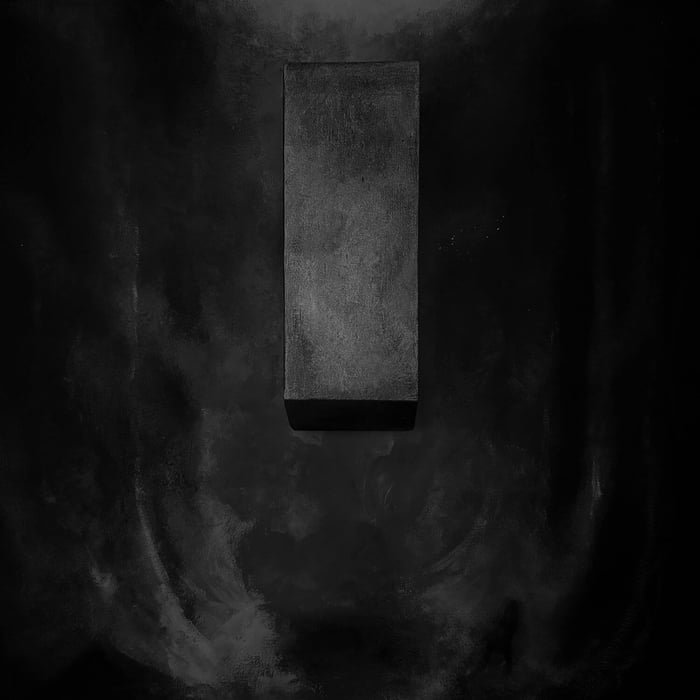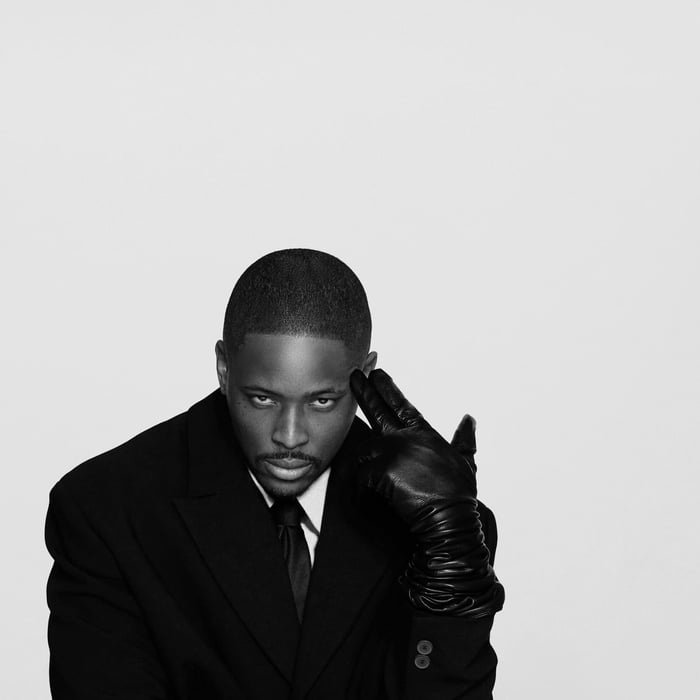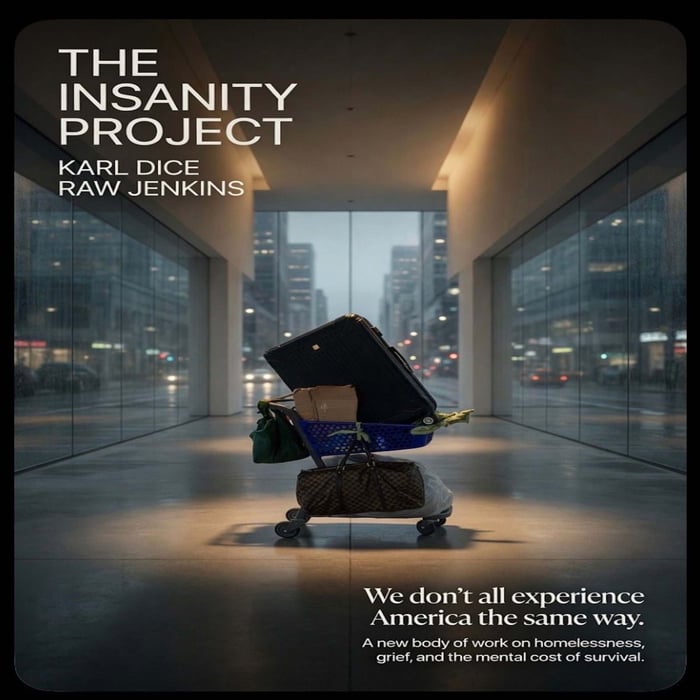
The Insanity Project Review: Dice Raw Turns Trauma Into a Flex (Kinda)


 See more Architeg Prints stories on Google.
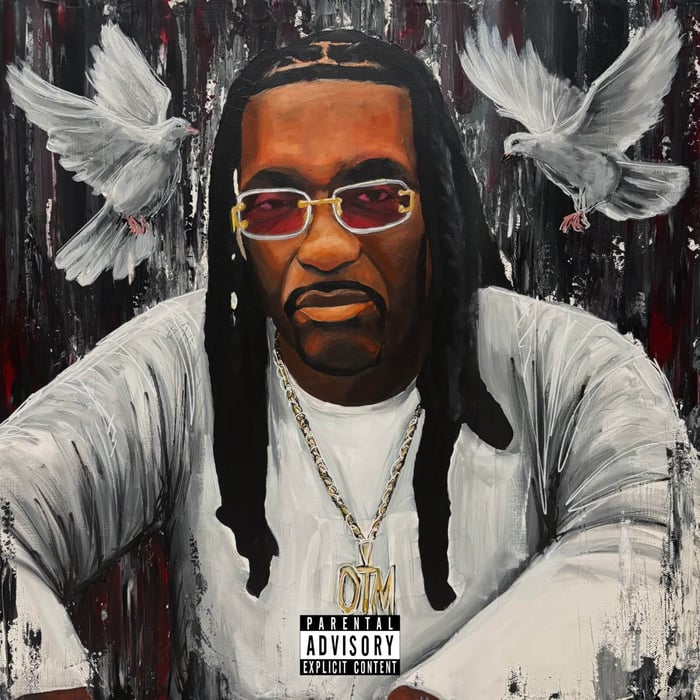
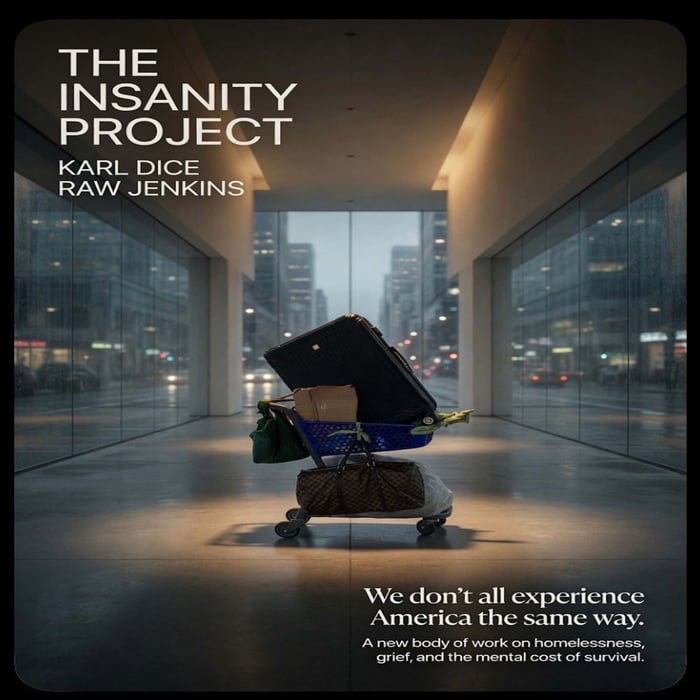
Album Review: The Insanity Project by Dice Raw
Dice Raw’s The Insanity Project delivers an unfiltered exploration of family, faith, and street violence, blending tenderness and trauma into a powerful, raw statement.
He’s Not Writing Outward Anymore—He’s Writing Into the Wound
Most rappers say they’re being honest. This album actually sounds like it has something to lose.
For decades, Dice Raw (Karl Jenkins, if you want the government-file version) has felt like a writer built for performance—words that travel outward: toward characters, toward the block, toward the crowd, toward whoever’s going to deliver the lines on stage or in a booth. That’s the instinct you pick up when your pen is made to be worn by other voices.
The Insanity Project flips that habit. The language doesn’t reach for an audience first—it doubles back into his own head, his family, his upbringing in Philadelphia, and a kind of violence that doesn’t politely stay metaphorical. The material here is rich in the same way it’s frightening: it has the heavy, annoying texture of real life. And the point is that he treats the warmth and the horror like they deserve equal shelf space.
That choice—giving tenderness the same weight as brutality—is the first sign this isn’t just another “grown man rap” record. It’s more like a file folder he finally stopped alphabetizing.
“Been a Minute” Makes Home Feel Like a Spell
The album’s most disarming move is how casually it lets love walk into frame.
“Been a Minute” centers on a mother in a third-floor walk-up who can apparently erase a whole street’s anxiety with the simplest combo: a frozen pizza and a movie. That detail could’ve been a throwaway nostalgia flex. Instead, it becomes the emotional anchor—like he’s saying: this is what safety looked like when safety wasn’t guaranteed.
Then the verse expands its circle: a Nanny, a grandmother, a Miss Nancy. The door stays open so consistently that the block starts acting like one shared living room. He even drops that specific little timestamp—back when Black folks “got fancy” and monograms started showing up. It’s a tiny status detail, but it lands like anthropology. Not because it’s cute—because it’s precise.
And it all closes on grandparents who “put in work for freedom, not for the bag.” That line matters because it refuses the modern urge to turn every sacrifice into a hustle story. He’s not selling their virtue. He’s marking the difference between dignity and clout.
Arguable take: this track is the real thesis statement, not the darker songs—because it proves he knows what he’s defending.
“Honor Thy Parents” Is Where He Stops Performing
From that warmth, he drags you somewhere colder—without raising his voice to warn you.
“Honor Thy Parents” goes straight into the moment he hears a doctor say his mother has cancer. No poetry contest framing. No cinematic buildup. Just the blunt human consequence:
“I cried that day and cried every day since.” — Dice Raw
He even says her name: Pamela. That’s a deliberate move. Naming her makes the grief concrete, not symbolic. It’s like he refuses to let her become a “mother figure” trope.
Then he pivots to his father—dead on New Year’s Eve, and described through family stories as a stranger who cheated and wandered and generally earned the kind of reputation people summarize with a dismissive sentence fragment. The prayer that follows isn’t pretty; it’s the kind of spiritual honesty people only allow themselves in private. He asks God to “smack him right in the back of the head” when they meet again. And then comes a line that’s cruel and hilarious in the same breath: he could still spit at his ghost and make him do his taxes.
Here’s what’s actually happening: hatred and grief share the same rhyme scheme. He doesn’t separate them into neat chapters. That’s why it works. He’s least inclined to “put on a show” right here, and ironically that’s when he sounds most powerful.
Mild criticism, though: a couple of these punchlines flirt with undercutting the ache. I get why he does it—humor is a pressure valve—but it risks letting the listener dodge the sadness the way he’s trying not to.
“Circles” Uses Flatness Like a Weapon
After family, the album turns its gaze outward again—but not to entertain. To indict.
On “Circles,” he says it plainly: his brain “switched,” and now the switch broke and he can’t switch back. There’s a mention of Emmett Till in the same breath as the claim that American violence is some long-forgotten con. He frames it like facts—like he’s just reading weather conditions.
That’s where the unease comes from: the emotional flatness. Not numbness exactly—more like the tone of someone who has seen the pattern so many times that outrage starts feeling performative. He even describes dismay like it’s observation, like he’s watching storm clouds and calling the forecast.
Arguable take: the calm delivery is the scariest thing on the album—because it suggests he’s past the point of believing shock changes anything.
I’ll admit, I wasn’t sure at first if that flatness was a flaw—like maybe he was withholding too much. But as the track settled in, it started to feel intentional: the absence of drama becomes the drama.
“Heather” and the No-Pause Writing Style
From there, the album starts stacking images so tightly you barely get oxygen between them.
On “Heather,” he raises the question of two million Black men disappearing—whether it’s dope-boy magic or a horror movie. And the verse opens with a steady hand hovering over an automatic weapon while he catalogs a kind of film-trained fear: “super-predator” language, crack cocaine, and the way those narratives accelerate the erosion of Black male existence.
The key here is how little he pauses. The writing is dense in a way that feels deliberate—like he doesn’t want to give you a clean break where you can say, okay, that was heavy, next thought. He wants the overwhelm. He wants the nonstop feed.
Arguable take: the lack of breathing room is the point—it mimics living in a world where the danger doesn’t politely wait for the chorus.
“Keep Dancing” Is a Hook That Shouldn’t Work (But Does)
This is the moment where the album gets almost offensively bold.
“Keep Dancing” opens with a rapid montage of video news brutality: a husband shooting his wife at a community pool; live action inside Robb Elementary; hundreds of days of invasion marked by Zelenskyy’s somber tone; an announcer practically begging people to stop dying.
Then he drops a hook that’s basically two words thrown against all that carnage: “Keep dancing.”
The first time I heard it, I thought, okay… is this going to be one of those “irony as wisdom” moves? The kind that sounds smart until you realize it’s just shock value in a trench coat.
But on second listen, the hook read differently: not as encouragement, not as dismissal—more like a sick observation. Like: this is what people do while the world burns. They keep moving. They keep scrolling. They keep dancing.
The second verse gets even harsher, placing the dancers next to the dead—next to a wife’s body, next to a pile of bloody children. He threads in a recitation of Sonia Sanchez’s “Catch the Fire,” and the names come like a chant—Nzinga, Nat Turner, Mandela—until the final call lands like a communal pulse.
Arguable take: this is the album’s most brutal trick—turning a dance command into a mirror you don’t want to look into.
“Mansa Musa,” “Yeat,” and “Black Gold” Make Greed Sound Like Theology
After all that moral smoke, Dice Raw does something that would look contradictory in lesser hands: he talks about wealth like it’s an altar.
“Mansa Musa” is the clearest, longest meditation on stacking money, and it’s explicitly tied to his government name and a multi-faith reach—prayer to Adonai, Allah, and Christ. The flex imagery stretches from private jets to satin pajamas, and there’s even room for the kind of bizarre indulgence that sounds like a dare: rats feeding a piranha. The tone isn’t simple celebration. It’s more like: if I’m going to imagine power, I’m going to imagine it until it becomes grotesque.
“Yeat” echoes the political proximity gesture, aiming at the White House with a prayer that he wouldn’t say something crazy in front of Biden. That’s not a punchline—it’s social anxiety dressed up as ambition. The desire to be near power, and the fear of what your own mouth might do when you get there.
Then “Black Gold” takes the whole thing cosmic. He says he’d rather be water than a star—specifically, a tsunami smashing little cities to bits.
Arguable take: these songs aren’t him endorsing greed; they’re him admitting that “escape” fantasies still come with violence baked in.
I kept waiting for a clean moral stance—something like “money isn’t real” or “faith saves you.” He doesn’t give you that. He gives you appetite, then dares you to pretend you don’t recognize it.
Middle-Aged Doubt and the Problem of Being Seen
As the album moves on, it starts showing its age in the best way: not nostalgia, but anxiety about relevance.
On “Share With You,” you get a rapper in his 40s hollering at an audience no one will remember. That detail stings because it’s true in a boring way. And he frames his role like a choice between being the brawler or the bowling pin—either the one doing damage or the one getting flattened. It’s not a metaphor you workshop for three weeks. It’s the kind you blurt out when you’re tired of pretending you’re in control.
Arguable take: the album gets more honest the less “cool” it tries to sound.
“Philadelphia” Is Nostalgia With Teeth
The closer (or at least the big reflective centerpiece) is “Philadelphia,” and it’s loaded with specific ‘80s references that don’t feel like props: stagflation, coke money, bargain-basement dollar parties, that Sergio Tacchini fit that became your entire identity.
The chorus frames the city like an enemy you grew up negotiating with, and as kids, you dreamed of being a team against its destructive pull. That’s a clean idea—but the verses complicate it.
He portrays a young woman as a stolen queen from an economic kingdom. He compares a thousand-dollar handshake to a Nazi salute—an ugly comparison, but he’s going for the sense of ritualized allegiance, the way money can turn greeting into submission.
He also recalls meeting both Larry Hoover and Pappy Mason, then watches the tip of a nose covered in snow melt away. That last image is nasty in its simplicity: coke as something you can literally watch disappear, while the consequences don’t.
Arguable take: this track isn’t “about the city”—it’s about the way a city teaches you what to worship, then charges interest.
And after all the exotic boasting and political reach and apocalyptic fantasies fade, the detail that keeps ringing in my ears isn’t a flex at all. It’s that mother upstairs making the world feel right with frozen pizza.
Final Take: This Album Wants the Truth More Than It Wants You
I walked into The Insanity Project expecting high-level lyricism and a few heavy stories. What surprised me was how often the album refuses the usual rap contract of “turn pain into triumph.” It doesn’t always hand you catharsis. Sometimes it just hands you the scene and walks away.
I’m not claiming every moment is perfectly calibrated—occasionally the density becomes a wall, and I did catch myself wanting one more second of silence between images. But the album’s real win is its insistence that family tenderness, spiritual reach, street memory, and world-scale horror can sit in the same room without apologizing for each other.
He’s not cleaning the mess up. He’s pointing at it until you admit you see it too.
This is the kind of record that lands as genuinely great not because it’s “important,” but because it refuses to lie about what it remembers.
Our verdict: People who actually like listening to lyrics the way you read a hard book will love this album—especially if “Been a Minute,” “Honor Thy Parents,” and “Philadelphia” sound like the kind of honesty you’ve been missing. If you need your rap trauma neatly packaged into inspiration, you’re going to get irritated fast and call it “too heavy” while you quietly keep dancing.
FAQ
- What is the core theme of The Insanity Project?
Family history and public violence colliding—without the album pretending those worlds are separate. - Is The Insanity Project more personal or more political?
It’s personal first, and that’s why the political parts hit harder; he makes the public feel like it lives inside the house. - What songs best represent the album’s emotional range?
“Been a Minute” for warmth, “Honor Thy Parents” for grief, and “Philadelphia” for memory with sharp edges. - Does the album rely on hooks or lyric density?
Mostly density, but “Keep Dancing” proves he can use a hook like a weapon when he wants. - Is this an easy listen?
Not really. It’s engaging, but it doesn’t prioritize comfort—especially when the imagery starts stacking without pauses.
If you want a physical reminder of the mood this record leaves behind, consider grabbing a favorite album cover poster for your wall at our store: https://www.architeg-prints.com. It fits the theme—memory you can’t scroll past.
 | DISCOUNTGET 30% OFF*Use code on your next order:
|
* This post may contain affiliate links, meaning we earn a commission if you make a purchase through these links, at no additional cost to you.