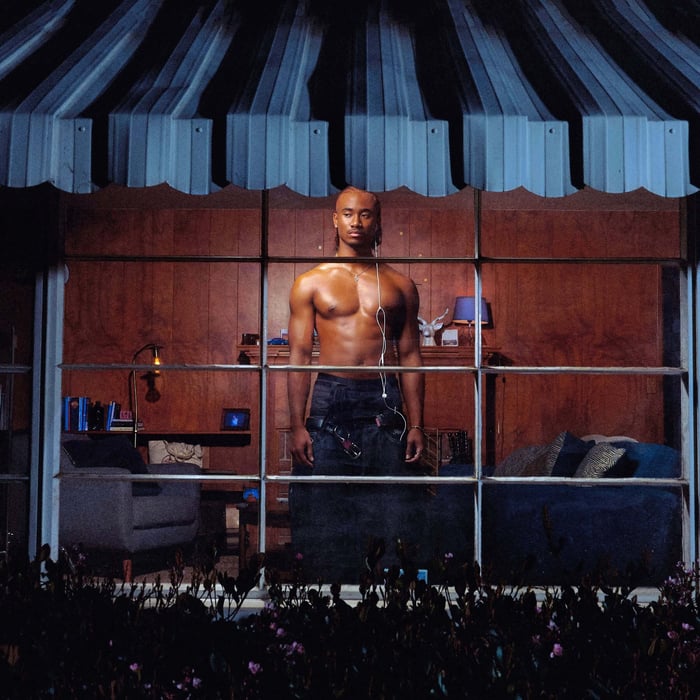
Make You Feel Mixtape Review: Dylan Sinclair’s Sweet Talk as a Control Habit


 See more Architeg Prints stories on Google.
Make You Feel Mixtape Review: Dylan Sinclair’s Sweet Talk as a Control Habit
Make You Feel isn’t just romantic R&B—it's Dylan Sinclair turning desire into a receipt, a rulebook, and a vow he half-believes.
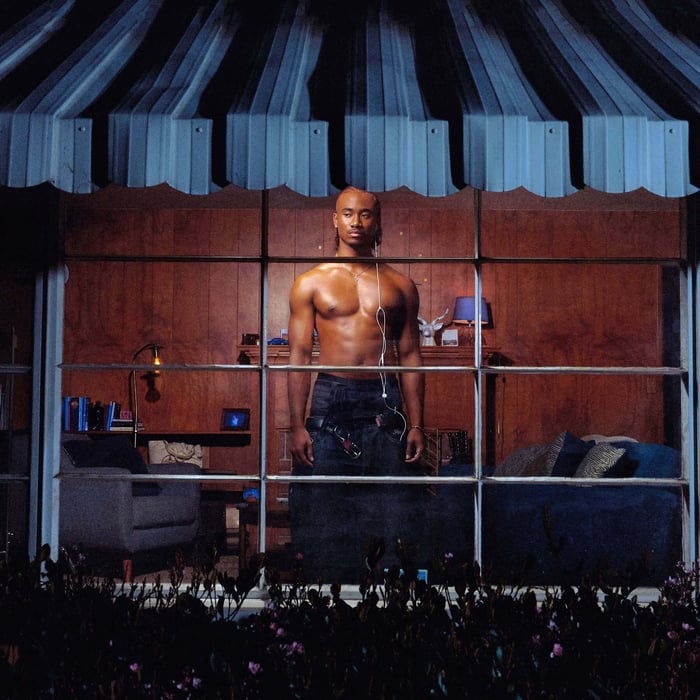
Let’s not pretend this mixtape is “just vibes”
The first thing Make You Feel does is make a promise so extreme it sounds like a dare: he’ll “spray” for a girl. Not metaphorically in the cute way either—more like he’s trying to convince you protection and possession are the same emotion. And the mixtape keeps returning to that idea until it starts to feel like the point: Dylan Sinclair keeps dressing love up as ownership, then acting surprised when it fits.
I kept waiting for the tape to soften into simple longing—plain wanting, no strings—but that’s not the lane it prefers. This project is built with producer Jordon Manswell like a showroom: money on the table, rules on the wall, camera in the corner. The affection is real, sure, but it’s almost never free.
Arguably, the mixtape’s real kink isn’t sex—it’s control.
The “slay” promise: protection, jealousy, and shallow flex all sharing a bed
Here’s what’s wild: when Dylan makes that vow to handle any man who looks at his lover the wrong way, it’s presented like devotion. But he matches that devotion with the same logic he uses for everything else—cash ready, club instructions issued, the bedroom staged like content. The desire rarely reads as curiosity about her; it reads like a claim staked in public.
And I’m not even saying he’s hiding it. The tape practically waves a flag that says: if I can provide, then I can love.
That’s a convenient equation—also a little bleak.
“Rich Luv” turns love into a spreadsheet (and that’s not an accident)
“Rich Luv” doesn’t ease you in. It leads with money like it’s the opening chord. He’s talking about stacking it until he dies, multiplying his counts by the women in his sightline, throwing out numbers like the romance is happening inside a bank app.
Then when the focus shifts to the woman he’s supposedly centered on, the main offering isn’t tenderness—it’s provision: “All you need to know is I want to provide.” And the song treats that as the same thing as love itself, like emotional depth is just financial capacity with better lighting.
Chase Shakur slides in and the whole exchange teeters near a namedrop that’s obviously meant to sound slick and filthy in the same breath. It works in the moment, but it also tells on the song: this isn’t intimacy, it’s performance of intimacy.
A reasonable listener could argue it’s just standard flex talk. I don’t buy that. The tape keeps repeating the same logic too consistently for it to be accidental.
“Spray” doubles down: care becomes a wire transfer and a threat
That “provision equals love” equation shows up again on “Spray,” and this is where it gets more complicated—and honestly, more effective. Obligations pull him away, but he tries to keep the relationship intact by promising financial support from a distance. He’ll “keep her street” even when he’s not there. Care turns into an electronic transfer: money as emotional language.
Part of me isn’t totally sure if the song knows how cold that sounds, or if it thinks it’s romantic. But the hook doesn’t hesitate. The storyline starts with two friends finally admitting feelings, and immediately the relationship comes with armed protection like a gift bag.
The hook says it plainly: Would I kill for this girl? Yes, I would spray. It’s catchy in a way that almost annoys me—because it makes the most unhinged sentiment on the tape feel like something you’d hum while doing dishes.
And with JVCK JAMES adding to the mix, the track lands right in that sweet spot between confession and claim. The threat isn’t presented as a real body count; it’s a measurement unit for devotion. Still, it’s devotion that can’t stop mentioning violence, which is… a choice.
Arguably, “Spray” is the tape’s cleanest example of what it’s actually doing: romance framed as enforcement.
“Denim” is where the tape briefly becomes physical instead of transactional
“Denim” flips the formula in a way I didn’t expect at first. The writing gets sharper, and for once his presence isn’t cash or rules—it’s clothing. He turns himself into something she wears, like his identity only makes sense when it’s draped on her body.
And that metaphor actually holds. The chorus turns the act of wearing and being worn into an ache—the kind you return to even when you shouldn’t.
“Something ‘bout me in my denim
Faded blue but you still feel the venom
Wore me out, call it vintage
Hung me up, still can't quit this.”
Halfway through, the track “thins out” emotionally. You catch a ghost version of him—less flex, more residue. It’s one of the first moments on the mixtape where it feels like two bodies are pushing and pulling, instead of one guy piling offerings at her feet and calling it closeness.
If someone told me “Denim” is the tape’s best songwriting, I wouldn’t argue much. It’s also proof he can do intimacy without turning it into a contract—he just doesn’t stay there long.
“Stay Home” makes the subtext into an instruction manual
Right after that, the possessiveness stops peeking and starts speaking in full sentences. “Stay Home” is basically a directive dressed as a song. Turn down guys trying to link. Don’t take drinks. Don’t answer what your name is. Come to my house instead of doing anything else.
And the song doesn’t try to disguise the mistrust. He implies she’s good at lying. He holds something back. He reminds her what she could lose if she keeps taking risks. That’s not “protective boyfriend” energy—it’s anxious management.
Here’s the mild problem: the melody feels like it’s being assembled out of lyrics rather than sung into existence. It’s more like he’s arguing in rhythm. That can be compelling when the writing is elastic, but here it sometimes lands as an attempt at a melody rather than the real thing.
A listener could say that stiffness is the point—like control should sound rigid. Maybe. Or maybe the song just doesn’t glide.
“He’s Not Me” tries to act patient, but you can hear the grip
“He’s Not Me” carries that same tendency: the words push so hard they start flattening the musical shape. The scenario is familiar—he assumes the last fling “wasn’t in the game,” but he’ll wait until she chooses him anyway. The song moves like the argument already ended, and now the bridge exists purely to reassure.
That reassurance is where the tape keeps trying to launder possession into romance. It’s not even subtle: he wants the emotional reward of being “the safe option” while still speaking like someone keeping score.
Arguably, that contradiction is the album’s engine: he wants to be trusted while admitting he doesn’t trust.
Public watching vs private watching: “Squeeze” and “On Cam”
Then the mixtape hits a funny pivot—funny in that calm, human way where you watch someone contradict themselves and they don’t notice.
“Squeeze” has him breaking a rule he previously claimed mattered: no PDA. Suddenly he’s handsy in a packed club, and the whole thrill is that everybody sees. He keeps insisting it’s “not his style,” but he’s clearly enjoying the attention. The song basically shrugs and says: maybe the rule wasn’t moral, maybe it was just inconvenient.
And then “On Cam” takes the watching out of the club and puts it in the bedroom. The camera becomes the third body. For the first two-thirds it plays almost casual—little more than the night’s noise (“squeak squeak”), some clean sheets, a low-stakes invitation framed like he’s doing her a favor.
At first I thought “On Cam” was just filler—one of those “set the mood” tracks that exists because the mixtape needs to be a mixtape. But on second listen, it clicked: the camera fits perfectly with his whole mindset. He doesn’t just want the moment; he wants proof of the moment. He wants to own the memory the way he wants to own the relationship.
A reasonable person could hear it as playful. I hear it as consistent.
“Safe to Say” is where he finally says the quiet part cleanly
“Safe to Say” is the point where the chase lands somewhere that actually sticks. He owns up to the hearts he’s smashed and tells her he won’t do that anymore. He starts talking long-term in a way the tape mostly avoids: asking if she’ll be his lady while having babies, saying he’d give up his career for her, promising they’ll grow old together until the grave.
It’s dramatic, yeah, but it’s the first time the melodrama feels earned instead of performative.
And then he admits the core theme out loud: when she’s around, he gets possessive—and he’s not ashamed. That line matters because it stops pretending. Throughout Make You Feel, the offer and the withholding kept acting like separate concepts. Here, he packages the possessiveness as part of a proposal. Same impulse, better suit.
Arguably, this is the mixtape’s most honest moment: not because it’s wholesome, but because it’s finally coherent.
So what’s actually going on across Make You Feel?
This mixtape keeps presenting love as a series of claims: financial, sexual, social, emotional. The money talk isn’t decoration—it’s the language he trusts most. The jealousy isn’t a flaw he hides—it’s one of the tools he uses to prove devotion. Even the softer tracks don’t escape the logic; they just whisper it instead of shouting.
The tape’s best moments (“Denim,” “On Cam,” “Safe to Say”) happen when Dylan lets the desire feel complicated rather than just managed. The weaker moments are when the controlling impulse tightens so much the music has to strain around it.
And yes, “Spray” might be the highlight—not because it’s the most tasteful, but because it’s the most committed to its own weird thesis.
Conclusion
Make You Feel doesn’t romance you so much as negotiate with you. It’s Dylan Sinclair using charm, money, surveillance, and vows to make love feel like something he can hold in his hand—then acting like that’s the same thing as trust.
Our verdict: People who like R&B that’s messy, possessive, and a little too honest about what it wants will eat this up. If you need your love songs to feel emotionally safe—or you flinch at “protection” that sounds like control—you’re going to spend this tape quietly arguing with your speaker.
FAQ
- Is “Make You Feel” more romantic or more controlling?
It’s romantic in wording, controlling in behavior. The tension between those two is basically the plot. - What’s the standout track and why?
“Spray,” because it fuses confession with threat so cleanly it becomes the tape’s clearest mission statement. - Does the mixtape rely too much on money talk?
Yes—and that’s intentional. It keeps using provision as proof of love, which says a lot about what the narrator thinks love is. - Which songs feel most emotionally sincere?
“Denim” for its physical, metaphor-driven writing, and “Safe to Say” for finally turning the possessiveness into an admitted feature, not a hidden bug. - Is there a weak spot?
“Stay Home” can feel more like a list of instructions than a fully formed melodic idea, even if the rigidity matches the theme.
If this tape left you thinking about how imagery and control show up in music, it might be worth putting that feeling on your wall—shop your favorite album cover poster at our store: https://www.architeg-prints.com/.
 | DISCOUNTGET 30% OFF*Use code on your next order:
|
* This post may contain affiliate links, meaning we earn a commission if you make a purchase through these links, at no additional cost to you.