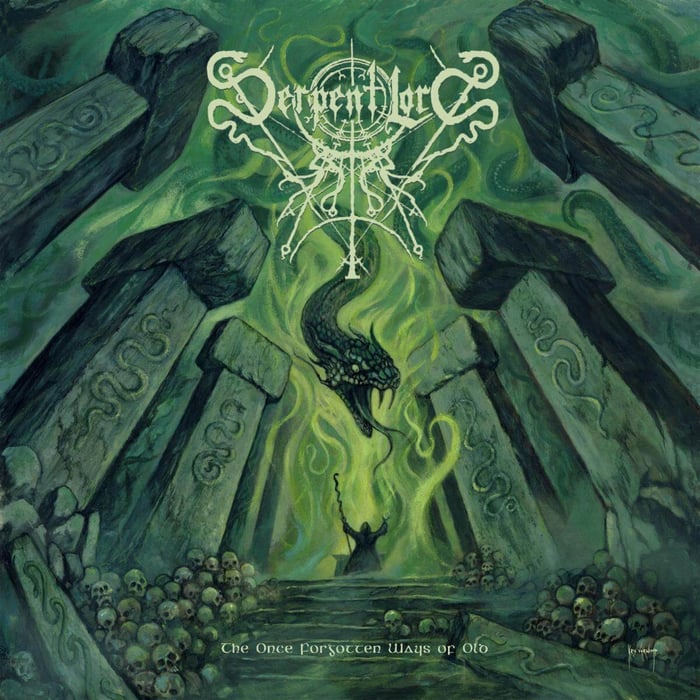
Serpent Lord Debut Review: 40 Minutes of Pagan Fire (Too Late?)


 See more Architeg Prints stories on Google.
Serpent Lord Debut Review: 40 Minutes of Pagan Fire (Too Late?)
Serpent Lord’s long-awaited debut album channels 90s pagan black metal with ritualistic pacing, dynamic vocals, and a mix of atmospheric and aggressive moments, delivering an immersive experience worth the decades-long wait.
The Long Wait Is the Point
Some albums arrive like a text you forgot to answer—months late, weirdly confident, and somehow still persuasive. Serpent Lord feels like that kind of arrival, except the delay isn’t months. It’s decades.
This project started back in 2003, and you can hear that history in the way The Once Forgotten Ways of Old carries itself. Not in a dusty, “look what I found in my old hard drive” way, but in the posture: these songs act like they’ve been waiting in the dark, rehearsing their entrance. Jake Superchi (yes, the same force behind UADA) keeps the whole thing mostly in the underground shadows for years, letting it live as scattered demos instead of a tidy public identity. Now it’s here, and it doesn’t show up apologizing.
I’ll admit it: my first expectation was that this would feel like a side-project indulgence—some nostalgia exercise dressed up with a new logo. On second listen, that assumption didn’t hold. The record isn’t trying to “catch up.” It’s trying to resurrect something.
This Isn’t UADA: It’s the Pagan Turn
The bridge from that long gestation into the finished album is the biggest tell. Serpent Lord leans hard into pagan black metal—the kind of 90s-spirited mood where riffs don’t just attack, they invoke. It’s not the same lane as Superchi’s main output, and that feels intentional, like he wanted a different mask and a different set of rules.
The production helps sell that decision. The early material gets rebuilt with a serious studio hand—Superchi working alongside Arthur Rizk—and the result doesn’t sound like a cleaned-up demo compilation. It sounds like an album that knows when to be raw and when to be cinematic.
That said, I’m not totally certain the “pagan” framing is always earned by the music itself. Sometimes it’s undeniable—chants, tribal touches, atmosphere that smells like smoke. Other times, it’s more like the album is wearing pagan clothing while still thinking in modern black metal structure. Depending on your tolerance for that, it’s either a clever hybrid or a slight identity wobble.
“Aries Ram” Kicks the Door In, Then Refuses to Explain
The opener “Aries Ram” comes in thundering, and it’s not subtle about it. The first several minutes sprint with that familiar Superchi-style momentum: frantic riffing, breakneck pacing, and the kind of forward drive that makes you stop multitasking. If you know UADA, you’ll recognize the muscle memory in the guitars right away.
But here’s the part that makes it feel like Serpent Lord instead of a copy: the balance of ferocity and restrained melody is handled with a calmer, more ritualistic hand. The riffs don’t just chase intensity—they circle it, then stab. And the vocals are the anchor. Superchi’s voice sits in the middle like a hook you can grab while everything else whips around, which is crucial, because the song’s opening movement is basically a controlled storm.
I thought the track might burn itself out early—too much speed, too much “look what I can do.” It doesn’t. It keeps its shape, and that’s the first sign the album isn’t just flexing.
The Album Uncoils Slowly—Because It Wants Control
From there, The Once Forgotten Ways of Old plays the long game. It runs close to 40 minutes across six tracks, and a lot of them stretch beyond eight minutes. That isn’t bloat for the sake of being “epic.” It’s the album choosing patience as a weapon.
The upside of these long structures is space—room for the project to shift moods without sounding like it’s switching playlists. The songs have time to establish a blackened landscape, let it breathe, then decide whether to torch it or haunt it. When the album hits, it hits hard because it’s been setting up the room first.
The mild downside: that same space occasionally tests your attention. There are moments where I kept waiting for a turn that took slightly too long to arrive. Not enough to derail the record, but enough that you notice the band is confident you’ll follow them into the fog. Sometimes you do. Sometimes you glance at the clock.
The Title Track Pulls the Album Into Ritual Mode
The title track, “The Once Forgotten Ways of Old,” is where the album makes its clearest statement: this is black metal that wants to summon, not just shred.
It leans into a mid-tempo gait for much of its run, and that choice is sneaky-smart. By holding back, it lets the atmosphere clamp down—heavy, clawing, the kind of tension that doesn’t need constant speed to feel dangerous. Then the track introduces shamanic chants, and suddenly the whole thing pivots from “song” into “rite.”
When it eventually explodes into a more soaring passage, it doesn’t feel like a random escalation. It feels like the payoff for sitting through the trance. If “Aries Ram” is the album’s bared teeth, the title track is the stare that happens before the bite.
A reasonable listener could argue it’s too indulgent—too much slow-burn for too little immediate hook. I get that. But I think that’s the point: Serpent Lord is demanding a different kind of attention than standard modern black metal adrenaline.
“A Pagan’s Spell” Is Where the Mysticism Actually Lands
If you want the clearest proof that the pagan angle isn’t just aesthetic, “A Pagan’s Spell” is the track that makes the case.
It starts as a frenzied beast—restless, aggressive, built on motion—but it doesn’t stay there. It twists and contorts into highly atmospheric terrain, and the shift doesn’t feel like a mood-board montage. It feels like the song is actively changing form.
The key detail is the tribal instrumentation cutting through the noise. It’s not thrown in like a novelty texture; it’s used like a blade, something that carves out a pocket of mysticism inside the distortion. The track basically tells you what the album wants: not just “old ways” as a theme, but old ways as a method—rhythm as invocation, repetition as pressure, melody as memory.
If there’s a contradiction anywhere, it’s that this track is so good at building that spell that it makes you wish a couple other moments on the album committed to that same level of transformation.
When It Needs To, Serpent Lord Just Goes for the Throat
The record doesn’t spend all its time in elaborate longform ritual. When it decides to be direct, it’s brutally efficient.
“Constrictor” is the shortest cut here, and it plays that role like it knows it’s the knife in the sleeve. It’s basically a concentrated dose of:
- bombardment-level blastbeats
- frenetic riffs that don’t pause to admire themselves
- howling vocals that push toward that infamous second-wave spirit
This is the album stripping off the robes and swinging. No slow-burn, no scenic route—just venom.
Then “Enter Serpentagram” shows up with a different trick: it makes the percussion the hook. The rolling blasts keep the momentum snapping forward through its near-five-minute sprint, and it’s the kind of track where your neck starts moving before you consciously decide you’re into it.
If someone told me these shorter tracks are the album at its most honest, I wouldn’t fight them. But I’d argue the opposite: the epics are where the album is most itself, and these are the reminder that it can still punch you in the mouth whenever it wants.
So What’s Actually Happening Here?
Here’s what I think Serpent Lord is really doing with The Once Forgotten Ways of Old: it’s using the idea of a “debut” as a trick. This doesn’t feel like a first step. It feels like a delayed strike—a project nurtured in fragments for years, then finally presented with the confidence of someone who’s already survived the scene.
Superchi’s decades of steering UADA through modern black metal clearly matter here—not because this sounds like UADA, but because it shows discipline. The songs are long, but not sloppy. The atmosphere is thick, but not decorative. The vocals stay dynamic, moving from feral to commanding, and that flexibility becomes one of the album’s main binding agents.
Would I change anything? Slightly. There are stretches where the album’s measured pacing flirts with overconfidence, like it assumes “epic length” automatically equals “epic feeling.” Most of the time it earns it. A couple times, it makes you do extra work as a listener.
Still, after sitting with it, I can’t pretend this isn’t an immersive debut. The year of the snake might be a cute metaphor, but the real point is simpler: Serpent Lord’s year starts when it decides it starts.
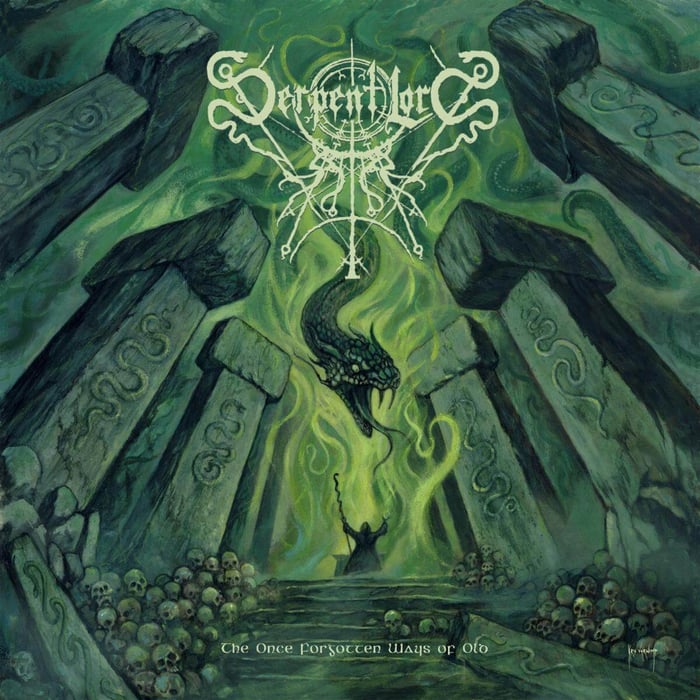
Release Details (Because Yes, It Matters)
This part is refreshingly straightforward: The Once Forgotten Ways of Old is out now via Eisenwald Records.
And if I had to slap a number on my reaction—against my better judgment—I land around an 8/10 kind of satisfaction: not perfect, not trying to be polite, and definitely worth the time it asks from you.
Serpent Lord waited 23 years to speak in full sentences, and The Once Forgotten Ways of Old sounds like it enjoyed the silence.
Our verdict: People who actually like long-form pagan black metal—where riffs act like rituals and songs take their time—will love this. If you need instant hooks every two minutes, you’ll call it “too long” and pretend that’s a personality trait.
FAQ
- Is Serpent Lord basically UADA under a different name?
No. You can hear shared DNA in the riffing and vocal command, but Serpent Lord leans harder into pagan atmosphere and ritual pacing. - How long is The Once Forgotten Ways of Old?
Just under 40 minutes across six tracks, with several songs running past eight minutes. - Which track hits hardest first?
“Aries Ram” comes out swinging—fast, triumphant, and designed to grab you by the collar. - Where does the album get the most atmospheric?
The title track and “A Pagan’s Spell,” especially once the chants and tribal elements start shaping the mood. - What’s the most aggressive, no-nonsense moment?
“Constrictor.” Shortest track, sharpest teeth—blastbeats and howls with minimal ceremony.
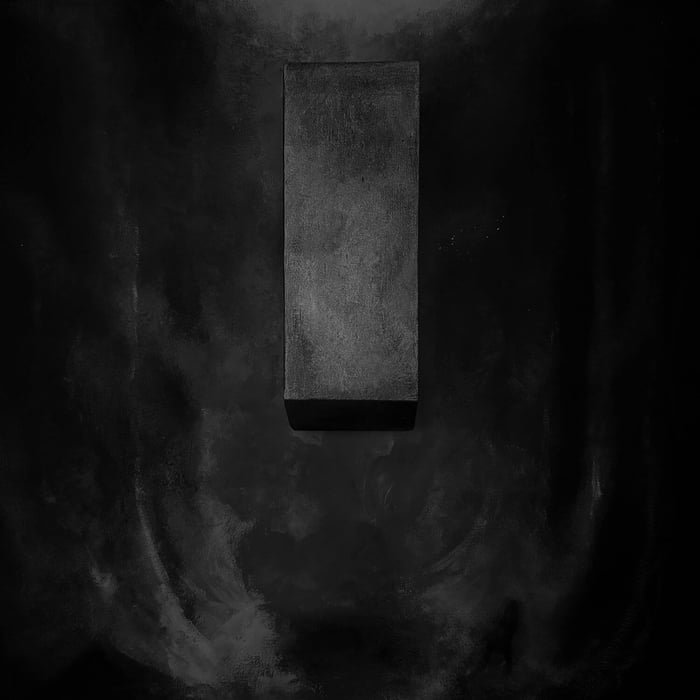
If this album’s artwork lodged itself in your brain (it happens), you can always pick up a favorite album cover poster for your wall over at our store. It’s a nice way to keep the spell going without replaying the whole record at 2 a.m.
 | DISCOUNTGET 30% OFF*Use code on your next order:
|
* This post may contain affiliate links, meaning we earn a commission if you make a purchase through these links, at no additional cost to you.