No Era Review: Rasheed Chappell Makes “Margins” Sound Like a Trap Door


 See more Architeg Prints stories on Google.
No Era Review: Rasheed Chappell Makes “Margins” Sound Like a Trap Door
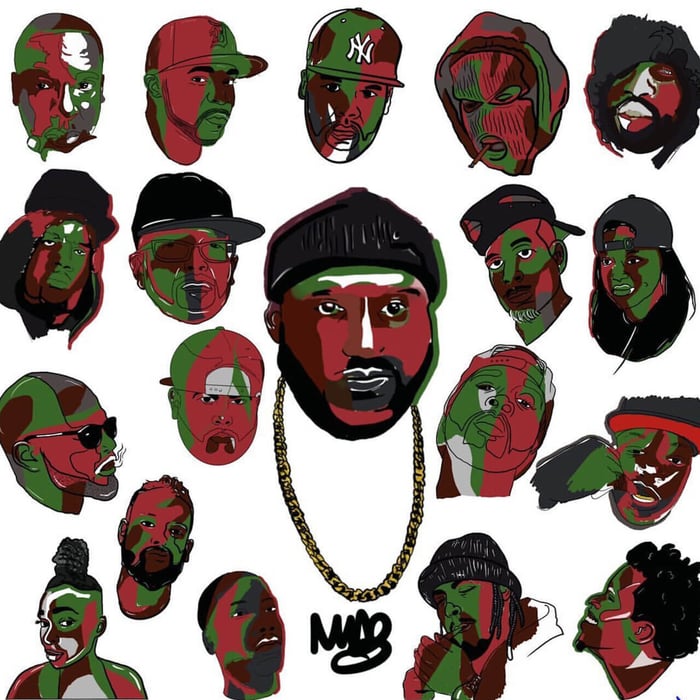
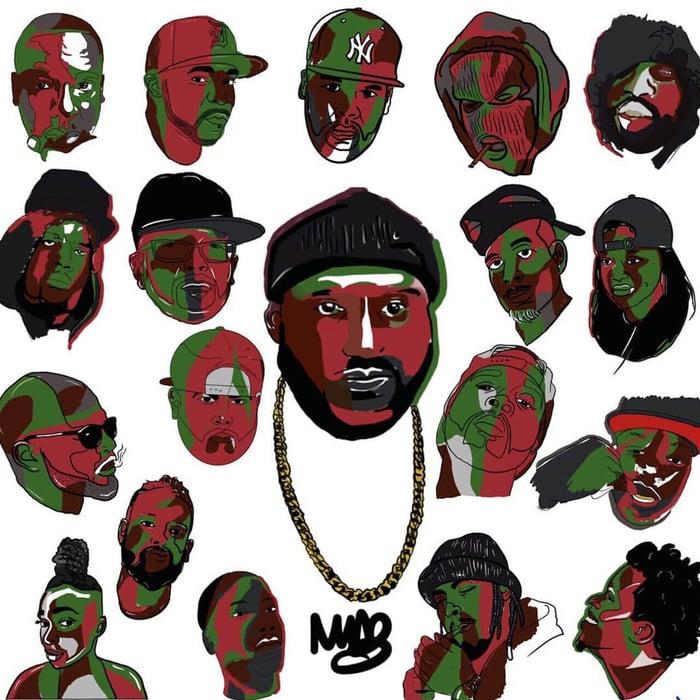
Rasheed Chappell’s No Era doesn’t beg for attention—it dares you to look at what you usually step over.
A city that doesn’t get written into songs—on purpose
Passaic sits close enough to Newark to borrow an exit and far enough away that nobody’s racing to claim it. That’s the energy this album carries: adjacent to the mythology, denied the glamour, stuck with the receipts.
Listening to No Era (I’m sticking with that shorthand because the album practically spits the full title out like it’s tired of explaining itself), I can feel years of someone rapping in a place where “buzz” is basically a rumor that dies in the hallway. Rasheed Chappell sounds like he’s been around long enough to watch interest flare up, fade out, and then get mistaken for “never happened.”
There are little tells of that long arc: a single that caught a flicker of attention back in 2009 (the one that later landed with the name “Resurrection”), then a first record in 2011 with Kenny Dope production—exactly the kind of co-sign that should’ve opened doors. But you can hear how the doors stayed mostly shut anyway. The album isn’t bitter about it in a dramatic way. It’s colder than that. It’s more like: fine, I’ll build the room myself.
And yeah, it registers that O.C. pops up here (intro and interlude), and it’s hard not to take that as a quiet stamp—like someone with actual ears clocked Chappell early, back in 2012, right around the time Kendrick Lamar was the other name getting that kind of attention. That contrast matters, even if it’s uncomfortable: one becomes a global reference point; the other becomes a specialist’s secret. No Era sounds like the secret deciding it doesn’t want to be whispered anymore.
“Muscle Memory” is the real thesis, and it isn’t motivational
The album’s first big statement lands on “Muscle Memory,” and it doesn’t land gently. Chappell raps like survival isn’t a choice you make—it’s a twitch. A reflex. The kind of behavior your body runs before your brain gets permission to be noble about it.
When he says, “Muscle memory, we hustle out of reflex / Hazards of the job is the way that we see death,” the line doesn’t feel like a clever quote. It feels like a diagnosis. And the move right after is what makes it sting: he sets violence next to church like they share a wall, no distance, no cinematic separation. “No saviors, just sinners and Holy Ghost / With the blood of Jesus, we make a toast.” That’s not “religious imagery.” That’s someone describing the way faith and threat live in the same room and stop feeling contradictory.
The second verse pushes into the drug war with a camera that doesn’t flinch. There’s a stop on a man who “got seven kids in a ward,” then a slide toward prisoners—men pinned to routines and hope, “methadone prophets” in a system that keeps its own shelves stocked. The way it plays, I don’t even think the song is trying to sound “dark.” It’s trying to sound normal, which is worse.
Arguable take: if you don’t feel slightly insulted by how casually “Muscle Memory” tells the truth, you might not be listening closely enough.
“Earners” gathers killers-with-a-code energy—and then checks it
The next pivot comes with “Earners,” and this is where Chappell starts sounding like he’s not just reporting—he’s placing rules on the table.
He opens with the vibe of mercenaries who still pretend they have a conscience, sketches lifers in Pelican Bay, and then draws a line around snitching that isn’t performative. “I stay silent in the face of the law / While these polygraph niggas out here telling it all.” It’s not said like a tough-guy slogan. It’s said like the air is already full of consequences.
Then the guests start doing something interesting: they don’t decorate the track; they pressure it.
- Flee Lord comes in sounding like he’s rapping under duress, like the verse is moving with a gun at its back, firing at “refineries spitting flames” as if the world itself is chasing him down.
- Che Noir closes with the most emotionally sharp contribution on the song—growing up Black, broke, and a girl in a scene that hands you a mirror and then tells you to hate what you see. When she hits the line about dark skin being called ugly, the track suddenly feels less like “rap talk” and more like social weather.
And then there’s this run of names and moments that feel like Chappell deliberately building a little rogue gallery of outsiders with their own currencies: a “Camp Lo” kind of fly talk cheat-code, Vic Spencer described with that clean-luxury menace (“sharper than a Phantom whip”), Hus KingPin standing in his own current like he’s competing with himself because nobody else is doing the job. Finally, “T.O.N.Y. Ran Kings” clamps the whole exchange tight—Chappell sounding engaged to the streets in a way that isn’t romantic, more like his name is “carved in stone” and he’s stuck honoring it.
Arguable take: “Earners” doesn’t glamorize the code—it makes the code sound like a cage you learn to love because you can’t afford not to.
“Hawks Out” is neighborhood cinema, and the hook is the warning label
From there, the album narrows its focus. “Hawks Out” plays like one man’s portrait, but it’s also a whole block’s biography.
The guy at the center is vivid in a way that feels too specific to be invented: the dog-park man flagging down cabs that don’t exist, dragging a Newport and then stowing it in his durag. An old head called Mighty Mouse who still knows what to do with his hands. That detail alone tells you what kind of “knowledge” this neighborhood values.
Chappell follows him through the debris like it’s a guided tour nobody asked for: someone thrown off a project roof, the ugly laughter when the body hit, the long jailhouse-yard years, the homecoming, the failure to exhaust a plea. It’s a chain of events that sounds less like a plot and more like a routine.
Then the hook shows up and turns the temperature down another notch:
“When you feel that chill in the air, you know the hawks out….”
That chorus works because it doesn’t try to be catchy. It tries to be true. “Hard to make a sellout here when the hawks out / Better keep an eye on your kids when the hawks out / Yeah, you be talking that talk till the hawks out.” It’s basically telling you: everyone’s brave until the neighborhood remembers your name.
Arguable take: the hook is stronger than the verses—not because the verses are weak, but because the hook is the album’s whole philosophy in four lines.
“Peace Beloved” goes spiritual… and doesn’t ask permission
Here’s where I hesitated for a second. On first listen, “Peace Beloved” came off like Chappell was about to drift into that foggy “I’m the chosen one” rap lane where the symbolism does all the heavy lifting. I kept waiting for the song to lose the ground beneath it.
But it doesn’t. It actually doubles down in a way that feels intentional: Chappell appoints himself as first principle, origin point—nucleus stone, monument, image-and-resemblance of God before any “remodel.” It’s a huge claim, borderline ridiculous on paper, and yet it works because he doesn’t sound like he’s trying to impress you. He sounds like he’s trying to remember himself correctly.
Planet Asia and Supreme Cerebral sit in that same lane, dropping God-talk and Islam under a low, languid ambience. The mood is almost sleepy, but the lineage thread stays unbroken into “Kufi & Jalabeeya.” And then Chappell swerves into one of the album’s most biting conceptual moves: calling himself the offspring/child of Willie Lynch, then name-jumping through a chain of power—Bobby Seale, Huey Newton, Condoleezza Rice in the White House, then Condoleezza Rice reframed as “the whore and the master.”
It’s ugly on purpose. It’s supposed to taste bad. He ends by tipping his hat to KRS, then loops back to the beginning: self-destruction.
Arguable take: this isn’t “conscious rap.” It’s the sound of someone trying to build a religion out of damage—and admitting the blueprints are stained.
“1000 Words” proves Chappell can freeze a scene like a photograph
“1000 Words” is where Chappell snaps into pure detail-work. He’s not just rapping about the neighborhood; he’s photographing it—have and have-nots, dreams fractured into stone and steel.
Then he drops into a boyhood memory that’s plain and brutal: “Nappy head, burnt chest, snotty nose, dirty clothes.” Not as a pity play—more like evidence.
The part that stuck to me is the small cruelty of the family scene: the boy reciting “The Message” off an album cover while his father sniffs cocaine off that same cover and lies about it. That isn’t “trauma storytelling.” That’s the album explaining how contradiction becomes furniture. How kids learn to hold truth and denial in the same hand.
Arguable take: “1000 Words” is more damning than any “political” track here, because it doesn’t argue—it just shows you the room.
“Mother’s Cry” is the album’s gut-punch, and it earns it
If No Era has a center of gravity, it’s “Mother’s Cry.”
Yolanda Sargeant sings while the “camera” (that’s how it feels) looks out over a Passaic news scene: a man dead on Main Avenue near Garden Street. One mother has a son who pulled the trigger. Another mother has a son who took the bullet. The track doesn’t sensationalize the symmetry. It lets it sit there, heavy and unmoving.
And then Chappell’s third verse shows up like a closing argument you can’t object to. He doesn’t just mourn—he connects the dots in a way that hurts because it’s not abstract.
“Yeah, two mothers, one night, both lost they sons
Death is what the street life cost they sons
One life behind bars for the life he stole
One life now gone for the life he chose
Two mothers now connected by the singular pain…”
—Rasheed Chappell, “Mother’s Cry”
Arguable take: this verse is the album’s most powerful moment because it refuses to pick a “side” you can comfortably root for.
“Open Fire” pretends to be loud, but it’s really about staying unseen
After that kind of emotional weight, the album makes a sly move: it lets loud men take up the room while Chappell slips through.
“Open Fire” feels like it’s aimed at snitches on the surface, but what I hear is Chappell framing his bars like museum pieces—something you mount and hang. “Art the imitation, life the inspiration / it’s so vivid you could hang it in the Guggenheim.” The brag slides home, but the grief is still hiding underneath it like a body under a sheet.
That Guggenheim line is telling, and I’m not fully sure Chappell even meant it as deeply as it lands. Because the real flex isn’t “my art is high-class.” The real flex is: I’ve been putting the block on a wall this whole time, and you’ve been stepping around it like it’s not art.
Mild criticism, though: the “hang it in the Guggenheim” moment is just a hair too self-aware, like he glanced at the audience for a second. The album is strongest when it doesn’t look up.
Arguable take: “Open Fire” isn’t the catharsis track—it’s the track where Chappell proves he can turn survival into display without begging for applause.
So where does that leave the album? Right where it wants to be
By the end, No Era feels like a record designed to survive being ignored. It doesn’t chase a trend. It doesn’t sweeten its own medicine. It just keeps handing you scenes, rules, names, consequences.
I thought going in that it might be one of those “respected but stiff” rap albums—good writing, low replay value. On second listen, I caught how often Chappell builds hooks and images that stick in your mouth like smoke. It’s not stiff. It’s controlled.
And the control is the point: this is a rapper refusing to make his environment “content.” He’s making it testimony.
Favorite tracks I kept coming back to:
- “Muscle Memory”
- “Mother’s Cry”
- “2 Evils”
And if you’re the sort of listener who insists on translating feelings into star math: this lands in great territory for me—around 4 out of 5—because the album does what it’s trying to do, even when it’s not trying to charm you.
Conclusion
No Era doesn’t try to be the record that saves anyone. It’s the record that points at the costs—quietly, clearly, and without letting you call it “just music” on the way out.
Our verdict: People who like street rap that actually names the street (not just the jewelry) will live in this album. If you need choruses to hug you, or you think “real” rap should come with a motivational speech, you’re going to bounce off this and blame the mix—or “the vibe”—like it’s the album’s fault.
FAQ
- What is the core focus of No Era as an album?
It keeps returning to the costs of survival—how reflex, faith, violence, and family history tangle together without neat endings. - Which song hits the hardest emotionally?
“Mother’s Cry,” especially the third verse, because it forces you to sit with two mothers linked by the same night. - Is No Era a feature-heavy record?
It has key voices (like O.C. on intro/interlude and strong guest verses elsewhere), but Chappell stays centered—features feel like pressure, not decoration. - Does the album lean more street or spiritual?
Both, and that’s the tension. “Peace Beloved” and “Kufi & Jalabeeya” pull spiritual language into street reality instead of separating them. - What’s a good first track to try if I’m unsure?
“Muscle Memory.” It lays out the album’s worldview fast, without easing you in.
If you like your rap with imagery sharp enough to hang on a wall, you might want to shop a favorite album-cover poster at our store—tastefully, not like a dorm room. https://www.architeg-prints.com
 | DISCOUNTGET 30% OFF*Use code on your next order:
|
* This post may contain affiliate links, meaning we earn a commission if you make a purchase through these links, at no additional cost to you.