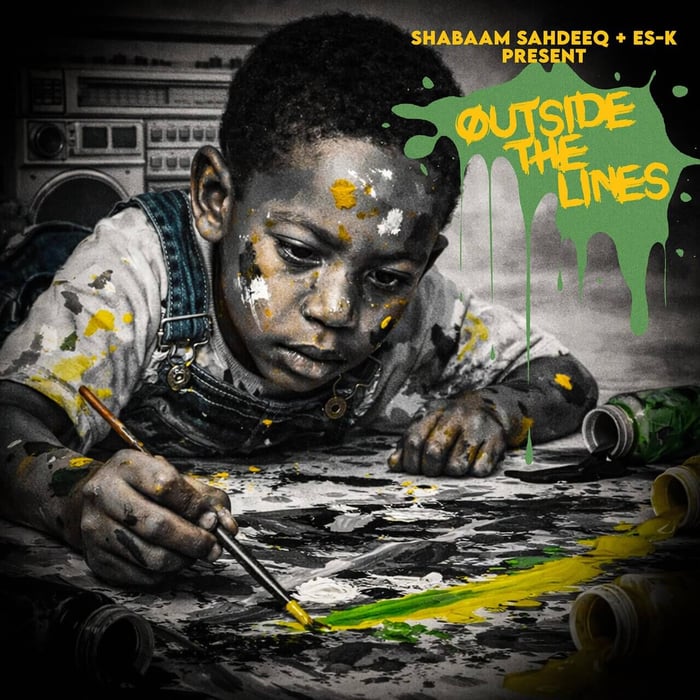
Outside the Lines Review: Shabaam Sahdeeq’s “Adult Hip-Hop” Flex


 See more Architeg Prints stories on Google.
Outside the Lines Review: Shabaam Sahdeeq’s “Adult Hip-Hop” Flex
Outside the Lines turns grown-man rap into a survival manual—with vitamin charts and grudges still intact.
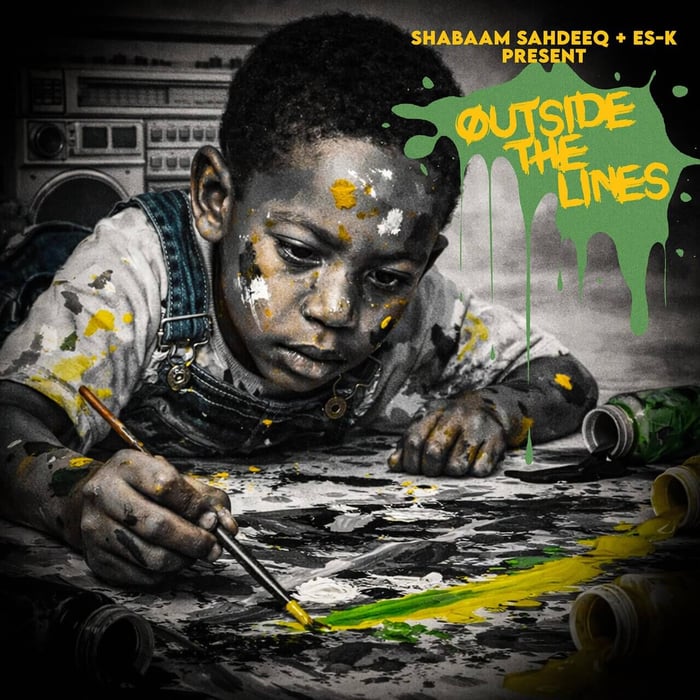
A rap record that refuses to “act its age”
Some albums try to convince you time isn’t real. Outside the Lines does the opposite: it stares at the clock, shrugs, and keeps rapping anyway.
Shabaam Sahdeeq comes from that era where you didn’t get to hide behind vibes—if your couplet was weak, people heard it from the back of the room. Listening now, I can feel that muscle memory: he still raps like he expects the audience to heckle him if he gets lazy. And Es-K’s beats don’t coddle him either. This is stripped-down, intentional, and built to hold a voice that’s been doing this for decades.
The big change is what he treats as “winning.” The braggadocio isn’t about corner mythology or flashy currency anymore. It’s more like: I’m still here. I’m still functional. I’m still building the catalog. He sounds like a guy recounting old battles the way someone tells stories at a barbecue—posted up, plate balanced on a knee, not trying to impress you, just making sure the story lands.
That said, I wasn’t immediately sold. My first impression was that the whole thing might lean too hard on veteran-stamina pride. But as it kept playing, I realized that’s kind of the point: this album is about endurance as a flex, not reinvention as a trick.
“Cold Truth” plants the flag—and then drags it through the Bronx
The album starts showing its spine on “Cold Truth.” It’s built on a single-minded beat, with Tone Spliff scratching the hook like it’s a sacred duty. Shabaam opens with a line that’s basically him taking attendance and marking himself present:
“I’m the opener, the closer, the alpha and omega.” — Shabaam Sahdeeq
And then he’s off—moving through an altered Bronx, iron steeds and high-rise reality, riding the subway from “Medina to New Jerusalem” like he’s mapping a spiritual geography onto city blocks. What hits is how he writes his name across the scene with fat-marker confidence, but without acting like it’s still 1998.
He does that thing veteran rappers do when they try to attach history to your ear—reminding you he was crafting rhymes back when you were playing with G.I. Joes, orchestrating street logic while you ate sugary cereal. That kind of line can sound corny in the wrong mouth. Here it lands because he doesn’t use it as a trophy; he uses it as a timestamp.
And the album keeps poking at how the old neighborhood “rules” have changed. The corner store used to pass out principles. Now, he implies, authority can put you in bed for good. He says it without nostalgia, which is honestly smarter than turning it into some misty-eyed “back in my day” sermon. By the time he’s deep into the second verse, you can feel two clocks ticking at once: hip-hop’s age and his age, racing side by side like they’re equally stubborn.
The intro admits the danger—and then pretends not to care
From there, “OTL Intro” gets more explicit about what survival actually cost. Bobbito Garcia hosts, and Shabaam talks through close calls, clashes with law enforcement, and what it felt like to re-enter normal life on the day he got released. It’s not dramatic in a movie way—it’s detailed in a this is what happened, next question way, which is often more unsettling.
He also mentions one of those questions he keeps getting in conversation: whether he’s Afro-Latino. Instead of turning it into a TED Talk, he drops the label he seems most comfortable wearing now: “Adult contemporary hip-hop.” It’s funny, but also telling. He’s basically admitting the music isn’t chasing youth, but it’s also not limping along begging to be respected.
If there’s a credo anywhere, it’s in the attitude: don’t accept the boundaries, and if you find one, push it further. He doesn’t linger on that idea, though. He tosses it out in a bar and moves on, like he doesn’t trust slogans.
“Top Tier” and the weird joy of turning Schoolhouse Rock into a flex
Next, the album starts playing with familiarity in a way that’s sneakier than it looks. “Top Tier” flips that Schoolhouse Rock energy—“Conjunction Junction” turned into a hook that acts like a flex, but the flex is basically: my life is stable and locked down.
Under Shabaam’s voice, “keeping house, dogs, and cars locked behind the gate” becomes the adult version of victory. He even says it plainly: it’s not about material things, but “we straight.” That line can read like a humblebrag, but it feels more like a boundary he’s drawing.
General Steele slides in and brings that old-school stamp—Bucktown tags and all—confirming this isn’t a nostalgia act so much as a roll call of people who actually lived the era. The arguable part: I think “Top Tier” works because it’s almost obnoxiously responsible. It’s rap as home maintenance, and it’s weirdly satisfying.
“Been There Done That” makes “success” sound like errands—and that’s the joke
From that angle, “Been There Done That” becomes the album’s quiet thesis. The track pivots in its second half—slightly sped up—and Shabaam starts rhyming about paintings by great artists and vacations, but with the energy of someone listing things he’d do anyway if nobody was watching.
It’s not “look what I can afford.” It’s “I’ve already outlasted the phase where I needed to prove I belonged in the room.” That’s a flex, even if it’s not a flashy one. A reasonable listener could call it boring. I think it’s intentionally plain: he’s making a point that grown stability is more radical than it sounds.
“Tea Reflections” is hardcore rap disguised as a wellness log
Then the album does something I didn’t expect it to commit to this hard: “Tea Reflections” turns into a literal wellness journal.
He’s in boxer briefs under a durag, nursing a cup of tea, running through his routine: fifty pushups, fifty squats, protein shake, parasite cleanse, aiming for 103 (a weight goal), blood pressure monitored, stress contained. On paper, it sounds like a parody. In his voice, it’s convincing—maybe more convincing than the usual rapper threats, because the man sounds dead serious about his vitamins.
Apollos harmonizes with the calmness, letting the track sit in its own quiet. And then Queen Herawin shows up and nearly steals the whole thing—coming in dense, theatrical, stuffing “lettermen” in her mouth while acting like she’s hosting the highest high tea imaginable, chanting ohms under a kimono, then chewing the syllables into something like lyrical wontons. It’s a ridiculous visual, but it’s also accurate to the sound: she’s doing a lot, and it works because Shabaam’s role becomes the straight man.
If I have one mild gripe here, it’s that Shabaam’s health-routine angle can feel almost too modest next to Herawin’s fireworks. But maybe that contrast is the design: his whole message is discipline, not performance.
J-Live shows up calm, and somehow that’s the toughest moment
“Soakin’ Up the Vibes” brings in J-Live like a weary warrior who’s retired from romantic heroics and decided inner balance is the last real sport left. He’s out here steeping oolong, practicing qigong, and then dropping the line that sticks:
“Knowing that you don’t know what you don’t know.”
Shabaam shares the space like a consigliere—supportive, measured—but J-Live’s verse is the one that lingers because it feels still and sharp. The arguable claim: J-Live doesn’t out-rap Shabaam technically here—he out-centers him, and that ends up feeling more powerful than speed or aggression.
When the menace returns, it’s surgery, not street theater
The album swings back into darker muscle on “Scalpels & Forceps.” Shabaam turns it into a surgical parable, acting like he’s operating on his own neck—scalpel, scar, keepsake—building hustle out of dirt and concrete.
Then Ruste Juxx enters like a guy signing a body in blood, bragging he snuffed someone the moment their eyes met and left no trace while putting his name on the stripe. It’s that classic hard-talk energy, but the key is Shabaam doesn’t compete for “most violent.” He keeps it disciplined, like he’s illustrating a lesson rather than trying to shock you.
Elsewhere, the album hands off mood to other voices:
- Sughee Sligh shows up on “My Equality” with something closer to a serenade.
- Dynas yanks the rug with stories involving cousins smiling and a musket pulled on a nickel-plated burner.
Across all of it, Shabaam stays stoic—like he’s chasing permanence while guests bring love or threat in bursts. It makes him feel less like the star and more like the spine. Some listeners will hate that. I think it’s the album’s whole strategy.
Road-trip Shabaam is the most relaxed version—and it’s oddly endearing
Then we hit the travel stretch: “Don’t Get Jammed” and “Windows Down.”
“Don’t Get Jammed” is the clearest warning track here—Brooklyn on a mission to Baltimore, hook functioning like a blunt command: head on a swivel, face out of your phone. The second verse backtracks to winter details—star patches sewn over holes in sweaters, crisp Timbs in that Gotham cold. It feels like memory used as armor.
But “Windows Down” is where he actually loosens his grip. It turns into a Southern travelogue: passing through Charlotte to check on D-Mack, sipping Tennessee whiskey, eating pizza and barbecue with the crew in Georgia, casually reminding you he’s been coming down South for thirty years.
The features give the song its movement:
- iLL Dose stays hard—fuck-the-police, kill-or-be-killed energy.
- Slim Chance flips it goofy and great, snapping a “hundred-hill” into your neck and going full Patrick Swayze with it.
It’s the most at-ease Shabaam sounds: a New York City guy crossing borders and actually enjoying the ride. I kept waiting for the track to turn into some preachy travel moral, but it just… doesn’t. It lives in the cruise.
Spite is his favorite volume knob—and sometimes he leans on it too much
Here’s where the album shows its habit: Shabaam overplays spite as a register. “Forged in Fire” runs on that fuel—hook has him wired up, racing from anyone who wants him to retire. And honestly, “Top Tier” and “OTL Intro” are tapping the same emotional circuit: I’m still here, and you can’t move me.
Sometimes that’s thrilling. Sometimes it feels like he’s shadowboxing an opponent that isn’t in the room anymore. I’m not totally sure if that’s intentional—like he’s admitting the grudge is now part of his cardio—or if it’s just a reflex from surviving too long in competitive spaces.
Chordz Cordero at least brings counterweight, talking about flicks in Zurich and Amsterdam, admitting he hasn’t made millions, but kept it solid in the ghettos and understands he’ll eventually become “a matter of discussion.” That line lands because it’s fatalistic without being whiny.
“The Underdog” drops the crown—and the doubt finally sounds real
Then “The Underdog” arrives as a brief spoken word piece that actually does more than the chest-beating tracks. Shabaam hops off the “top tier” throne and basically admits the obvious: he’s been overlooked, tilted, cast aside—again and again.
He claims he’s “dozens of galaxies from the wackest,” sure, but the more important moment is the blue note at the end: he’ll keep going anyway. That doubt hits harder than the bravado because it feels earned. The arguable claim: this is the album’s most honest moment, and it proves he doesn’t need the spite gimmick as much as he thinks he does.
“The Life and Times of S.S” finally gives you the whole map
When Shabaam lays out the full biography on “The Life and Times of S.S,” it doesn’t feel like a Wikipedia entry—it feels like a man forcing the timeline into order.
He starts at the literal beginning: born at Kings County Hospital at 3 a.m. in ’74, Trinidadian father, Venezuelan mother. Raised in the Vanderveer projects until the moving vans showed up. The ’90s hit and he’s in ruthless Jersey City while his mother moves back and forth to Manhattan. He learns composure among derelict buildings and stray dogs. She buys him a boombox. He sees a man killed in Wilkinson Park where they blazed “crills.” He moves to Teaneck halfway through high school, then circles back to the mecca—open mics at Wetlands, R&R, carrying spray cans, rhyme books, and sometimes a box cutter in his bag.
Then the career machinery: gigs through Chuck Rock and Nick Wiz, a world tour that comes and goes until he’s sick of it. Then the trapdoor: stuck in Red Hook, hopping the G-train to Smith and 9th, still feeling like life is in debt to him for the rest of the story. He tells it like a movie that’s finally starting to shoot—like he’s been waiting for the scene where everything makes sense.
It’s a lot. And it works because it’s not framed as triumph. It’s framed as accumulation—years stacking up like crates, and him refusing to pretend they weigh nothing.
Favorite moments (the ones that actually stick)
Sliding out of the full listen, three tracks feel like the core of what he’s doing:
- “Cold Truth” — the mission statement with real city texture.
- “Tea Reflections” — the funniest serious rap song I’ve heard in a while, because it’s genuinely about blood pressure and discipline.
- “The Life and Times of S.S” — the whole autobiography delivered like he’s tired of being misunderstood.
If you only hear one, make it “Cold Truth.” If you want the weird heart of the album, it’s “Tea Reflections.”
Outside the Lines doesn’t beg to be called classic. It just stands there, breathing, refusing retirement, turning adult routine into proof-of-life rap.
Our verdict: People who like rap that sounds lived-in—where the flex is survival, not sparkle—will lock into this fast. If you need constant reinvention, glossy hooks, or youth-coded trends, you’re going to call it “too grown” and wander off like the album asked you to take your shoes off at the door.
FAQ
- What is “Outside the Lines” really trying to prove?
That longevity is its own aggression—especially when you refuse to soften your pen to make it easier for people to clap. - Is this a nostalgia album?
Not really. It uses old-school discipline, but it doesn’t romanticize the past; it treats the past like evidence. - What’s the most surprising track?
“Tea Reflections,” because Shabaam making a vitamin schedule sound intimidating shouldn’t work, but it does. - Do the guest features matter here?
Yes—Queen Herawin and J-Live in particular shift the center of gravity and force Shabaam into sharper choices. - Where should I start if I’m new to Shabaam Sahdeeq?
Start with “Cold Truth,” then jump to “The Life and Times of S.S” to understand why the voice sounds so unmoved by trends.
If this record’s whole vibe—identity, grit, and grown-up routine—stuck with you, a sharp album-cover poster kind of fits the mood. You can pick one up at our store.
 | DISCOUNTGET 30% OFF*Use code on your next order:
|
* This post may contain affiliate links, meaning we earn a commission if you make a purchase through these links, at no additional cost to you.