Public Luxury Review: Downtown Boys’ “Luxury” Is a Fist in a Silk Glove

 See more Architeg Prints stories on Google.
Public Luxury Review: Downtown Boys’ “Luxury” Is a Fist in a Silk Glove
Public Luxury isn’t trying to save you—it’s trying to wake you up, even if it has to shout in Spanish over industrial-punk clang to do it.
Nine Years Later, They Show Up Like the Room’s on Fire
Nine years is a long time for a punk band to go quiet, and you can hear Downtown Boys returning with the specific energy of people who weren’t resting—they were watching. The world got meaner, louder, and more shameless in that gap. And this album doesn’t stroll back in with nostalgia or a “we’re so back” victory lap. It barges in like it’s late to an argument that never ended.
I’ll admit, my first thought was: is this going to sound like a time capsule? The kind of reunion record that tries to recreate old urgency with new equipment and polite mastering. But Public Luxury doesn’t have polite bones. It feels like it was made because the band thinks the moment demands it—like they’re irritated that anyone still needs convincing.
That’s the album’s first real move: it treats “now” as a problem that doesn’t deserve gentle language.
The Opener “No Me Jodas” Sets the Terms: Fast, Angry, Unapologetic
The record opens with “No Me Jodas”, and it doesn’t ease you in—it throws you into motion. It’s fully in Spanish, and that choice lands like a statement before you even parse a syllable. Downtown Boys have always had speed and bite in their toolkit, but here it comes off less like style and more like insistence.
If you don’t speak Spanish, you won’t catch every detail on the first listen. I didn’t. And I’m not totally sure that matters. The point isn’t to politely translate itself for everyone in the room. The point is that the performance carries meaning on tone alone—anger, pride, resolve—like a chant you understand in your chest before you understand it in your head.
And right now, with multicultural identity getting treated like a political provocation in places like the US and UK, “No Me Jodas” doesn’t feel like an aesthetic flourish. It feels like refusal. The album basically dares you to call heritage “extra,” then turns the amps up so you can’t finish the sentence.
Video: “You’re a Ghost” Hits Like a Genre Collision You Don’t Get to Vote On
“You’re a Ghost” is where the album’s style-blending becomes unavoidable. It doesn’t just live in “punk” as a museum category—it drags industrial textures and distortion into the room like furniture being flipped during an argument. The band sounds like they’re using friction as an instrument, and if that seems dramatic… well, it is. That’s kind of the point.
An arguable take: the band almost wants the edges to feel messy. Not because they can’t clean it up, but because clean would be dishonest.
Spanish-Language Tracks Aren’t a Detour—They’re the Blade
As the record rolls on, Spanish shows up again on later tracks like “Viva La Rosa” and “Sirena.” And the more it happens, the clearer it gets: this isn’t “representation” as decoration. It’s a tool. It’s leverage.
There’s pride in it, sure, but it’s not the soft kind of pride that just wants applause. It’s the hardened kind that’s built for confrontation. The Spanish-language tracks don’t ask permission to belong on the record; they behave like they’re defending territory that was never up for debate.
If Public Luxury has a thesis, it might be this: identity isn’t a diary entry. It’s a weapon you learn to hold correctly.
I will say—mildly—the album doesn’t always give those moments room to breathe. Sometimes I wanted one extra bar, one extra turn of the phrase, just to let the track dig in deeper before it’s gone. But Downtown Boys clearly aren’t interested in comfort, including the comfort of lingering.
The Short Songs Don’t Feel Small—They Feel Like Blunt Objects
One of the sly tricks on Public Luxury is how it scatters these short, punchy anthems—songs that land just under two minutes but still hit like a full argument. There’s a specific kind of confidence in writing music that refuses to over-explain itself.
The standout jolt is “Enemy Without,” sitting in the middle like an interlude that’s not really an interlude. It’s more like someone shaking your shoulders mid-album:
stay here, don’t drift.If your attention starts wandering, this track snaps it back into place.
An arguable claim: “Enemy Without” isn’t there because the album needs variety—it’s there because the band doesn’t trust you to stay angry for long enough on your own.
And honestly? Fair. Modern listening habits are a mess. Downtown Boys respond by making the record feel like it has elbows.
Victoria Marie’s Voice Leads, But the Drums Act Like the Narrator
A lot of this album runs on the chanting echoes of vocalist Victoria Marie, and it’s not just “good punk vocals.” Her voice comes off crowd-commanding—like it’s designed to lead bodies, not just listeners. Track after track, there are layers of distortion that reinforce the DIY lineage: rock, punk, thrash—stuff that’s supposed to sound like it was built under pressure.
But what really follows her around is percussion. The drums feel constant—not monotonous, constant. Like a pulse that won’t let the songs turn into abstract rage-clouds. There’s rhythmic tapping, fire-fueled banging, and that carefully careless clashing that makes the whole thing feel physical.
I kept thinking about the difference between dancing to a beat and marching to a heartbeat. This record sounds like the first, but it feels like the second. The drums don’t just keep time—they keep urgency.
Here’s where I had to revise my first impression: early on, I thought the album was going to be pure blunt-force speed. But the longer I sat with it, the more it felt structured—like the band is controlling the chaos more than they’re drowning in it.
The Title Track “Public Luxury” Closes the Loop—And It’s Not Comforting
By the time the album closes on “Public Luxury,” the title stops sounding like a phrase and starts sounding like an accusation.
The track lands with this grim, juxtaposed realization: the world evolves and devolves in the same motion. Progress stalls. Then it backslides. Safety and sanctuary start to feel like pipe dreams—dreams with busted plumbing and a landlord that won’t return your calls.
Downtown Boys hold up a cracked mirror and don’t let you look away. Not from their hometown. Not from their country. Not from the bigger planetary mess either. The album’s closer basically insists that discomfort is the price of paying attention. If you feel upset, good—then the music worked the way it meant to.
An arguable statement: Public Luxury isn’t trying to inspire hope; it’s trying to shame apathy. Those are not the same thing, and the album knows it.
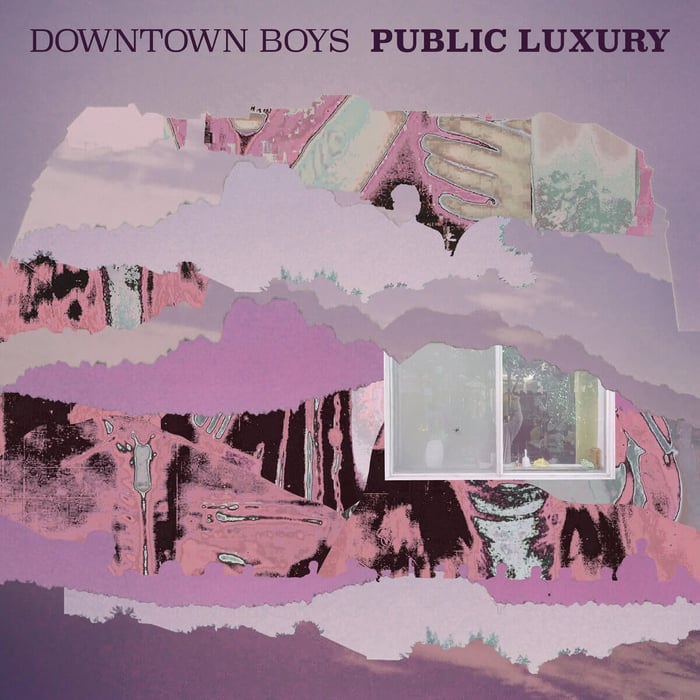
Album Art
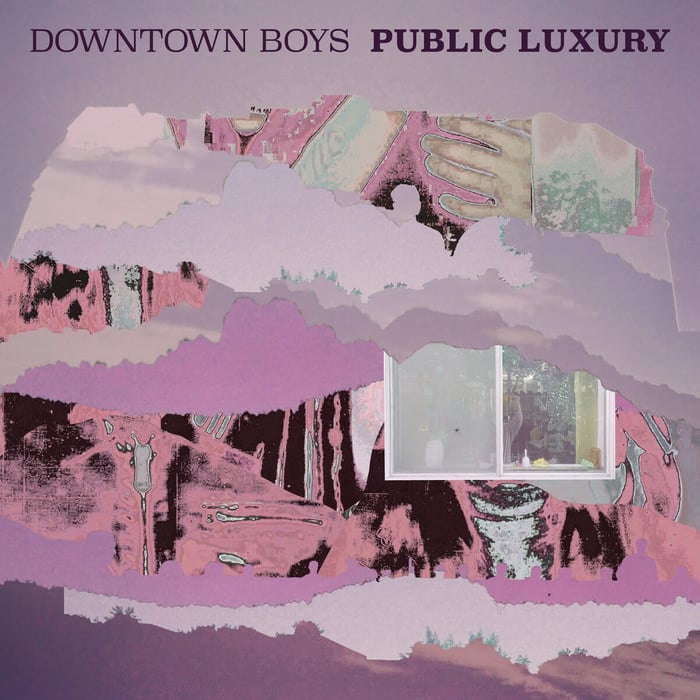
Release Notes (Yes, This Matters)
Public Luxury is out now via Sup Pop Records.
And if you’re the type who still follows bands like a human being, not an algorithm, Downtown Boys are on Facebook: https://www.facebook.com/DowntownBoys/
Where I Landed (Including the Number Nobody Needs, But Everyone Asks For)
If you forced me to slap a rating on it, I’d put Public Luxury at 8/10—not because it’s “near perfect,” but because it’s effective at what it’s clearly trying to do: provoke, rally, and irritate the part of you that wants to tune out.
It doesn’t always give its sharpest ideas enough room to echo, and a couple moments feel intentionally abrasive in a way that borders on self-sabotage. But maybe that’s the point. Downtown Boys aren’t offering a pleasant listening experience. They’re offering a confrontation you can replay.
Conclusion
Public Luxury sounds like Downtown Boys returning to a worse world and refusing to soften their stance to match it. It’s fast, bilingual, industrial-tinged punk that treats identity as force and discomfort as proof-of-work. If it leaves you rattled, that’s not collateral damage—it’s the desired outcome.
People who like punk that actually means something—and doesn’t stop to translate itself for the sake of politeness—will love Public Luxury. People who want “politics-free” music (meaning: politics they already agree with) will hate it, then complain that the band is “too angry,” as if that’s not the entire genre’s job.
FAQ
- Is Public Luxury a good entry point for Downtown Boys?
Yes, if you want them at their most direct and confrontational; no, if you’re allergic to intensity and slogans that don’t wink. - Do I need to understand Spanish to get the album?
Not to feel it. You’ll miss specifics, but the delivery communicates plenty—and that’s part of the point. - What’s the role of industrial punk here?
It adds clang and grit that make the songs feel like they’re happening in a real place, not a “punk” playlist bubble. - Which track hits hardest in the shortest time?
“Enemy Without.” It’s the mid-album jolt that refuses to let you drift. - Does the album offer hope, or just rage?
Mostly rage—focused rage. Any hope is implied in the act of showing up and insisting things can’t stay like this.
If this album’s cover stuck in your head the way the hooks do, you can always grab a favorite album cover poster for your wall at our store: https://www.architeg-prints.com — a harmless way to keep a not-so-harmless record in the room.
 | DISCOUNTGET 30% OFF*Use code on your next order:
|
* This post may contain affiliate links, meaning we earn a commission if you make a purchase through these links, at no additional cost to you.