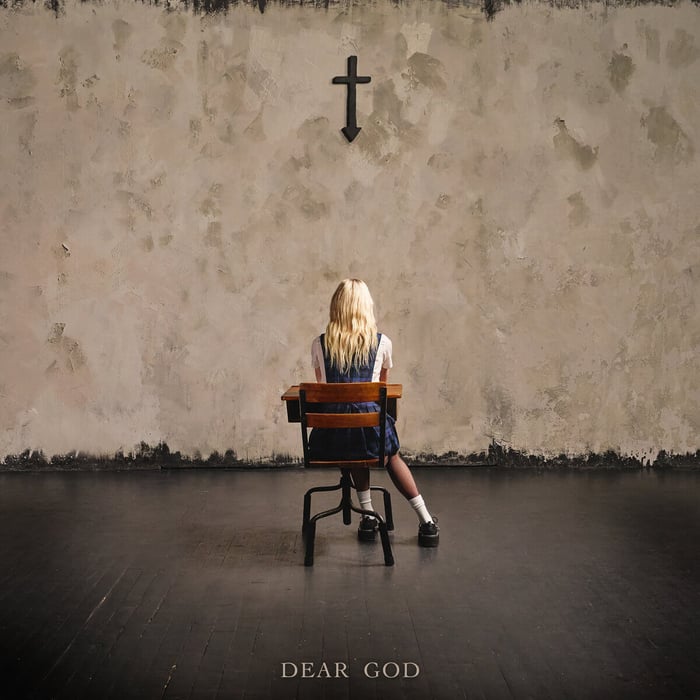
The Pretty Reckless Dear God Album Review: a prayer with a guitar solo


 See more Architeg Prints stories on Google.
ALBUM REVIEW: Dear God – The Pretty Reckless
A powerful, dark, and emotionally raw fifth studio album that balances heavy rock aggression with vulnerability, marking a bold statement from The Pretty Reckless.
An entrance that feels like you walked in mid-confession
The Pretty Reckless didn’t come back quietly. Dear God doesn’t “reintroduce” them so much as barge into the room with a look that says, yeah, we’re still here—deal with it. It’s their fifth album, and it plays like a continuation of everything they’ve been building for years… except it’s shaded darker, moodier, and more willing to sit in discomfort without rushing to the chorus as a safety blanket.
And I’ll be honest: at first I thought the gloom might be a costume. A little too “cinematic,” a little too aware of itself. But the more I sat with it, the more it started to feel like a choice the band made on purpose—less “look how heavy we can be,” more “here’s what it sounds like when you can’t outrun your own brain.”
What this album is actually obsessed with
To get why Dear God works, you have to notice what it keeps circling: mortality, self-discovery, chaos, redemption. Not as tidy themes for a press release—more like recurring intrusive thoughts. This is a 14-track run where Taylor Momsen sounds like she’s testing the edges of control: sometimes commanding, sometimes unraveling, sometimes doing both in the same line.
The record’s big trick is how it balances heavy-rock aggression with emotional panic, and it doesn’t always do it gracefully—which I mean as a compliment. When it stumbles, it sounds human instead of “polished.” When it hits, it feels like the band found a new way to sound like themselves without repeating themselves.
“Life Evermore Pt. 2” opens like a door you weren’t invited to
Right after you press play, “Life Evermore Pt. 2” sets a dramatic tone with a short acoustic, atmospheric intro. It’s not a “song” so much as a deliberate mood placement—like Momsen is letting you step into a narrative already underway. I kept thinking about big rock records that start with a scene-setter rather than a hook, and this one absolutely wants that same kind of curtain-raising energy.
It’s also a risky move, because openers like this can feel like empty staging. Here, it works because the softness isn’t pretending to be profound—it’s just clearing space before the first punch lands.
“For I Am Death” is where the boots hit the floor
And then the softness gets yanked away fast. “For I Am Death” comes in with a sinister, thunderous weight—driven by Ben Phillips and Mark Damon’s guitars and Momsen’s vocal delivery that sounds like it’s meant to be carved into stone.
This is The Pretty Reckless doing what they’re best at: making a rock song feel theatrical without turning it into costume jewelry. The riffs hit with intention, and the structure feels intricate in a way that suggests the band isn’t just chasing loudness—they’re chasing drama. If someone told me this track was designed to be shouted back by a crowd, I’d believe them.
“When I Wake Up” pretends it’s casual—then drops a huge chorus
From there, “When I Wake Up” swings into a classic rock feel that plays like a nod toward big-radio rock swagger and that specific kind of rebellious lift that’s basically engineered for a massive chorus.
Here’s my arguable take: the song almost oversells its “classic” posture at first, like it’s trying on someone else’s leather jacket. But then the chorus hits and it stops mattering, because the band commits fully. The confidence becomes the point.
“Love Me” is the record’s gut-punch in lipstick
Now for the turn: “Love Me” pulls back into something softer but nastier emotionally—bluesy rock with that signature Pretty Reckless swagger, except the swagger is cracked.
“My body is all that I’m worth… why doesn’t anyone love me?”
Momsen sings this line and it lands like someone saying the quiet part out loud in a room full of mirrors. It’s desperate, blunt, and ugly in the most effective way. The chords don’t just support the vocal—they feel like they’re carrying the weight of it, like the whole band is dragging the emotion across the floor.
If there’s a complaint here, it’s a small one: I wanted the track to linger a little longer in its most fragile moment before it moves on. But maybe that impatience is the point—this album doesn’t love staying comfortable.
“Dragonfire” is the moment the album shows its teeth
If you’re waiting for the big “okay, there they are” explosion, “Dragonfire” feels like one of the record’s largest statements. It burns with intensity, showcasing the band’s heavier side, but it doesn’t just slam the gas pedal and call it a day. It builds slowly, then detonates into overlapping rhythms that feel both familiar and slightly new—like the band is deliberately twisting their own sound into a sharper shape.
The overlapping acoustics are the sneaky magic here. Even while it’s heavy, it has movement and layering that screams “this is going to be ridiculous live,” the kind of track that turns a venue into one swaying organism.
The title track “Dear God” is a centerpiece, not a label
From there, the album plants its flag: “Dear God” is a long, dramatic, cinematic six-minute trip that feels like a conversation with something too big to answer back. It mixes anger, fear, and hope in a way that doesn’t feel neat—because prayers usually aren’t neat, are they?
“Dear God can you lift me up, can you take me higher,”
Momsen shouts this line, and the moment doesn’t read like a random big-line bid for attention. It reads like the emotional thesis of the whole record: wanting rescue while not fully believing you deserve it.
Here’s where I hesitated on first listen: six-minute “centerpieces” can drift into self-importance. This one mostly avoids that trap by staying dynamic—switching emotional gears instead of sitting in one dramatic pose. Mostly. There’s a tiny stretch where I caught myself thinking, okay, we get it, but then it swings back into something gripping again.
The interlude returns, and the album flips its perspective
Just when you think you know the album’s pacing, it dives into a second “Life Evermore” interlude, narrated by Momsen, and uses it like a hinge. The record doesn’t just “continue”—it pivots into the second half with “About You.”
This is where the album starts feeling less like a sequence of rock songs and more like a stitched-together storyline. Not in a corny “concept album” way—more like recurring scenes in the same emotional universe.
“About You” sounds like memory with the volume cranked
“About You” leans into reflection and memory, but it doesn’t go quiet. It rides loud guitars, anthemic riffs, and vocals that feel built for a wide-screen moment—like the climactic scene in a teen movie that thinks it’s too cool to admit it’s sentimental.
That bluesy feel keeps it grounded. And if you disagree with me, fine, but I’d argue this track is where the album proves it can be emotional without getting delicate. It’s still rock. It just happens to have feelings.
“Spell On You” goes full mystic—and it fits
Then “Spell On You” drags the lighting lower. It’s darker, almost mystical, and it lands like something The Pretty Reckless were always going to make eventually. Momsen drops the line:
“If I were a witch I would make a brew… put a spell on you,”
and it somehow doesn’t sound goofy. That’s not easy. This kind of lyric can collapse under its own drama if the performance winks at you. Here, it doesn’t wink. It stares.
Arguable claim: this is the most “iconic Pretty Reckless” moment on the back half, the one that would slide into a setlist like it’s been there for years.
The second half chooses energy over elegance
From this point on, Dear God embraces the unpredictability of existence—less brooding posture, more classic-rock momentum. The record feels looser, more energetic, and maybe a little more dangerous because it’s willing to get messy.
That swing is most obvious on:
- “Rollercoaster Of Life” — which leans into the idea that stability is a myth, and the band knows it.
- “Eye Of The Storm” — which stands out as a resilient anthem for the masses, the kind of track that tries to make endurance sound like a chorus you can wear on your sleeve.
If you want my blunt read: “Eye Of The Storm” is built to be screamed by people who are tired of being told to “stay positive.” It doesn’t offer serenity. It offers a spine.
“Devil In Disguise (Michelle’s Song)” adds another bruise to the story
“Devil In Disguise (Michelle’s Song)” deepens the album’s emotional layering and shows off the band’s songwriting muscle. It feels like another chapter in the record’s ongoing conversation about damage and survival—less abstract “darkness,” more specific ache.
I’m not totally sure who “Michelle” is supposed to be in the listening experience, and I don’t think the album insists I should know. The ambiguity works; it lets the track function as both personal and universal, without turning into vague motivational wallpaper.
The closing run trudges through gloom on purpose
The album closes with “Dark Days” and “Life Evermore Pt.1,” and the ending feels like a grungy walk toward an inevitable door. These songs are drenched in gloom, yes, but it’s a chosen gloom—the kind that fits the end of a story that’s been threading through the whole record.
And that final spoken moment from Momsen—saying she doesn’t want to be surprised by her life anymore—lands harder than I expected. It’s not a grand rock-star statement. It’s almost mundane. That’s what makes it sting. After all the dramatic swings, ending on that note feels like admitting the real fantasy isn’t glory. It’s peace.
So what’s the point of “Dear God” as an album?
By the end, Dear God feels like a bold statement that doesn’t abandon the raw blues/rock foundation that built the band’s reputation. It just adds layers—maturity, depth, and a willingness to let the ugly feelings stay ugly.
On second listen, what surprised me is how often the huge riffs aren’t the climax—they’re the delivery system. The real punch is the emotional honesty underneath, the sense that the band is using rock theatrics not to hide, but to say it louder.
And yeah, if you need a neat number: my gut lands around an 8/10 kind of effectiveness—not because it’s flawless, but because it mostly accomplishes what it’s trying to do: make big rock feel like a lived-in crisis instead of a costume party.
Release note (because you’ll ask anyway)
Dear God is out now via Fearless Records.
If you want to keep up with the band, they’re on Facebook: https://www.facebook.com/theprettyreckless/
Conclusion
Dear God album doesn’t beg for your attention—it assumes it. The Pretty Reckless turn mortality and chaos into something you can yell along to, and somehow that contradiction is the whole appeal.
Our verdict: You’ll actually like this if you want big, theatrical rock that still sweats and bleeds a little—especially if you enjoy songs that sound like they’re arguing with the universe. You won’t like this if you want chill background “vibes” or if you panic when a band commits to drama without apologizing for it.
FAQ
- Is Dear God a heavy album or a moody album?
It’s both, and that’s the point—heavy guitars used to carry mood, not replace it. - What track sets the tone fastest?
“For I Am Death” snaps the album from atmospheric intro into full-force confrontation. - Does the title track “Dear God” earn its length?
Mostly, yes. It stays dynamic enough to avoid feeling like six minutes of posing, even if it flirts with that danger once. - What’s the emotional gut-punch song here?
“Love Me.” The lyric about worth and lovability hits like an exposed nerve. - Does the album feel like it has a storyline?
It does, especially with the “Life Evermore” interludes acting like hinges between acts.
If this album’s visuals are living in your head now, you can always grab a favorite album cover poster for your wall at our store: https://www.architeg-prints.com — consider it décor for your next dramatic listen.
 | DISCOUNTGET 30% OFF*Use code on your next order:
|
* This post may contain affiliate links, meaning we earn a commission if you make a purchase through these links, at no additional cost to you.