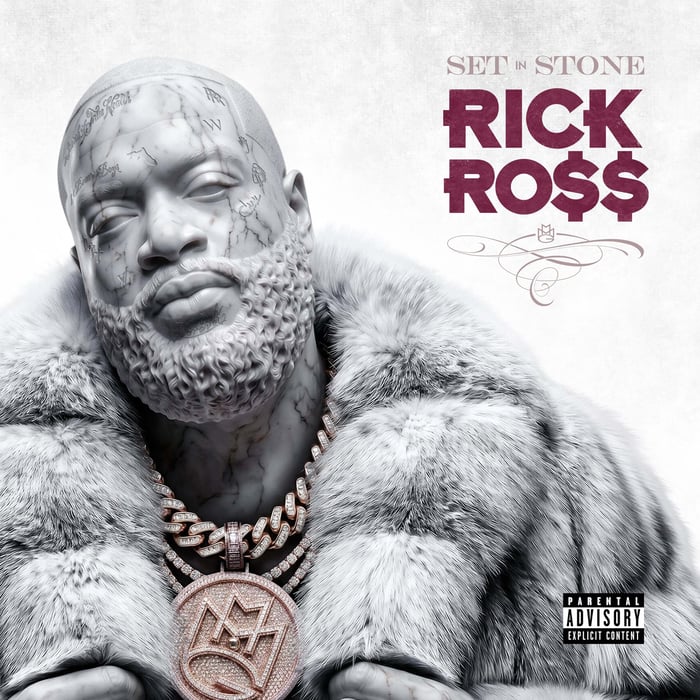
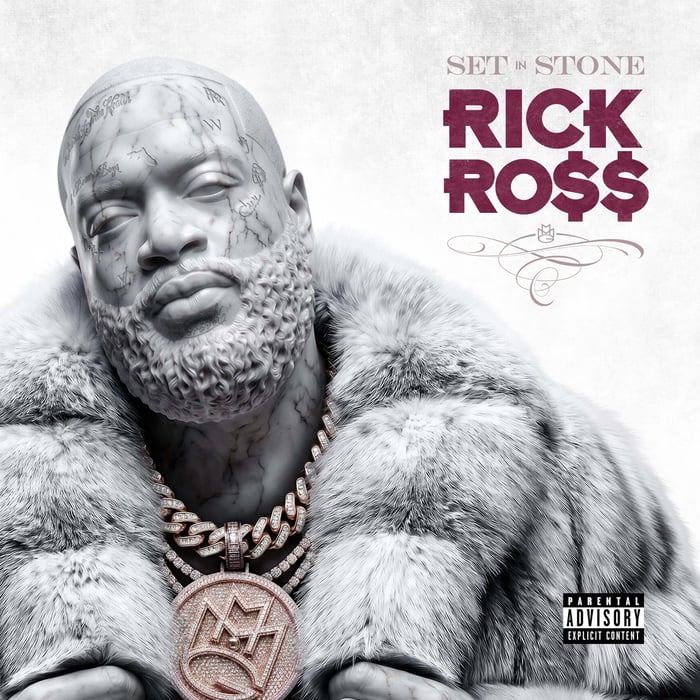
Rick Ross Set In Stone Review: Luxury Rap That Still Smells Like Gunpowder


 See more Architeg Prints stories on Google.
Rick Ross Set In Stone Review: Luxury Rap That Still Smells Like Gunpowder
Rick Ross’ Set In Stone stacks yachts, scars, and Miami mythmaking—then quietly admits the nightmares are real.
A hook before the hook
Rick Ross doesn’t “return” on Set In Stone—he re-enters the room like he owns the building, the block, and the valet stand outside. And the album’s real trick is how it makes absurd wealth sound like a coping mechanism instead of a victory lap.
The album’s main move: keep the costume, dare you to question it
Here’s what hit me first: Set In Stone isn’t trying to convince you Rick Ross is a real-life kingpin. It assumes you already agreed years ago, then uses that assumption like a blank check. The whole project feels built on a strange cultural handshake: once the character got big enough, the details stopped mattering.
I kept thinking about how long he’s been allowed to play this role without anyone really checking the math anymore. Ross is past the age of most of the hustlers he once studied like field research, and the album leans into that seniority. It’s not anxious about credibility; it’s almost bored by the question. That’s the flex now—wealth so established it becomes its own alibi.
And yeah, on first listen I took Set In Stone as pure indulgence. On second listen, it landed differently: the indulgence is the point, but it’s also the camouflage.
“Caviar Bumps”: Ross writes shopping lists like they’re scripture
The clearest example is “Caviar Bumps,” where the luxury isn’t seasoning—it’s the entire meal. Ross paints the fantasy so densely it starts to feel self-operating: six Rolls-Royces, Range Rovers, crocodile Birkins, and a European villa still being paid off (which is the funniest possible detail, honestly, because nothing kills a myth like a payment plan).
But he can’t keep the darkness out of it. In the same breath as the brags, the devil is hanging around the edges—near the pit, safety off, waiting. Ross even gives his enemies a bizarrely intimate instruction:
put on my shoes and strangle me with my laces.That line doesn’t feel like “tough talk”; it feels like someone testing how graphic he can get before the room gets quiet.
He drops a spoken aside crowning himself Miami’s Martin Scorsese—like he’s not just narrating crime, he’s storyboarding it. And then he gets comically specific about yacht-size minimums, as if the tape measure is part of the mythology.
What surprised me is how the track makes the fantasy sound both stable and one spark away from detonating. That contradiction is the album’s pulse.
“Ring Around the Rolls”: the guest says the quiet part out loud
On “Ring Around the Rolls,” YFN Lucci states the transformation in the plainest language possible: shackled in the back of a paddy wagon once, now dropping “three hundred stacks” to sit in the back of one by choice. It’s blunt enough to make the whole album’s premise feel like a sick joke society agreed to laugh at.
Ross responds like he’s writing threats into a time capsule: grudges planted like explosives, rats cleared the moment he spots them. Then he tosses in a line about enemies ending up on the Epstein list—one of those moments where I’m not totally sure if he’s being pointed or just trying to stain his rivals with the darkest brush available. Either way, it’s Ross doing what he always does: mixing real-world disgust into his operatic crime pageant, hoping you won’t notice how personal it sounds.
“Mahogany Caskets”: T.I. shows up to win, Ross orders chaos like room service
“Mahogany Caskets” is the spot where the album stops lounging and starts biting. T.I. comes in with the meanest energy on the record, talking like he married the game with a prenup—committed, but never stupid. He raps like he’s collecting trophies, even joking through the menace.
Ross doesn’t back down. He counters with images of the feds already knowing everything, and a rat flipping so fast it makes the prosecutors jealous. Then he drops an outrageously casual command—shoot up everything, and a named diss tossed off like he’s ordering lunch. The scariest part isn’t the aggression; it’s the ease. The album keeps implying violence is administrative.
If there’s a critique to make here, it’s that Ross sometimes relies on that “boss posture” as a substitute for variation. A couple moments feel like he’s coasting on the sound of his own authority rather than sharpening the writing. The track still lands, but you can hear the formula.
“Maybach Music VII”: Jeezy brings old-money dope talk, Don Toliver sells the hook
When “Maybach Music VII” starts, it doesn’t feel like a sequel—it feels like a ritual. Jeezy walks in sounding like the oldest wealth in the room, reminiscing about the era when they called him Master P and when moving a hundred bricks a week was considered a flop. That’s not just bragging; that’s perspective. He delivers it like a man describing weather patterns.
Then Don Toliver floats in and does what he does: turns the hook into something you can afford at multiple price points. It’s luxury rap’s funniest trick—the hook becomes the installment plan. You might not own the Maybach, but you can rent the chorus for three minutes.
This is where Set In Stone feels most confident: when Ross curates a room full of people who sound like they’ve already won, and the song becomes a conversation between different kinds of victory.
“Minks In Miami”: Max B celebrates, French Montana narrates the coke-wave mythology
“Minks In Miami” is pure celebratory excess. Max B slides in like he clocked out from a hard day’s work and decided the reward is more work—but glamorous. It’s party music with a hustler’s posture.
French Montana, meanwhile, frames his own coke wave like it revived New York City end-to-end, Morocco-to-the-Bronx. It’s a wild claim, the kind you say because nobody in the room wants to be the one to argue. And that’s the vibe Ross keeps creating: a soundtrack where disagreement feels impolite.
Then the dead start showing up—and the album gets honest by accident
Here’s the turn I didn’t expect the first time through: some of the dead show up in between the branzino orders and the Phantom upgrades. And suddenly the album isn’t just flexing—it’s remembering.
On “City Lights,” Ross slips in a question that sounds like it came from a different album: blood stains on his Nike Airs… are those really teardrops from nightmares? That’s not a punchline. That’s guilt dressed as imagery.
The track plays like a night drive, and The-Dream sings about a three-wide Rolls dipped in cocaine—an image so glossy it should be ridiculous, but it lands because Ross keeps that uneasy undertow running beneath it. The city lights don’t comfort him; they expose him.
On “Big Fish,” he throws out Whitney Houston’s overdose like it’s settled fact, then stacks it next to Poconos coke traps. The whiplash is the point: celebrity tragedy and street infrastructure treated as the same ecosystem. He also brings up the years of ankle bracelets he wore alongside Black Bo, the manager he lost in 2017, while both were fighting their cases. That’s one of the few moments on the album that feels like it has a date stamp—memory instead of myth.
Gucci Mane shows up on the same song like a killer whale in a small pond, wiping himself clean with dollars and promising somebody’s mother will miss them. It’s a grotesque boast, but that’s why it works: it’s honest about how numb money can make you.
“Remarkable Hussle”: Nipsey’s voice turns Ross from narrator to participant
“Remarkable Hussle” is the album’s emotional center because it forces Ross to stop narrating and start responding. Nipsey Hussle appears via a recorded phone call talking about faith and the marathon, and Ross answers directly with the kind of truth nobody wants to say out loud:
When you winning like Nipsey, boy, they gonna gun you down.
Leon Thomas carries the hook like a prayer, and Ross frames it as a plea for sinners—starting with himself. When he vows his name is set in stone for life, it doesn’t sound like arrogance. It sounds like a man realizing he’s older now than Nipsey ever got to be, and he doesn’t know what to do with that fact besides enshrine it.
This is where Set In Stone stops being a mansion tour and becomes something closer to a confession—still wrapped in marble, but human underneath.
When the album slacks: “Face Down,” “#23,” and Ross on autopilot
The project isn’t all precision. “Face Down” is basically a tribute to Magic City, and it plays like it: Rich The Kid brags about being rich since SoundCloud, Ross kicks back in sunglasses while the plane sits on the runway. Nothing in the track demands effort, and—worse—nothing lingers after it ends. It’s music that evaporates on contact.
“#23” feels thin too: two quick verses, a Jordan free-throw chorus, and a pledge to “unalive” anyone who undermines him. That content-moderation phrasing in the middle of street menace is unintentionally hilarious, like the song is trying not to get demonetized while threatening your existence.
Then “She’s My Star” flips the energy. Yung Miami works harder than Ross (yes, that’s the reality here) over glossy J.U.S.T.I.C.E. League luxury. She’s throwing bottles, demanding star treatment, making him beg “Caresha, please,” while Ross slides through with… shopping instructions. The contrast is almost too clear: she performs hunger, he performs comfort. And comfort isn’t always interesting.
“Do It One Time”: Miami history as a roll call
“Do It One Time” is one of Ross’ smartest moves because he hands the keys to DJ Nasty, who pays tribute to DJ Uncle Al, Uncle Luke, and Disco Rick while explaining where the Dickies and golds come from. It’s not nostalgia for nostalgia’s sake—it’s grounding. Ross even sneaks in an RIP Uncle Al, and for a moment he raps like a man whose whole identity is actually welded to the city, not just marketed with palm trees.
Young Breed pops up eating fried conch outside the club, and the track starts naming places—Liberty City, Overtown, Brownsville—like a map being unrolled on the hood of a car. It’s one of the only times on the record where the luxury feels earned by specificity instead of repetition.
“Diamonds Never Die”: Kodak and Ball Greezy tighten the orbit
On “Diamonds Never Die,” Kodak Black and Ball Greezy pull the song into a tighter street gravity. Kodak multiplies his snipers like he’s doing math out loud, Greezy nods at the dope man without even needing to explain it, and Ross brings it back to his favorite gesture: seeing a car today and buying it tomorrow.
That’s Ross’ real superpower—making impulsive wealth sound like a natural law. Sometimes I’m not sure if he’s bragging or just reporting his own addiction to acquisition.
“Camel Meat”: Deon Cole makes the fantasy look ridiculous (compliment)
Then comes “Camel Meat,” and it’s the album winking at itself without fully admitting it. Deon Cole shows up flying into Miami with conditions: don’t greet him with nineteen cars (because last time the valet ticket looked like a fleet manifest), and apparently someone left a car at the hotel that nobody returned for yet.
He wants strip club profits passed under the table, and he wants Ross to leave only one woman in the room instead of four—because the last four stole his glasses, his belts, and even the insoles from his shoes. That detail is so specific it feels true, and it also punctures Ross’ endless-victory aura in the best way. The empire looks different when you zoom in on the petty chaos.
Ross’ own monologues get even more grand: eating camel meat in Dubai, scheduling murders for July like it’s a calendar invite, pricing a palace for two wives at fifty million dollars. It’s outrageous. It’s also kind of the thesis: this lifestyle is so inflated it becomes slapstick, but the threats are still real.
And somewhere back in Miami, the image that sticks is quiet and absurd: a Rolls-Royce sitting in valet parking, waiting for a man who has 199 more.
Conclusion: the marble cracks, and that’s the point
Set In Stone works best when the luxury starts to rot at the edges—when nightmares leak into the yacht talk, when loss interrupts the menu, when a joke about valet tickets exposes how cartoonish the whole operation has become. Ross is still selling the myth, but he’s also archiving the cost, whether he admits it or not.
Our verdict: People who like their rap opulent, slow-walking, and morally complicated will eat this up—especially if you enjoy hearing wealth described like an ongoing crime scene cleanup. If you need every track to feel urgent or innovative, you’ll get impatient and start counting how many songs drift on pure “boss aura” fumes.
- What is the core vibe of Set In Stone?
It’s luxury rap that keeps tripping over reminders of death, paranoia, and consequences—like a silk suit with a bullet hole you can’t unsee. - Which tracks feel like the album’s emotional peak?
“Remarkable Hussle” hits hardest because Nipsey’s presence forces Ross into something real instead of just theatrical. - Where does the album feel weakest?
“Face Down” doesn’t stick, and “#23” feels underbuilt—more slogan than song. - Does Rick Ross sound different this time?
He sounds older in the way he chooses details: more memorials, more reflections, fewer explanations. The character is the same; the shadows are darker. - Is Set In Stone more about Miami or about Rick Ross himself?
Both, but when it’s great, Miami isn’t scenery—it’s the engine. “Do It One Time” proves that.
If this album put you in a “staring at cover art while the bass rumbles” mood, you can always shop a favorite album cover poster at our store—tasteful wall proof that you commit to the bit: https://www.architeg-prints.com
 | DISCOUNTGET 30% OFF*Use code on your next order:
|
* This post may contain affiliate links, meaning we earn a commission if you make a purchase through these links, at no additional cost to you.