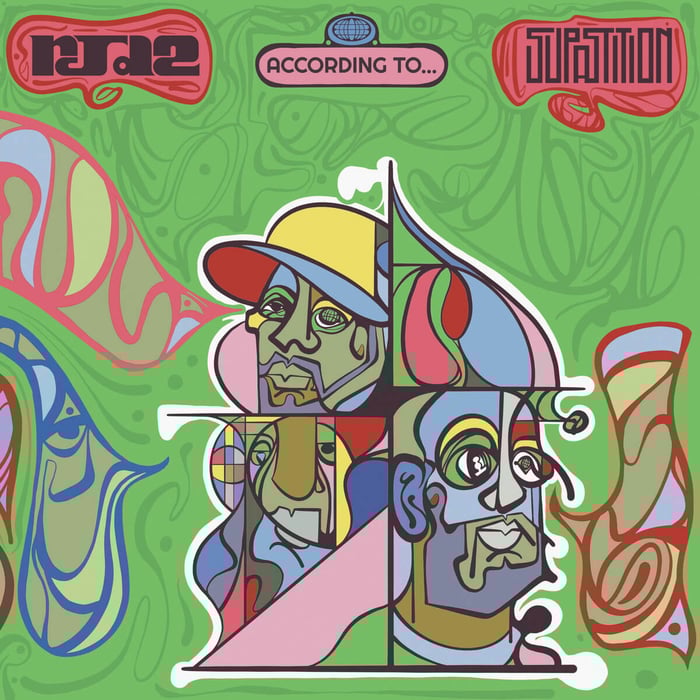
RJD2 & Supastition’s According To Album: Midlife Math, Petty Grace


 See more Architeg Prints stories on Google.
RJD2 & Supastition’s According To Album: Midlife Math, Petty Grace
According To is the rare rap collab that skips the rollout and goes straight for your throat—bills, grief, and petty rage, set to warm RJD2 knocks.
No rollout, no begging—just “here it is”
Some albums arrive like product launches. According To arrives like a text from a friend you haven’t heard from in months: no warm-up, no context, just read this now.
It showed up quietly—self-directed, dropped on a Thursday in February—while a lot of rap is busy auditioning for algorithms. That choice tells you the whole attitude. This isn’t “please notice me.” It’s “I’m done explaining myself.”
Supastition (Kam Moye) has been doing this for a long time—rapping since the late ’90s, coming up out of North Carolina, then Charlotte, then Atlanta, stacking write-ups, features, and international touring… and still somehow ending up as the guy people praise by saying other famous rappers respect him. That’s a backhanded kind of legend.
RJD2 (Ramble Jon Krohn) is the opposite type of known: the producer with a big early landmark (Deadringer), a long resume (Aesop Rock, Mos Def), a TV theme credit (Mad Men), a whole other group identity (Soul Position with Blueprint), eight solo records, and—because apparently making music wasn’t hands-on enough—he’s out here soldering his own hardware at some point. The two of them have brushed past each other for years. RJD2 handled the STS record in 2015. Supastition has worked with basically every producer from that backpack-era universe that actually mattered.
And yeah, hearing According To, it’s hard not to think they should’ve locked in a decade ago. That’s not nostalgia talking—this album sounds like two veterans who finally stopped being polite about what they’re capable of.
This isn’t a legacy lap. It’s a spreadsheet panic attack
Here’s the part a lot of late-career underground rap gets wrong: it treats aging like a medal ceremony. According To mostly refuses that.
Sure, Supastition checks his place in hip-hop here and there—he’s human—but the album’s real obsession is uglier and more specific: the daily grind of being a Black man in his forties with kids, bills, energy vampires masquerading as friends, and the kind of exhaustion you can’t sleep off.
On “Machines Like Us,” he drops the line that basically brands the whole record: “Six figures feels like ditch digging.” That’s the album in one sentence—work that looks good on paper but still feels like you’re getting buried alive. And he doesn’t rap about it like some abstract “capitalism is bad” speech. He raps like someone who has watched a clock crawl, felt their blood pressure climb, and realized their dreams have turned into a tab they keep open but never click.
A reasonable listener could argue this is “too adult” for rap—too cubicle, too practical, too close to the bone. I’d argue that’s exactly why it hits: it’s not trying to be aspirational. It’s trying to be accurate.
“Wins and Losses” turns ambition into hunger (and it’s not pretty)
After the office dread, “Wins and Losses” swings the camera into the kitchen. The goal isn’t a trophy; it’s a form. He wants to turn W’s into a W-2. That’s not even a clever line so much as a tired confession: I’m trying to make stability out of effort, and the conversion rate is insulting.
He runs the comparisons everybody pretends not to make. A cousin sells drugs, does prison time, gets out, starts a business. Supastition? He’s sitting there wanting a scratch-off win. Not because he’s lazy—because he’s tired of effort only buying him the right to keep trying.
Then he drops the line that cracks the song open: “Maybe God don’t want me to be a millionaire.” It’s not a bar meant to trend. It’s a thought people have and feel ashamed of. He talks himself around it—says he doesn’t need rich, just comfortable—then admits he’s been watching how his kids eat lately, and “comfortable” suddenly sounds like denial.
That’s the album’s real move: it doesn’t posture. It calculates out loud. And the numbers don’t add up.
I’ll admit I wasn’t sure on first listen if “Wins and Losses” was going to get preachy, like a motivational poster trying to rap. But it doesn’t. It just sits there with the hunger and lets it look unflattering.
“Bittersweet” is petty in HD, and that’s the point
Most rappers can write a breakup track. Very few will let themselves look small on purpose.
“Bittersweet” is the album’s most purely entertaining stretch because Supastition goes full petty—surgical, specific, almost gleeful. His ex is engaged and he’s furious at both of them. He admits the obvious: he borrowed money, he didn’t have a reliable car, he was a broken man and she wasn’t wrong to say she couldn’t fix him. But the sting is that when he finally got himself together, it was supposed to be them.
So he starts wishing for the wedding day to be cursed—not harm, he even says that himself, just inconvenience-as-revenge. Thunderstorms. Traffic. Objections. A heel breaking. It’s ridiculous. That’s what makes it real.
Then he keeps going—brings in workplace drama, a “toxic” coworker, a random sighting while shopping—and the pettiness gets so detailed it loops back into something human: the humiliation of still caring. When he even calls himself out—“That’s super petty, right?”—it’s not a wink. It’s him noticing himself spiraling and not stopping anyway.
You could say this track undercuts the album’s heavier themes with sitcom energy. I think it does the opposite. It proves he’s not performing “depth.” He’s just reporting his actual emotional weather, including the ugly parts.
“The Mourning After” refuses to make grief convenient
Then the album turns and stops joking.
“The Mourning After” starts with spoken words that sound unsteady—like he’s not sure he should even be saying them. He talks about a rough year, about holding things in, about not really talking to people. The way he frames it is sharp: trauma carried without being taught how to process it—just taught to move on.
He draws a line between depression and anxiety that feels lived-in rather than textbook. Depression as emptiness, flatness, nothing left. Anxiety as everything mattering at once—everyone needing him—stress like slow suffocation. And he mentions the relentless drumbeat of loss: every week, every month, somebody he loves dying. The numbness starts to sound like a survival tactic, not a personality flaw.
The second verse goes for the jugular: his biological father never raised him, then resurfaced two weeks before dying from a massive stroke—unable to speak. Imagine craving a meeting for years and getting a silent stranger on a deathbed. Supastition stares at him and feels nothing, and he doesn’t dress that up as strength. It’s just the blunt reality of abandonment’s timing.
Then comes the extra twist—finding out he has a sister he never knew, and the father had been telling her for years they were keeping in touch. Abandonment plus a lie that benefits the liar.
“I forgive you for your trash ways, I pray that you repented in your last days.”
This is the kind of confession most albums hide in a single verse, then sprint away from. Here, it gets the longest emotional stretch on the record. And it earns it by refusing to make grief “palatable.” If you want your pain neatly packaged with a chorus bow, this track will irritate you on purpose.
I’m not even sure “enjoy” is the right word for hearing it. It’s more like witnessing it.
Bad friends, tired patience: “Reset (Better Friends)”
After that, the record doesn’t pretend everything’s fine. It just changes rooms.
On “Reset (Better Friends),” Supastition inventories his friendships and basically finds most of them defective. He sketches types with quick, weary precision:
- the pessimist who drags the energy out of every room
- the friend constantly trying a new pyramid scheme
- the narcissist
- the conspiracy theorist with the tinfoil worldview
- the picky eater so extreme you can’t even share a meal
What makes it land isn’t the roasting—it’s the tired affection underneath it, like he’s been trying to keep these bonds alive out of habit. He’s not ranting like he’s above them. He’s saying his life changed: marriage changed him, free time evaporated, and his friends’ priorities narrowed into BBL model talk and nonsense.
It’s an arguable take, but I think this song is sneakily one of the album’s boldest: it admits that sometimes “community” is just another bill you can’t afford anymore.
Hip-hop status talk hits different when the rest of your life is this real
Because so much of the album is about work, family, grief, and social exhaustion, the “rap talk” sections don’t feel like chest-thumping. They feel like a man checking where he stands after the dust settles.
On “One Last Time,” he basically says: maybe I’m not your top three, but my kids call me father of the year—and that’s his Lex Luthor flex. It’s a great line because it’s petty in a grown-up way. He’s not begging for a crown. He’s swapping the scoreboard.
“Expiration Date” goes sharper. He brings up producers he used to work with telling him he was a waste of beats, and critics treating him and J-Live like stray cats. J-Live shows up on “Expiration Date” too, and his verse is the rare “older rapper” moment that doesn’t smell like self-congratulation—he’s talking about getting better by finally saying things he didn’t even know back then. Not “I’m still here,” but “I’m actually improved.”
Then “Carte Blanche” flips the mood: Supastition runs into his favorite rapper, calls him a legend, and gets the line back—“You a legend yourself.” From there, he bets on himself.
If you think rap status talk is always corny, fair. But here it feels earned because it’s surrounded by mortgage-level reality. Bragging sounds different when it’s coming from someone who just told you six figures feels like ditch digging.
RJD2’s beats: warm, roomy, and allergic to showing off
RJD2 built every track at Dustbowl Studios in Columbus, and the production choice is consistent: warm, spacious, and rarely in the way.
These beats nod to boom-bap without turning into museum exhibits. They bump, they move, and they leave lanes for Supastition to actually rap like he means it. When the material gets heavy, the instrumentation pulls back—less clutter, more air. When the songs turn aggressive, the drums punch through like they’ve got a point to make.
“Beasts Per Minute” is the clearest “get the blood moving” cut—like catching the peak of a good DJ set when your head starts nodding before you agree to it. Supastition comes off half Human Torch, half tortured soul, hoping his mother gets to see him finally get there.
If there’s a mild gripe I have, it’s this: RJD2’s restraint is mostly a superpower, but every once in a while I wanted one beat to be a little nastier—something less polite, a little more reckless. The pocket is almost always right, but “almost always” is still a real phrase.
Still, the bigger point stands: RJD2 knows how to match a rapper without smothering them, and that skill is the backbone of the album.
“Rent Money” and the sneaker-therapy confession
STS shows up on “Rent Money” and drops a verse that’s funny until it isn’t: blowing bill money on Gucci, admitting he’s clinically diagnosed as an onomaniac, choosing new shoes over fresh food, hitting the drive-thru incognito like shame needs privacy.
Supastition matches that energy and pushes the idea into something bleakly relatable: studies say retail therapy is coping; retro Jordans are the coping mechanism. They might be broke, but they aren’t poor—there’s a difference, and the difference is pride.
Even the little details hit: his mom asking about the sneakers, grocery bills rising faster than sneaker prices. That’s such a specific modern frustration that it stops being “a rap song about shopping” and turns into a song about men trying to self-medicate without admitting they’re self-medicating.
A whole generation of thirty- and forty-something listeners will feel exposed by this track. That’s not accidental—this album keeps choosing the kind of specificity you can’t fake.
“Judge me not, my budget’s shot, this my coping mechanism.”
A closing track that actually closes: “A Beautiful Ending”
“A Beautiful Ending” doesn’t wrap things up with inspirational fog. It says goodbye carefully, like he’s choosing each word so he can live with it later.
Supastition addresses his kids and asks forgiveness—times he pushed too hard, times he came up short. He talks about a friend who died: thirty years of brotherhood gone on a Tuesday morning. He says he can’t name one person more qualified to be an angel, then admits he’s been struggling since the death—caught between motivation and depression, questioning how much time he has left.
The dedication lands like a headstone inscription: Eric Hood and Eric Powell, named, both gone.
And the father thread comes back too—two weeks before death without the ability to speak. The album has already told you some books don’t stay closed, even when you want them to. The “ending” is beautiful because it’s honest about not being finished.
The tracks I kept replaying (whether I wanted to or not)
I’m not pretending every moment is equally sticky, but a few cuts keep pulling me back:
- “Wins and Losses” for the hunger math and the way he admits “comfortable” might not be enough
- “The Mourning After” for refusing to make grief neat or inspirational
- “Bittersweet” for turning pettiness into something weirdly brave
And honestly? On second listen, I realized “Reset (Better Friends)” was doing more than I gave it credit for. I thought it was just a gripe session at first. It’s not. It’s a boundary-setting song in rap clothing, which is a sentence I didn’t expect to write.
Conclusion: According To isn’t trying to be timeless. It’s trying to be true while it’s happening—and that’s why it lingers longer than the big, shiny releases that beg to be remembered.
Our verdict: This album will hit people who’ve ever stared at a paycheck and felt insulted, who’ve grieved without a script, and who still love rap that values sentences over slogans. If you want escapism, club hooks, or “we made it” energy, you’re going to bounce off this like it’s homework—and honestly, it kind of is.
FAQ
- What is the core vibe of According To?
Grown-man rap that talks like a real person, paired with warm, disciplined production that refuses to compete for attention. - Is According To more lyrical or more beat-driven?
It’s lyric-forward, but RJD2’s beats do quiet heavy lifting—especially in how they leave space when the subject matter gets heavy. - Does the album focus on hip-hop legacy talk?
Some, but it’s surrounded by work stress, parenting, grief, and friendship fatigue—so the rap-status bars feel like footnotes, not the point. - What’s the most emotionally intense track?
“The Mourning After,” because it doesn’t compress trauma into a tidy verse and move on. - What’s the most “fun” moment on the record?
“Bittersweet,” where the pettiness gets so specific it turns into accidental therapy.
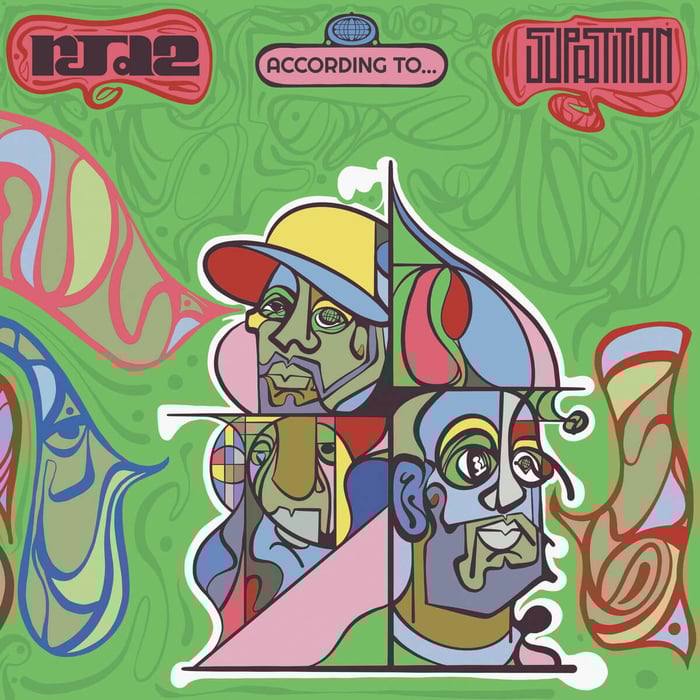
If this album’s cover is now burned into your brain (it happens), you can grab a favorite album cover poster for your wall over at our store: https://www.architeg-prints.com. It’s a quieter way to keep the music around without replaying your existential dread at full volume.
 | DISCOUNTGET 30% OFF*Use code on your next order:
|
* This post may contain affiliate links, meaning we earn a commission if you make a purchase through these links, at no additional cost to you.