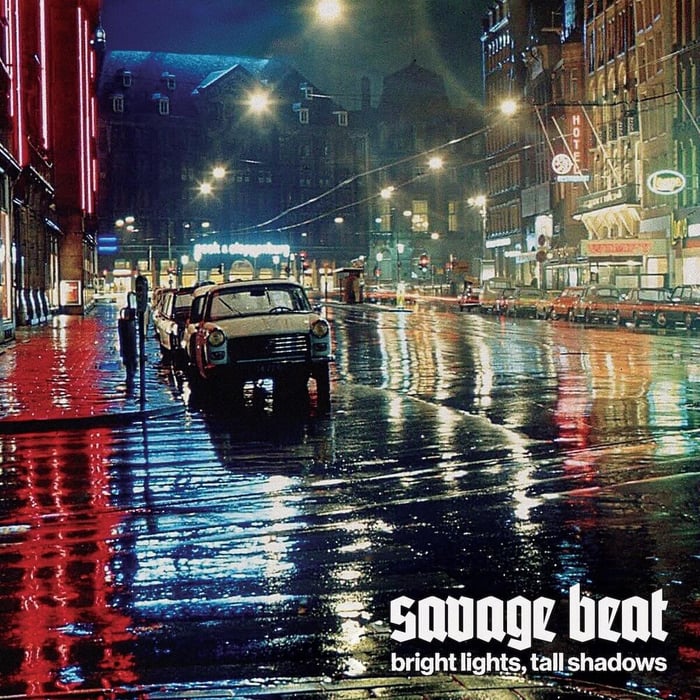
Savage Beat’s Bright Lights, Tall Shadows: Punk for People Who Sweat


 See more Architeg Prints stories on Google.
Savage Beat’s Bright Lights, Tall Shadows: Punk for People Who Sweat
Savage Beat aim for “street boogie” swagger on Bright Lights, Tall Shadows—and it’s basically a dare to stand still for 35 minutes.
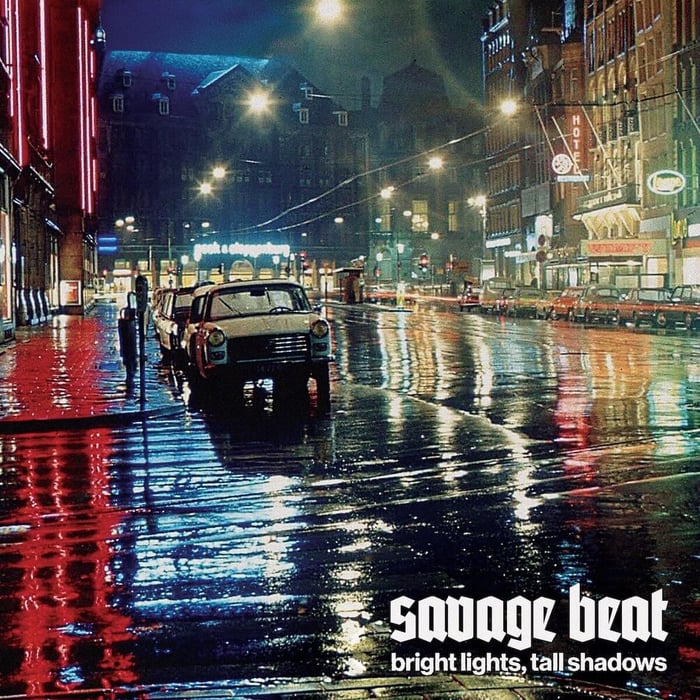
This album isn’t asking politely
Some records invite you in. Bright Lights, Tall Shadows elbows through the door like it already paid for the room. And honestly, Savage Beat sound like a band that doesn’t even recognize the concept of “warming up.”
Right away, the whole thing announces its agenda: riffs first, attitude second, everything else somewhere down the list. That’s the “street boogie” pitch in action—raw, riff-driven, late-’70s punk DNA with high-octane rock ’n’ roll grease under the nails. It’s not subtle, and it’s not supposed to be. The point is momentum.
And yes, I can hear the band’s basic religion: three chords, no apologies. Some listeners will call that limited. I think it’s a choice—Savage Beat keep the musical vocabulary tight so the delivery becomes the story.
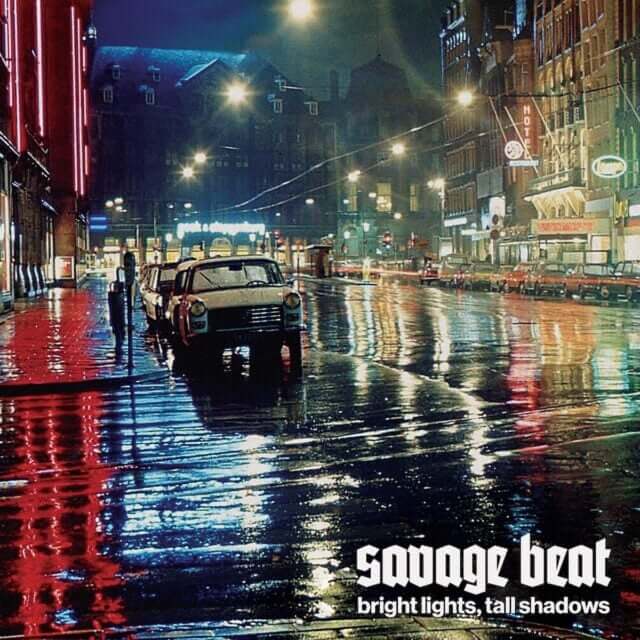
The “street boogie” thing is a branding move—and it works
Here’s what Savage Beat are actually doing with that “street boogie” label: they’re giving themselves permission to be blunt. Not “dumb.” Blunt. There’s a difference.
The riffs come in towering and clean enough to register as anthems, but they’re played with the kind of scrappy shove that keeps them from drifting into polite rock cosplay. This is that late-’70s punk posture—shoulders forward, eyes locked—mixed with rock ’n’ roll that wants the crowd to sing even if the crowd can’t sing.
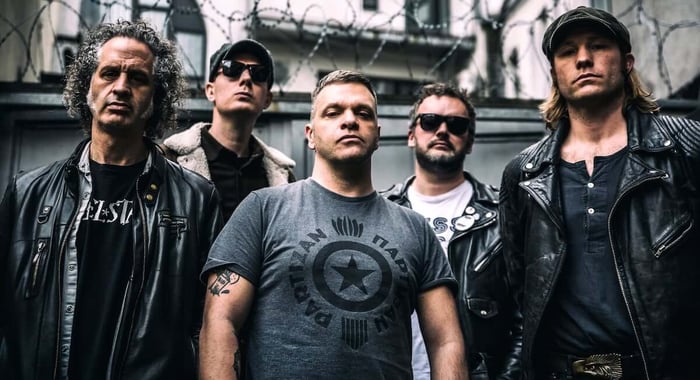
Formed in 2016, they’ve spent years building a reputation in the most old-fashioned way possible: showing up and igniting rooms across the U.S. and Europe, racking up festival appearances, and turning volume into a calling card. The band’s résumé—sharing stages with The Damned, Cock Sparrer, Angelic Upstarts, and The Exploited—doesn’t just read like namedropping. It explains why they sound so comfortable making everything feel like a stage, even when you’re listening alone.
A reasonable person could argue this kind of full-throttle identity is a trap—that it pressures every song to behave like a closer. But I think Savage Beat lean into that pressure on purpose. They’re torchbearers for a style that’s supposed to be a little exhausting.
They double down on the formula because they don’t think it’s a flaw
If you’re waiting for a pivot—some delicate reinvention, some “mature” left turn—you’re going to be waiting a while. Bright Lights, Tall Shadows doubles down: fist-pumping choruses, riff walls, and hooks engineered for sweat-soaked clubs and festival fields.
At first, I took that as stubbornness. On second listen, it felt more like confidence: they’re not repeating themselves because they ran out of ideas; they’re repeating themselves because they want the crowd reaction to be the main instrument. That’s a very specific creative decision. And it’s kind of refreshing in an era where bands over-explain themselves with “concepts.”
Still, I’m not totally sure every track earns the same level of swagger. There are moments where the band’s attitude arrives early and the song has to jog to catch up. That’s the trade: if the engine is always redlining, you don’t always notice the scenery.
The riffs are the sales pitch; the choruses are the contract
The “towering riffs” thing isn’t just volume or distortion—it’s how the guitar parts are written to feel like architecture. Big shapes. Clean lines. You can picture the crowd timing their bodies to them.
Then the choruses land like they’ve been pre-loaded into the audience’s memory. That’s the slickest trick on the record: Savage Beat make “new” choruses feel familiar without sounding like they’re quoting anybody specific. You might call it classicism. You might call it shameless. I call it functional.
And here’s an arguable take: the band’s best moments aren’t when they’re fastest—they’re when they leave just enough space for the chorus to swing. High-octane rock ’n’ roll doesn’t need to sprint 24/7. It needs to strut at least once in a while, just to remind you it has hips.
“Street Boogie Confidential” is a flex because it refuses lyrics
The instrumental highlight, Street Boogie Confidential, tells you a lot about the band’s self-image. It’s defiant in a different way than the shout-along tracks—no lyrical banner, no chant, just the band saying: our hometown spirit is in the playing.
And yes, that reads like a nod to where they come from, a kind of “we’re from here and you’re going to feel it” statement. The title alone makes it sound like an under-the-table dossier—like the groove is classified information. A little ridiculous, but also perfect for a band whose whole vibe is turning street-level attitude into a headline.
If you don’t buy instrumentals in this genre, you’ll probably call it filler. I didn’t. It felt like a palette cleanser that still throws punches—like they’re proving they don’t need words to sound confrontational.
“Cut To The Chase” doesn’t cut corners—it cuts air
Cut To The Chase is ferocious in the way punk ferocity is supposed to be: not complicated, not precious, just direct contact. The track’s real achievement is that it doesn’t merely go fast—it goes forward. There’s a difference. Some bands play quick but feel stuck in place. This one feels like it’s trying to run through a wall because the door is taking too long.
That said, this is where my mild criticism lives: the “winning formula” can be so reliable that it occasionally flattens the surprise. When you’re this committed to big riffs and big choruses, the temptation is to treat verses like necessary paperwork. A couple of moments flirt with that. Not enough to derail the experience—just enough that I caught myself thinking, Okay, show me a new angle.
But maybe the “new angle” isn’t musical. Maybe it’s emotional.
“Unhinged” is the single because it sells the band’s whole argument
Unhinged makes sense as the banner track because it captures the relentless energy Savage Beat have built their ambassador reputation on. It’s not trying to be clever; it’s trying to be undeniable. The hooks hit with that exact “we’ve done this live a thousand times” certainty.
And I think that’s the real selling point: this record is written like it expects an audience to be present. Even when you’re listening on headphones, it’s arranged like a stage set—riffs positioned like lighting cues, choruses arriving like hands in the air.
A listener could disagree and say that’s a limitation—that “tailor-made for clubs and festivals” is just code for “doesn’t reward close listening.” I don’t buy that. Close listening here isn’t about hidden details; it’s about noticing how efficiently the band moves your body around. That’s a craft, even if it’s not fancy.
The lyrics play a trick: celebration first, darkness underneath
Here’s where Bright Lights, Tall Shadows quietly gets smarter than its three-chord evangelism suggests.
Lyrically, it balances celebratory rock ’n’ roll defiance with darker introspection. You can feel tension and uncertainty creeping in—modern-life unease—without the band giving up their punch. It’s like they’re insisting on the party because the party is the only thing keeping the walls from closing in.
At first, I assumed the record would be pure rah-rah, no shadows—just bright lights and louder lights. But the “tall shadows” part starts to make emotional sense as you sit with it. The album doesn’t wallow. It just admits the air isn’t as easy to breathe as it used to be.
And that’s an arguable claim, too: some people will hear the lyrics as standard punk defiance dressed in leather. I hear a band trying to keep the volume up because silence would feel worse.
They’re “battle-scarred,” but the focus is the real upgrade
The band come off battle-scarred in the best way: not worn out, but seasoned. There’s a difference between sounding tired and sounding trained. Savage Beat sound trained—like they’ve done the chaotic thing for long enough that now they can aim it.
This is their most confident and hard-hitting statement because it’s more focused. Not tighter in a sterile way—more like they’ve learned what to cut so the punch lands cleaner. It’s full-throttle rock, but it’s not flailing.
If you’ve got love for Slaughter & The Dogs, The Hellacopters, and Dead Boys, you’ll recognize the lineage: the unapologetic, riff-heavy assault; the emphasis on choruses that feel like chants; the idea that attitude is a musical component, not a costume. But Savage Beat don’t sound like a tribute act. They sound like a band that wants to carry the torch and swing it around like it’s on fire (because it is).
If you need a neat genre box, this album will ignore you
One more thing: the record’s fusion—late-’70s punk bite, rock ’n’ roll speed, and that self-mythologizing “street” stance—doesn’t care if you want it categorized. It wants a reaction.
I kept waiting for a “soft” track, or even a moment where they pretend to be soft. It mostly doesn’t happen. And I’m torn: part of me respects the refusal, part of me wonders if one left-field move would’ve made the heavy moments hit even harder.
But maybe Savage Beat’s whole point is that restraint would be dishonest. This is a band that’s built a reputation by igniting stages. Bright Lights, Tall Shadows sounds like they walked into the studio already mid-set.
Bright Lights, Tall Shadows isn’t trying to convert you with nuance—it’s trying to convert you with impact. Savage Beat commit to their street boogie identity so hard that the record starts to feel less like a collection of songs and more like a single extended shove forward, with just enough darkness in the lyrics to keep the swagger from turning cartoonish.
Our verdict: People who like punk that treats choruses like civic infrastructure will actually love this—especially if you measure a record by how quickly it makes you move. If you hate three-chord devotion, or you need “variety” to be obvious and polite, this album will feel like being yelled at by a leather jacket.
FAQ
- What is the core sound of Savage Beat on Bright Lights, Tall Shadows? Riff-driven “street boogie”: late-’70s punk attitude blended with high-octane rock ’n’ roll and big, chant-ready choruses.
- Is Bright Lights, Tall Shadows more of a club album or a headphone album? It’s built like a live set—headphones work, but it clearly wants sweaty rooms and raised voices.
- Which tracks stand out first? Street Boogie Confidential (instrumental swagger), Cut To The Chase (all-forward ferocity), and Unhinged (single-level urgency).
- Does the album have any darker themes, or is it just party punk? It keeps the defiance and celebration, but there’s visible tension and uncertainty underneath, like the fun is partly a survival tactic.
- Who are reasonable comparison points for this style? If you’re into Slaughter & The Dogs, The Hellacopters, or Dead Boys, this lands in that unapologetic, riff-heavy lane.
If the album art is half the reason you show up, it might be worth putting it on your wall too—shop a favorite album cover poster at our store: https://www.architeg-prints.com.
 | DISCOUNTGET 30% OFF*Use code on your next order:
|
* This post may contain affiliate links, meaning we earn a commission if you make a purchase through these links, at no additional cost to you.