The Story of Michael and Tanya Review: Marriage Therapy, But Loud


 See more Architeg Prints stories on Google.
Album Review: The Story of Michael and Tanya by The War and Treaty
An unfiltered, theatrical exploration of marriage, The Story of Michael and Tanya exposes every raw emotion and contradiction with prayerful honesty and dramatic flair.
A curtain-raiser that basically dares you to look away
This album doesn’t ease in. It kicks the doors open and says: you’re going to listen to Michael and Tanya in public, even when it feels like you shouldn’t.
The setup is theatrical in a very specific way—like a Vegas-style introduction where the point isn’t subtlety, it’s permission. Whoopi Goldberg walks to the mic like an institution, frames the couple as something people “couldn’t figure out,” then tosses their contradictions onto the table like a dealer who’s tired of polite conversation. And the album takes that framing literally: everything after it behaves like testimony performed under stage lights, built for an audience, not a bedroom. A reasonable listener could argue that’s oversharing; I think it’s the whole artistic decision. They want the marriage to sound like a public event.
“Shouldn’t Have” turns confession into a relay race
The first gut-punch is “Shouldn’t Have,” and it’s blunt in the way only a rehearsed apology can be blunt. Michael opens by listing his wrongs—disappearances, late nights, another woman he took to dinner—then lands on the line that matters because it admits a pattern:
“I crossed the line / I did it this time / How could I lose control.”
Then Tanya answers, and the chorus flips pronouns:
“You crossed the line / You did it this time.”Same melody, same bones, totally different weapon. That’s the trick of the track: the chorus becomes a rotating object. One minute it’s confession, the next it’s indictment. Eventually both sides get sung and nobody “wins,” which is exactly the point—this song isn’t trying to solve the problem, it’s trying to prove the problem is real.
I wasn’t sure at first whether that chorus swap would feel gimmicky, like a songwriting exercise. On second listen, it hits harder because the repetition starts to sound like a loop they can’t exit—two people reciting the same pain from different angles. If you think pop structure is automatically shallow, this track quietly argues the opposite.
“Don’t Say Goodbye” is where the polite words crack
After the accusation math of “Shouldn’t Have,” “Don’t Say Goodbye” slides into something more evenly weighted: both of them asking to stay, both of them begging for the same basic thing—keep what we found, don’t lose it, don’t let it die.
And then the song drops one image that makes all the “promise” language feel like it’s standing on a trap door:
“I lay down in your bed, but you won’t wake up in mine.”That line doesn’t need extra decoration. It’s not poetic; it’s physical. It tells you there are separate beds in this story—separate nights, separate consequences—and the song suddenly stops being a general plea and becomes a specific memory you can’t scrub.
A lot of albums about relationships hide behind vibe. This one drags a chair into the center of the room and points at it.
“You Can’t Hurt Me Anymore” recruits heaven like it’s security
“You Can’t Hurt Me Anymore” is Tanya shifting from wounded to armored. She describes letting someone into her heart the way you’d let someone into your kitchen—familiar, allowed, assumed safe. Then the chorus arrives like a door being dead-bolted:
“I took back all my pride / I got Jesus on my side / And an army full of angels at my door.”
That’s not just faith language; it’s a tactical upgrade. The threat is specific enough that she’s stacking the porch with divine bouncers. Babyface and Jeff Gitelman are credited here, and you can hear the craft in how the chorus blooms—built to feel like empowerment without pretending the pain didn’t happen.
An arguable take: this is one of the album’s smartest moves because it refuses the trendy “I’m unbothered” posture. She’s bothered. She’s just done being defenseless.
“Holy Ghost Fire” goes from prayer to threat—and doesn’t blink
Then “Holy Ghost Fire” shows the other side of protection: Michael as avenger. He addresses a woman he says he wants to send to the fire, and the lines are so specific they feel like they’re aimed at a real person, not a concept.
The moment that sticks is when he snarls:
“You don’t need Grandmama’s prayer warriors… You need a killer who’s been there before.”It’s a ridiculous escalation—Grandmama’s prayer warriors catching a stray—but that’s why it works. The song doesn’t want to be tasteful. It wants to be protective in a way that’s half-holy, half-unsafe.
And then there’s the image that seals the track’s intent: the “camera” finding him guarding her with a gun in his hand. Even when the lyrics sound like prayer, the posture is vigilante:
“Strapped up mama tell me when / You ain’t gotta feel sorry for him / He had it coming.”
Here’s my mild criticism: the track flirts with righteous fantasy so hard it nearly forgets how terrifying it would be in real life. I get the emotional logic, but the song sometimes sounds a little too pleased with its own heat. Still—if you’re going to dramatize devotion, at least do it with conviction. This does.
“Lay This Bottle Down” is the album’s quietest self-own
“Lay This Bottle Down” slows everything down, and it’s basically Michael alone with his reflection. Whiskey pours thick and slow into the track, and the writing stays locked on that glass like it’s a confessional booth.
“I see my face in the bottle’s glare / Haunted by memories just hangin’ there.”
That’s the sound of someone watching themselves become the problem again. Then he admits the loop:
“Each pour’s a promise… I tell myself it’s the last time… But the pain it calls, and I give in.”The chorus comes back like a relapse you already scheduled.
What makes the song sting is the bridge refusing a neat redemption arc:
“Faith keeps me going / But life’s still tough.”No victory lap. No tidy bow. Just a man saying belief helps, but it doesn’t magically rewire your habits.
An arguable claim: this track does more for the album’s credibility than any big chorus, because it risks being plain. It doesn’t chase applause; it tells on itself.
“Don’t Give Up Now” chooses directness over drama
After the bottle-song’s inward spiral, “Don’t Give Up Now” opens into a group effort—Tanya and other voices pushing back against someone on the edge. It’s an “us” song, friends forming a net under a person who’s about to fall.
It’s also the album’s most straightforward writing. Instead of building a scene like “Lay This Bottle Down,” it leans on the plea itself. You could argue it’s less interesting because it’s less specific. I get that. But I also think the simplicity is the point: when someone’s barely hanging on, you don’t hand them poetry—you hand them your voice and keep talking.
I kept waiting for a sharper lyrical twist here, and it didn’t come. But the plainness ends up functioning like a hand on your shoulder: not flashy, just steady.
“Litty” reduces fifteen years to a dare—and somehow gets away with it
Then the album does a hard pivot into “Litty,” which takes fifteen years of matrimony and compresses it into one night out like it’s an experiment. Tanya sings,
“You’re my wine / I’m your gin,”measuring love in appetite. Michael answers,
“Drinking you in / Got me intoxicated / I’m loving this hangover.”
It’s playful, but it’s also revealing: when they want to escape the heaviness, they escape into sensation. And the lyric
“Foot on the gas. no brakes / This is what keeps heartaches away”admits the strategy—speed as avoidance, fun as a shield.
My revised first impression happened around here. At first, I thought this stretch might cheapen the album, like switching channels mid-argument. But the more I sat with it, the more it sounded like realism: couples don’t live in one tone. Sometimes you’re in a fight; sometimes you’re dressing up to outrun the fight.
An arguable statement: “Litty” isn’t filler—it’s the coping mechanism set to music.
“High Heels” crowns Tanya and turns Michael into the willing sidekick
“High Heels” keeps that confident energy and sharpens it into a little power ceremony. Tanya walks in, owns the room, and the song treats her outfit and presence like a coronation. Michael responds with loyalty-talk that’s almost comically formal, like he’s giving a speech at his own devotion:
“Baby Mama with no drama that’s how she became my wife / I’ve signed up for her army / I’m a soldier for life.”
You can roll your eyes at the “soldier” metaphor—and honestly, I did for a second—but the track’s real move is letting Tanya’s confidence be the stabilizing force. In an album full of betrayal and recovery, her swagger becomes a form of order.
A reasonable listener might say it’s too cute. I think it’s intentionally a little ridiculous, the way real devotion can sound ridiculous when you say it out loud.
“Darlene and Gene” is a honky-tonk revenge movie in three minutes
The album’s wildest narrative turn is “Darlene and Gene.” The setup is pure soap opera: a woman skips lunch to surprise her husband at the office and catches him in a compromising situation. Instead of processing it, the song launches into a fully in-character honky-tonk revenge fantasy, giddy in its own escalation:
“I’ll gladly go to jail for shooting Darlene and Gene.”
And because the universe has a sense of drama, Darlene isn’t a stranger—she’s the former best friend. They used to dress alike, smell alike, even talk alike. That detail makes the betrayal sting in a specific way: it’s not just infidelity, it’s a social mirroring that got weaponized.
An arguable claim: this is the album’s smartest piece of theater because it doesn’t ask you to approve of the fantasy—it asks you to recognize the emotional temperature that produces it. It’s messy. It’s catchy. It’s also the sound of dignity snapping.
“Reclaim All of Your Time” turns pain into a group project
Finally, “Reclaim All of Your Time” takes the revenge energy and redirects it into community. Tanya links up with Valerie June and Wynonna, and the song becomes advice delivered with backbone, steering a forlorn woman toward freedom.
The line that frames the whole attitude is blunt:
“Send that baby back home to his Mama.”It’s not delicate. It’s not trying to be. The advice keeps escalating until it’s not just emotional support—it’s an exit plan, complete with pawning the wedding ring. The song treats liberation like logistics: get the money, get the distance, stop negotiating with someone who already checked out.
A reasonable listener might find it too on-the-nose. I’d argue that’s precisely why it lands: when you’ve wasted enough time, subtlety starts to sound like complicity.
Conclusion: this album weaponizes honesty—and sometimes that’s the point
The Story of Michael and Tanya isn’t trying to be tasteful background music for your day. It’s trying to make private damage audible, then dare you to call it “too much.” It stages marriage like a public trial, complete with prayers, threats, confessions, and the occasional high-heel victory lap. Not every moment is graceful, and a couple lines tip into melodrama, but the album’s commitment is the real headline: Michael and Tanya don’t hide the mess—they amplify it until it tells the truth.
Our verdict: If you like your relationship songs clean and metaphorical, this will feel like sitting too close at someone else’s dinner table. If you want Michael and Tanya in full color—holy, petty, forgiving, furious—you’ll love how little this album flinches.
FAQ
- What is the core focus of The Story of Michael and Tanya?
It keeps circling one idea: a marriage told out loud, with both confession and accusation getting equal microphone time. - Which track best shows the album’s back-and-forth perspective?
“Shouldn’t Have,” because the chorus literally shifts pronouns and turns the same hook into two opposing truths. - Where does the album get the darkest?
“Holy Ghost Fire,” where protection turns into something closer to revenge, with prayer language rubbing against violence. - Is there a song that feels more intimate than theatrical?
“Lay This Bottle Down” is the most inward moment—one voice, one mirror, no crowd-pleasing resolution. - What’s the most story-driven track?
“Darlene and Gene” plays like a honky-tonk short film: betrayal, betrayal-by-best-friend, and a gleefully extreme fantasy payoff.
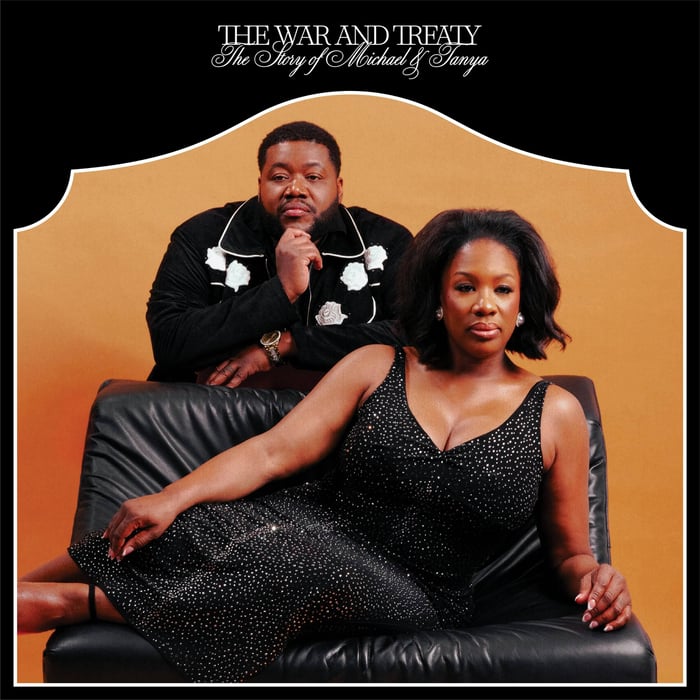
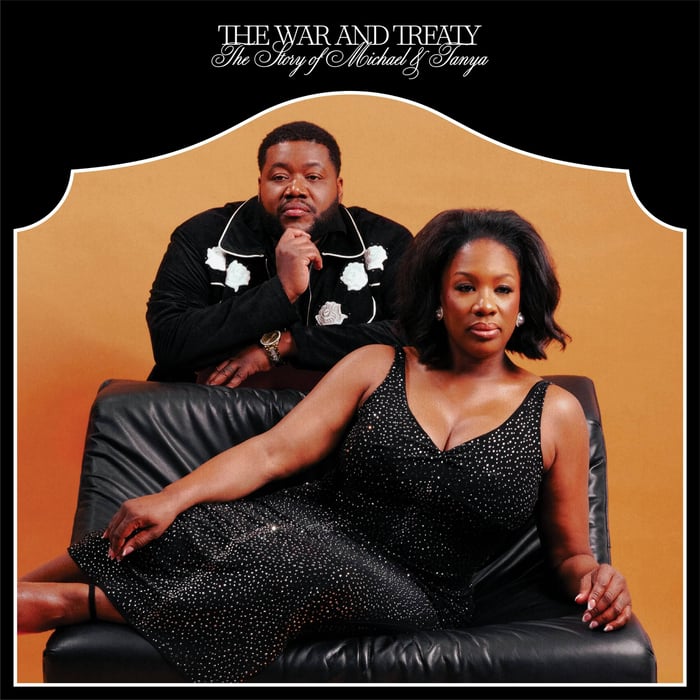
If this album put a specific image in your head—like that cover staring back at you—printing it might be the most normal way to keep the drama at arm’s length. You can shop your favorite album cover poster at our store: https://www.architeg-prints.com
 | DISCOUNTGET 30% OFF*Use code on your next order:
|
* This post may contain affiliate links, meaning we earn a commission if you make a purchase through these links, at no additional cost to you.