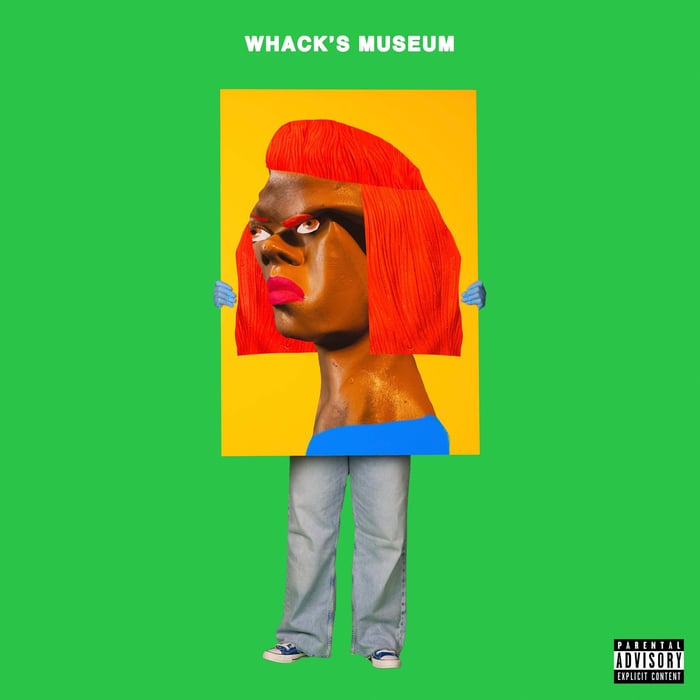
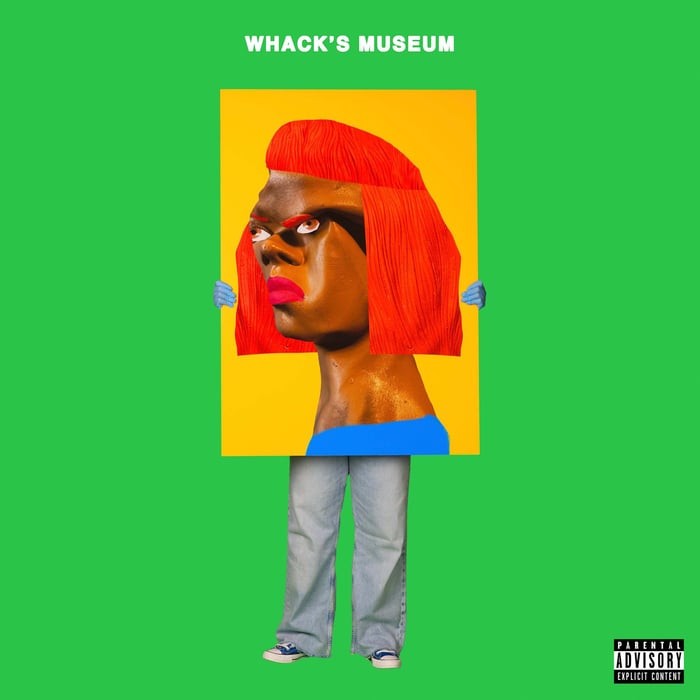
WHACK'S MUSEUM Mixtape Review: Tierra Whack Wants Her Trophy Now


 See more Architeg Prints stories on Google.
WHACK'S MUSEUM Mixtape Review: Tierra Whack Wants Her Trophy Now
WHACK'S MUSEUM is Tierra Whack turning wordplay into a lawsuit for recognition—funny, nasty, and occasionally heavy when the jokes finally crack.
A mixtape that sounds like a receipt being slapped on the table
This isn’t a “back outside” project. It’s Tierra Whack walking into the room with a stack of evidence and saying: you’ve been acting like you don’t see me, so I’m going to make the seeing unavoidable.
The whole WHACK'S MUSEUM experience feels built around one fixation: credit. Not vague “respect,” not “streams,” not even money—credit, while she can still stand there and accept it with her full chest. And she chooses the most Tierra way to prosecute that case: dense bars, constant word surgery, punchlines that double back and bite twice.
I’ve heard plenty of rappers do wordplay like it’s a hobby. Here it’s closer to a compulsion. Sometimes it’s exhilarating. Sometimes—if I’m being honest—it’s a little exhausting, like she’s trying to win every second instead of every song. But that’s also kind of the point: WHACK'S MUSEUM doesn’t want to be “smooth.” It wants to be undeniable.
The real flex is how she builds a verse out of one word
Right away, she’s splitting language in half and eating both sides. Across the mixtape, she keeps pulling the same trick—homophones, spellings, names that turn into insults mid-syllable—except she does it so often it stops feeling like a trick and starts feeling like the architecture.
“WIGGIDY WHACK” is where this urge peaks. Over a gritty Conductor Williams and Agent-X backdrop, she’s so packed with writing that the beat almost feels like it’s just there to keep the lights on. The line that sums up her whole posture is the one that’s basically a spelling-bee diss: “We are not the same, I’m super, you supper/The difference is the spelling.” It’s petty, clean, and weirdly educational.
She goes further, breaking her own name apart to humiliate whoever’s in front of her: “Dog, you wack without H, so that means you a knockoff.” That’s the kind of insult that doesn’t just say “I’m better,” it says “you don’t even qualify as a real version of your category.”
Then she starts firing off quick compressions: doodle/doo-doo, Nia Long/Columbus Short—jokes that land fast enough to hide how sharp the intent is. Because she always circles back to the real meat of it: the grudge she claims others hold because she’s the one carrying the torch. The punchlines are the wrapper. The bitterness is the actual snack.
Arguable take: this track isn’t “brag rap” so much as it’s her trying to prove she should be graded on a different rubric than her peers—like she’s submitting an advanced-placement exam while everyone else is filling in bubbles.
“WAX PAPER” is the one that feels fully finished—and that’s not an accident
“WAX PAPER” stands out immediately, partly because it’s shot in stark black-and-white around Philadelphia with the camera locked on her face—no distractions, no cute world-building, just Whack and the words. And sonically, it’s the only moment that truly feels complete in a traditional sense: the performance, the beat (another Conductor one), the clarity of the hook.
The writing here is hard, stripped, and deliberately public. The chorus becomes a parade of famous names—used as rhymes, used as punchlines, used as a way of turning pop culture into a blunt instrument. She flips “Ellen DeGeneres” into a neat insult, then swings into “Mike Epps” because she’s “all about the Benjamin’s.” It’s clever, sure, but the cleverness is almost a decoy for what she’s actually saying underneath.
Because she keeps circling the same claim: she doesn’t need cash, she needs her due. She straight-up insists she just wants her credit. And when she complains that people act like her name is hard to pronounce, she spells it out through ad-libs—“It’s Whack!”—like she’s tired of being politely ignored.
I thought this song was going to be just a clean “single moment,” but on second listen it plays more like a confrontation staged as a performance: she’s daring the listener to keep pretending they don’t get it.
Arguable take: “WAX PAPER” works because it stops being “quirky Tierra” and turns into “angry Tierra,” and that’s the version that actually sticks.
The silence around her name becomes the enemy—and she treats it like a conspiracy
After “WAX PAPER,” the mixtape starts sounding like it’s shadowboxing with a crowd that refuses to clap. The next run of tracks keeps returning to the same idea: people know, but they won’t say it out loud.
On “EARWAX,” she makes that refusal part of the hook—“You know the truth but you can’t even say it”—and then widens it into a room-wide indictment: “They know I’m hot, but they don’t even say it.” The melody smooths the edges, but the message is basically: you’re withholding praise on purpose.
I’m not totally sure whether that’s paranoia or sharp intuition (probably both), but it’s consistent. She seems convinced the quiet is strategic, like the only unforgivable crime is winning while being visibly herself.
Then “TOTEM” comes in trap-banging and names the accusation she expects to get slapped with when success shows up: “When you winnin’ and you blackin’, they gon’ say, ‘Illuminati.’” And the way she throws it off isn’t defensive—it’s almost smug, like the accusation itself proves she’s climbed high enough to scare people.
She even spells out her strategy in lines that sound like ambition with teeth: she’d win more if she put less on, but she’s a “stepper,” so she’ll “take the stairs.” That’s a great line because it’s not motivational-poster nonsense. It’s admitting she’s choosing the hard route partly out of pride.
Then she escalates the metaphor into a whole legal identity: “My new name is Felony, I’m not a misdemeanor.” It’s dramatic, sure, but that drama is the fuel here. Every slight becomes another piece of evidence that she should be bigger.
Arguable take: these songs don’t just want recognition—they want an apology for the time lost without it.
Philly isn’t just home base—it’s the trophy case she’s dragging into the spotlight
When she talks about being “bigger,” she doesn’t mean abstract superstardom. She means Philly and the pantheon at once, like she wants the city to be both her origin story and her permanent pedestal.
On “BRAZILIAN WAX,” she places herself “top five next to Meek and Beanie Sigel” without blinking. She calls herself “hip-hop’s daughter,” which is such a loaded claim it almost dares you to argue with it. And while she’s raising herself into the lineage, she’s also swatting away the online peanut gallery with a perfect little sneer: “These internet niggas just type in Helvetica.” That’s not just an insult—it’s her saying their whole world is fonts and comment sections, while hers is legacy.
She keeps it local and competitive on “GODDA,” calling herself Philly-based and claiming more swagger than a neighbor, then goes even bigger on “QUEENS CROWN” with “Philly known as the real estate.” It’s the kind of line that tries to rename the entire city in one breath—like if you say it confidently enough, it becomes true.
From there, the boasts aim for the sky: she talks like she’s already planning the memorial plaque, promising she’ll “die a legend,” swearing like cuss words. On “48 Laws,” the vibe is basically: the playbook is open, and she’s reading it out loud while everyone else pretends not to.
It’s almost funny how early she starts engraving her own myth. But it’s also kind of the tragedy: she’s doing the coronation herself because she doesn’t trust anyone else to do it in time.
Arguable take: the mixtape’s bravado isn’t confidence—it’s insurance.
“SIREN” jokes like a shield, then slips and shows the bruise
“SIREN” is the funniest track on the tape, and it’s also the one where the humor starts sounding like a coping mechanism instead of a personality trait.
The verses cram in punchlines about food, cartoons, celebrities—rapid-fire and bright on the surface. She stacks up tidy little refrains that sound like self-help slogans if you don’t listen closely: “I don’t chase, I attract…I don’t fall, I fall back.” The cadence makes it feel easy, like she’s shrugging through the chaos.
Then the chorus drops the act.
She talks about seeing her mother cry, frames her father like a magician, and admits she’s been trying to feel better by focusing on nutrition—then hits the line that sticks because it’s so casually brutal: her tears taste like cold-pressed juice. It’s a hilarious image and a miserable one at the same time, like she’s documenting grief through a wellness routine because the alternative is too direct.
She ends by turning herself into a warning: “I can be your siren.” Not a rescue. Not a savior. A siren—something beautiful that lures you, something dangerous that signals you’re already too close.
I kept waiting for the song to turn into a full confession, but it refuses. It stays half-joke, half-flare gun. That restraint is the whole mood of WHACK'S MUSEUM: she’ll tell you she’s hurting, but only if she can rhyme while doing it.
Arguable take: “SIREN” is the moment the mixtape admits the bragging is partially a mask.
When the grief shows up, she treats it like an aside—and that’s the scariest part
Later, the tape starts dropping heavy lines in the middle of all the GOAT talk, like she can’t afford to stop the show but the reality keeps walking onstage anyway.
On “WHACK JOB,” she’s in the middle of proclaiming her greatness when she says, plain as day, that she’s lost three relatives and misses them. And then she keeps moving. No pause, no dramatic swell—just a brutal admission stuffed between flexes. She follows it with the idea that once you’re famous, everything becomes sacrificial. That’s not even poetic, it’s just bleak.
Then “CANDLE WAX” hits a lower point. The chorus carries a fatalism that doesn’t sound like a metaphor anymore: feeling too high, driving herself, suggesting she might kill herself but she’ll “die” herself, admitting she’s too lazy to get the help she needs. She says it deadpan, like another punchline, which honestly makes it hit worse. There’s no comforting hand on the shoulder from the production either—just a chopped “Sometimes…” sample (Tyler, the Creator) filtered through Pop Wansel, Robonbass, and flippa like the track is refusing to soften the blow.
Here’s where my first impression changed. At first I took the tape’s constant cleverness as pure showmanship—Tierra doing Tierra. But by this stretch, it starts sounding like the cleverness is also a way to avoid sitting still with the pain. The speed becomes a defense.
Mild criticism, though: the project sometimes drops these heavy admissions and then moves on so fast it can feel emotionally abrupt, like a door slamming before you can process what you just heard. Maybe that’s intentional. Maybe it’s self-protection. Either way, it’s jarring.
Arguable take: “CANDLE WAX” is one of the most important moments here precisely because it refuses to be “beautiful” about its darkness.
“FLOWERS” isn’t a cute concept—it’s a deadline
By the time “FLOWERS” arrives, the theme isn’t subtle anymore. She asks for flowers so she can be seen while she’s alive—now, not posthumously when it’s safe and polite and useless.
And then she drops the darkest line on the project: finding her grandmother dead and realizing it because of how stiff she felt. It’s not dressed up. It’s not metaphor. It’s a blunt memory, and it turns the whole “give me my flowers” idea into something urgent and ugly.
Credit becomes more than ego here. It becomes a protest against how people wait to celebrate you until you’re gone. And she’s saying she doesn’t want that. She wants the acknowledgment with breath still in her body.
Arguable take: “FLOWERS” reframes the whole mixtape—suddenly the wordplay isn’t just showing off, it’s her trying to carve her name into the present tense.
She finally points at the real target: not rappers—writers
Near the end, “TWO FIFTEEN” gives the one moment of tenderness she barely allows herself: a line about her mother raising a queen, and how without her she’d be who-knows-where. It’s small, but it lands because the rest of the tape is mostly armor.
And then she clarifies something that snaps a lot of the earlier anger into focus: she isn’t dissing the rappers—she’s dissing the writers. The people who get to “assign” credit in public language. The people who decide whose work becomes officially remembered.
That’s a bold distinction, and a slightly risky one too, because it reveals how much she cares about documentation—about being recorded correctly. She’s not just trying to win. She’s trying to be archived.
By the time the tape ends, it feels like her argument is already “in print” in her head. She’s done pleading. She’s writing the plaque herself.
Arguable take: the mixtape’s real villain isn’t the industry machine—it’s the story people tell about who matters.
Conclusion
WHACK'S MUSEUM plays like Tierra Whack refusing to wait her turn in a line she doesn’t respect. The bars are the evidence, the humor is the camouflage, and the grief leaks through at the worst (and most human) moments—when she can’t punchline her way out fast enough.
Our verdict: This works for listeners who like rap as craft and confrontation—people who rewind lines, who enjoy watching an artist argue their case with syllables and spite. If you want tidy emotional arcs or a project that holds your hand through its darker corners, you’ll probably bounce off this. And if you think giving someone credit “eventually” counts, Tierra basically made this tape to roll her eyes at you.
FAQ
- Is WHACK'S MUSEUM really about WHACK'S MUSEUM as a “concept,” or is that just a title?
It feels less like a museum tour and more like her building the exhibit labels herself—proof, artifacts, receipts, and a demand to be cataloged correctly. - Which track shows her purest rapping on this tape?
“WIGGIDY WHACK” is the densest writing—she barely lets a bar breathe without splitting a word open. - What’s the most “finished” or focused song?
“WAX PAPER.” The performance and presentation feel locked in, and the message lands without extra decoration. - Where does the mixtape get unexpectedly heavy?
“CANDLE WAX” and “FLOWERS” hit with blunt grief and fatalism that the earlier punchlines can’t fully hide. - Who is she mad at, exactly?
By “TWO FIFTEEN,” she draws a line: it’s not the rappers she’s aiming at—it’s the writers and the whole credit-assignment ecosystem.
If you want to keep this vibe on your wall, shop your favorite album cover poster at our store—tastefully loud, like Tierra’s bars: https://www.architeg-prints.com
 | DISCOUNTGET 30% OFF*Use code on your next order:
|
* This post may contain affiliate links, meaning we earn a commission if you make a purchase through these links, at no additional cost to you.