Xandria Eclipse Review: Symphonic Metal Swagger, With One 80s Detour


 See more Architeg Prints stories on Google.
ALBUM REVIEW: Eclipse – Xandria
A bold and cinematic symphonic metal album that combines dramatic orchestration with defiant lyrics, delivering memorable hooks and a confident swagger.
A record that starts by picking a fight
Some albums “set a mood.” Xandria Eclipse sets its jaw.
Right away, this thing feels like a band that’s done playing nice. The songs don’t just gesture at “dark times”—they shove your face toward them and then try to yank you back out with a chorus. And the wild part is: it mostly works. Xandria Eclipse sounds like it was designed to be performed with your chest out, not your head down.
The track “Colours” pretty much spells the mission statement in one line—
“Empathy was called a crime, but not in our name,”—and from there the album keeps throwing full-bodied rebuttals at the state of everything. No coy metaphors. No polite distance. It’s direct enough that if you came here for escapism, you might want to keep your receipt.
They found the secret ingredient: a vocalist who fits the frame
Here’s the hinge: once Ambre Vourvahis enters the picture (after 2023’s The Wonders Still Awaiting and all the road-testing that followed), Xandria stop sounding like they’re auditioning for their own legacy. They sound planted.
I thought at first this would be another “new lineup, same template” scenario—competent, glossy, vaguely interchangeable. But a few songs in, I had to eat that assumption. There’s a different posture here. The band sounds like they believe their own drama again, which is basically the whole job in symphonic metal.
And yes, I can hear the extra muscle: Hollywood composers were brought in to help realize the big-screen ambition. That choice tells you what kind of record this is. It’s not trying to be “raw” or “intimate.” It wants to look you in the eye while a cathedral collapses in slow motion behind it.
The title track “Eclipse” is absurd—in the correct way
This is where the album makes its play for the top shelf. “Eclipse” (the title track) is pure symphonic metal wish-fulfillment: bigger every minute, more dramatic every chorus, stacked with the kind of cinematic escalation that dares you to roll your eyes.
And sure, a reasonable listener could argue it’s too expensive-sounding—like it’s trying to buy emotion with orchestration. But I don’t think that’s the mistake. I think the point is the exaggeration. When this track rocks, it rocks. When it decides to soar, it practically leaves the atmosphere.
Lyrically, it even takes a swipe at “red caps,” which is the kind of blunt reference that can age badly—yet the performance is so committed it doesn’t feel like a cheap topical jab. It feels like the band saying, “We’re not neutral, and we’re not pretending.”
“Colours” knows it’s cheesy, and weaponizes it
Coming off the title track, “Colours” pulls back—less bombast, more rally-cry structure. And yeah, on paper it’s the kind of song that lives on the cheesier end of symphonic metal: a big chorus, uplift messaging, a posture of communal endurance.
But the hook is annoyingly sticky. Good luck not hearing it again later while doing something boring like loading the dishwasher.
The trick is that Eclipse surrounds it with other songs that also want a better tomorrow, so “Colours” doesn’t stick out as naive. It reads like a deliberate tonal choice: a bright flare fired into a sky the rest of the record describes as getting uglier.
And behind it all, you can feel the songwriter impulse—Marco Heubaum sounds like he’s been watching society take a hard turn and finally decided to stop journaling about it and start yelling in melodies. Whether it’s bile, cynicism, or optimism, the album keeps returning to the same stance: call out the nonsense, then insist on something better anyway.
Video: “Northstar” (and why the softer moments matter)
This is the bridge into the album’s more tuneful, folk-leaning comfort zone—without abandoning the big-stage shine.
“The Shannon’s Home” and “Northstar” use nostalgia like a cheat code
Here’s where Eclipse starts playing with comfort. “The Shannon’s Home” carries that tuneful, folkier swing that people love to pin to the Anette Olzon era of Nightwish—and honestly, I get the comparison. It’s not an insult; it’s a map coordinate. If you like that melodic warmth where the chorus feels like it’s always existed, this track hands it to you.
And “Northstar”—especially the refrains—has this lullaby quality when you imagine it rearranged or stripped back. That’s the sneaky strength of these songs: the melodies don’t depend on the fireworks. They’d still stand if you took the cape away.
A cynical take is that this is nostalgia-bait, engineered to feel “classic.” But I don’t hear it as pandering. I hear it as the band leaning into what they do best: comfort that doesn’t sound complacent.
“The Grand Delusion” moves fast because it doesn’t trust you
“The Grand Delusion” hits with immediacy, and it does it with a hook that feels weirdly familiar—like you’re stepping into a room mid-chant. The swashbuckling strings push it forward, and there’s an urgency to the rhythm that edges into Sabaton territory: that marching, “get to the point” momentum.
If you told me this song was built to jolt the album’s pacing back into motion, I’d believe you. It doesn’t linger. It doesn’t brood. It grabs your sleeve and drags you to the next scene.
And that’s the quiet flex of Eclipse so far: it keeps switching costumes—epic, folk-tinged, rally-cry, urgent hook machine—without collapsing into a playlist vibe.
The variety is the album’s gamble—and mostly its win
By the time you’re deep into the tracklist, the record has already tried on a lot:
- ballads that soften the edges without turning to mush
- epics that aim for “final boss” energy
- ragers built on speed and sharp hooks
- mid-tempo anthems designed to stick
That kind of variety can easily turn an album into a scattered mood board. But Eclipse mostly holds together because the band’s confidence is consistent even when the tones aren’t. The performances keep telling you, “Yes, this belongs here.”
Almost.
“Wave Of Tanis” is the one moment I don’t fully buy
The only real tonal misstep is “Wave Of Tanis.” It’s so aggressively 80s it practically demands shoulder pads and a fog machine that smells like hairspray.
To be clear: it’s not bad. I can imagine someone loving it precisely because it’s that committed. But it’s the one time the album’s unity gets wobbly. Everything else feels cut from the same dramatic cloth; “Wave Of Tanis” feels like it wandered in from a different party and nobody had the heart to tell it.
And I’ll admit some uncertainty here: maybe that’s the point—maybe it’s meant to be a palette cleanser, a left turn to keep the album from drowning in its own grandeur. If so, I still think it’s a slightly clunky solution to a problem the record didn’t really have.
“Masquerade” and the album’s distrust of public performance
Moving past that detour, the album’s cynicism sharpens again. “Masquerade” carries a knowing edge—less “we can fix it” and more “we all see what’s happening, right?” It’s the sound of someone tired of performative goodness, tired of costumes, tired of being lied to with a smile.
The arguable claim: this album doesn’t actually want to “escape” reality—it wants to make reality look pathetic and then replace it with something bolder. That’s why the choruses are so rousing. They’re not just hooks; they’re counter-programming.
“The Poetry Of The Real World” is the album’s emotional thesis
Then comes the stunner: “The Poetry Of The Real World.” This is where the album turns life-affirming without turning soft. It frames existence as this string of lucky coincidences that got us here at all—basically the opposite of doomscroll music.
And in a cultural moment where plenty of loud public figures profit off anger and division, this song feels like a stubborn refusal to participate. It’s not pretending everything is fine. It’s insisting life still matters anyway.
A listener could argue it’s sentimental. I’d argue it earns the sentiment by placing it inside a record that’s already been willing to sneer, bite, and shout. The warmth doesn’t feel unearned—it feels fought for.
“Lore” closes like a cinematic curtain call
The eight-minute closer “Lore” pulls from Star Wars—rebels, truth, the whole “fight for the good of humanity” framework. And before you groan at the idea of space-opera inspiration in symphonic metal… come on. This genre basically lives in that neighborhood. The only question is whether the band can sell it.
Here, they do. “Lore” lands as a roaring, triumphant closer that doesn’t just end the album—it finishes it. It’s the kind of track that makes you want to restart the record just to feel the opening punch again.
I kept waiting for it to overstay its welcome, because eight-minute closers often confuse “long” with “important.” But this one held my attention better than I expected. The pacing keeps it from turning into a victory-lap slog.
Artwork (and the album’s promise in one image)
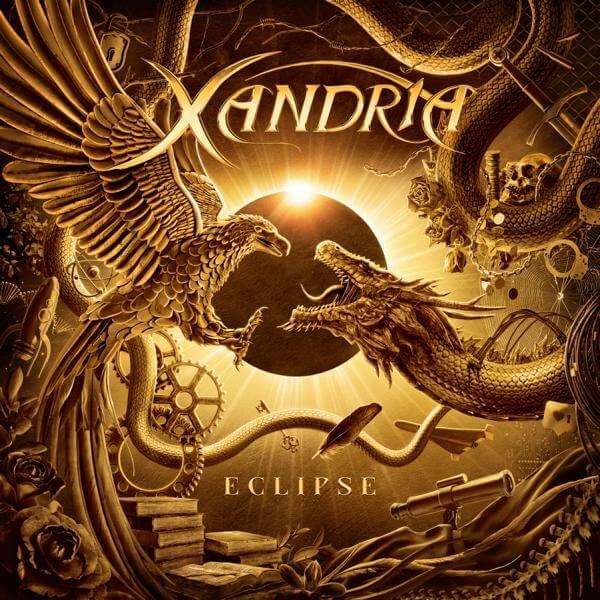
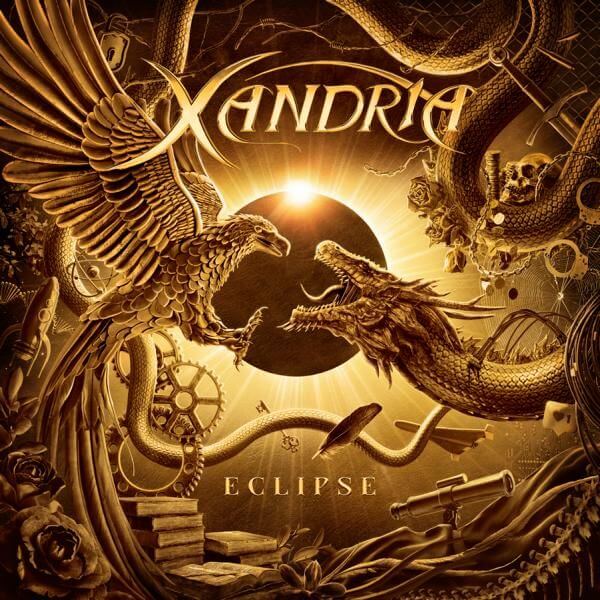
The cover looks exactly like the record sounds: polished, dramatic, and not remotely interested in subtlety.
Release note, and the number I can’t ignore
Eclipse is out now via Napalm Records.
And since the original listening experience basically dares you to quantify it: I’d place it around an 8/10 in terms of how effectively it pulls off what it’s clearly trying to do—big hooks, big statements, big emotions, executed with surprising steadiness for a band with a long history of shifting shapes.
Not perfect. Not delicate. But effective.
Conclusion: Eclipse isn’t subtle—because it doesn’t want to be
Xandria Eclipse plays like a band deciding that if the world is going to be absurd and hostile, they might as well answer with maximal melody and cinematic force. The album’s best moments don’t just “sound nice”—they feel like someone trying to drag hope back into the room by the collar, even if it wrinkles the shirt. The one 80s-flavored stumble doesn’t sink the ship, but it does remind you how hard it is to keep this much variety under one roof.
Our verdict: People who like symphonic metal when it’s huge, tuneful, and unashamed of drama will eat this up—especially if you want choruses that cling to your brain. If you hate big statements, cinematic arrangements, or anything that smells like hope in a leather jacket, you’ll find this album exhausting in about ten minutes.
FAQ
- What is the core vibe of Xandria Eclipse?
It’s symphonic metal with a defiant, world-facing attitude—big cinematic swings, big hooks, and lyrics that don’t hide behind vagueness. - Which songs show the band’s most melodic side?
“The Shannon’s Home” and “Northstar” lean into tuneful, folk-tinged comfort without losing the album’s grand scale. - Is there a weak point on the album?
“Wave Of Tanis” is the one track that feels tonally off—so 80s it briefly breaks the album’s spell, even though it’s not outright bad. - Does Eclipse feel cohesive despite the variety?
Mostly yes. There are ballads, epics, and faster cuts, but the confidence and production ambition keep it feeling like one statement. - Who is Eclipse most likely to satisfy?
Listeners who want symphonic metal that’s catchy and unapologetically cinematic—less “background atmosphere,” more “main character energy.”
If you’re the type who misses when album art looked like a portal you could fall into, it’s worth grabbing a favorite album cover poster to match the mood—have a look at https://www.architeg-prints.com/ when you’re done listening.
 | DISCOUNTGET 30% OFF*Use code on your next order:
|
* This post may contain affiliate links, meaning we earn a commission if you make a purchase through these links, at no additional cost to you.