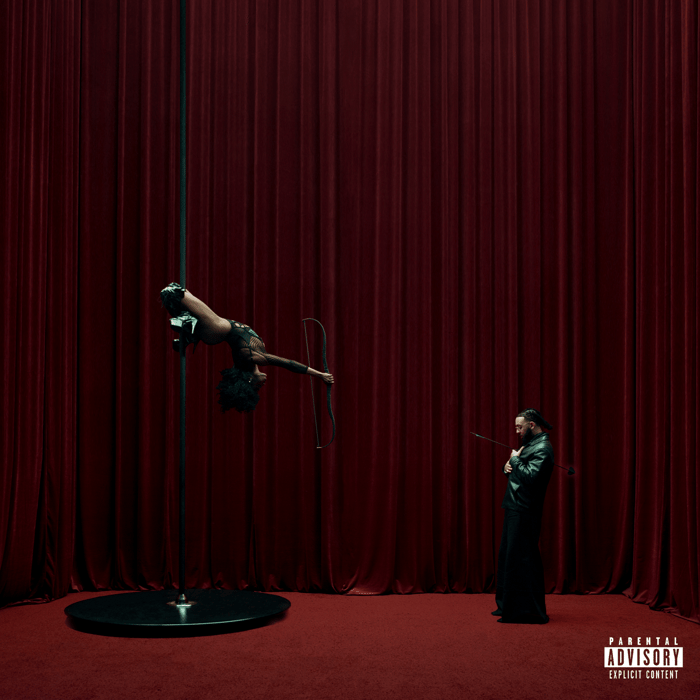
Arca XXXXX Review: A Love Letter That Keeps Setting Itself on Fire


 See more Architeg Prints stories on Google.
Arca XXXXX Review: A Love Letter That Keeps Setting Itself on Fire
Arca XXXXX turns lust, devotion, and self-myth into club wreckage—Spanish commands, glitch jokes, and one weirdly sincere love moment.
Let’s not pretend this is “just” an album
Arca doesn’t drop Arca XXXXX like a normal record. It lands more like a dare: can a love song still be a love song if it’s built from arson, spite, and craving so blunt it fogs the mirror? I kept thinking I’d get used to the extremes. I didn’t.
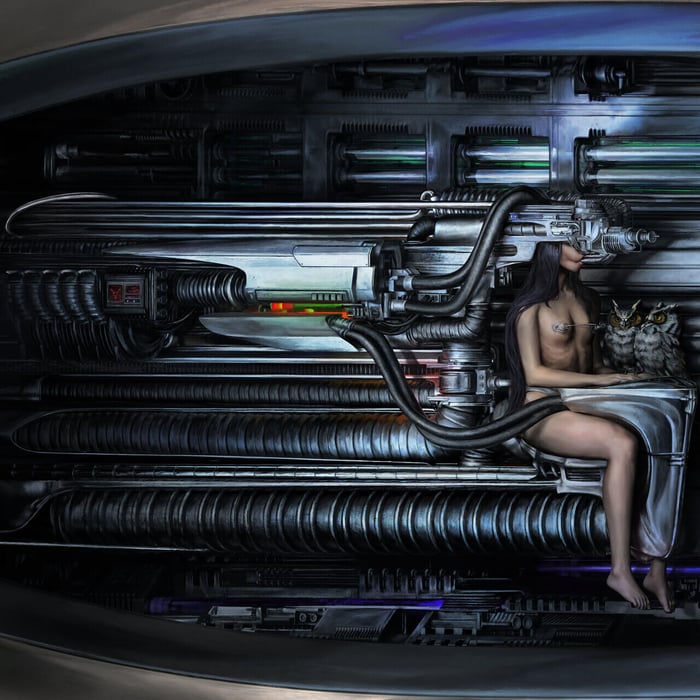
Arca’s return isn’t a comeback—she’s reclaiming the room
Here’s what’s obvious the moment Arca XXXXX starts breathing: this is music made by someone who stopped being useful to other people’s projects and started building a private universe instead. The KICK era already drew the borders—two languages, one body, a whole mythology of appetite—and then there’s this long silence. Five years without another full-length is a long time when your whole thing is transformation.
Now she’s back, and the songs don’t feel like “new chapters.” They feel like she’s reopening the same book and underlining the sentences about want until the paper tears. Nearly everything here is hunger. Sometimes it wants the same thing twice, and it’s not subtle about repeating itself—like repetition is part of the spell, not a limitation.
That’s an arguable choice, sure. Some listeners will call it obsessive. I hear it more like insistence: if you say it again, it becomes law.
“Eidolon” opens with murder and glory like they’re the same food
So the first real shock on Arca XXXXX is “Eidolon,” because it sprints straight into violence and holiness without switching masks. The opening lines pile up murder, a burning city, and glory—fast, rhythmic, almost tossed off:
“Toma tú, tú/Te maté, perra/Arde Troya/Pura gloria.”
Spanish is where she goes when she wants to be blunt. Not “poetic” blunt—knife blunt. The images keep coming: fire falling from the sky, the earth burning, relief slipping in (“Ay, qué alivio”) like she’s exhaling into the smoke, then “Brillan tinieblas,” darkness shining.
And the whole thing keeps getting governed by a single command: “Rompe.” Break. No object. No explanation. Just the order.
Then it flips into pledge-mode: swearing to God she can feel “you” inside her, choosing “Reviento” for the sensation—bursting, exploding—and calling it eternal, and then saying it again, slightly re-lit, like she moved the shine to a different part of the word.
What’s happening here is the album’s thesis in miniature: this is a love song made of murder and burning cities, and she refuses to lower one emotional register to make room for the other. Reverence and arson sit at the same volume. She keeps them both in her mouth at once.
If that sounds like a contradiction, it is. That’s the point.
“Fxck” and “Taconeando” play the same craving at two temperatures
From there, “Fxck” doesn’t waste time pretending it’s a metaphor. It starts with a stuttered “I”—as if even saying “I wanna fuck” requires a little buffering—then the chorus jams two needs into one sentence: love and wreckage.
“Fuck me like you love me, fuck me til’ I pass out.”
The beat sits in that glitch-pop, syncopated pocket where everything feels like it’s tripping over itself on purpose. The lyrics flex and beg in the same breath: hair done, watch her “stun out,” calling herself the shit, calling you daddy—then suddenly turning toward the father and asking for him dead. It’s whiplash, and I’m not totally sure the song wants you to recover. It wants intensity to stay messy.
Then “Taconeando” hits the same appetite from the party side. High-energy Latin Eurodance pulse, heels, tight skirt, bend down—music that moves like a grin with sharp teeth. The chorus boils down to one admission—“Yo sé que tú quiere’ que me venga”—and she answers herself in the third person before stepping out under the lights, still in heels, like the whole scene is staged for the glare.
Between “Fxck” and “Taconeando,” she’s basically running the same craving through two climates:
- “Fxck” is heat and static—desire as overload.
- “Taconeando” is desire as choreography—still raw, but funnier.
And yes, “Taconeando” is the funnier song. Not because it’s a joke-song—because it understands how ridiculous lust looks when you put it in good shoes.
The beats aren’t “production”—they’re where she tells on herself
The funniest, sharpest parts of Arca XXXXX often happen in the beats, not the toplines. She’ll introduce a bright arpeggio with the innocent joy of a handheld game—then scour it against metal until only the sweetness remains, like candy melted onto a knife.
She stacks her voice up into full operatic height—three parts thick—and then drops the floor out from under it so it collapses into distortion. The build-up only exists so the fall can land. It’s basically a pratfall engineered with cathedral acoustics.
Percussion snaps like whip cracks. Somewhere in here she drops a record scratch that does exactly what record scratches did decades ago—no irony, no wink. Weirdly, it comes off affectionate, like she loves the crude mechanics of it.
And then there are the breakbeats: dismantled, rearranged, pushed so fast it’s hilarious at first, then the laughter wears off and the speed starts to hurt. The low end gets thick enough that it stops being “bass” and starts acting like a shove.
She’ll also write mournful, uncomplicated strings like they’re torn straight out of a film soundtrack—then build something huge underneath and just leave the melody sitting there, unchanged, as if it’s too proud to move.
Here’s the thing, though: none of this exists to decorate the vocals. These beats are where most of the jokes live, and they don’t cheapen the writing. If anything, the humor makes the seriousness harder to ignore. Like: you laughed, great—now listen closer.
If I had one mild complaint, it’s that she sometimes stretches the bit long enough that it stops feeling like tension and starts feeling like she’s daring you to get bored. Most of the time she wins that dare. Not every time.
“Finisher” slips the warmest knife into the album
After all that force, “Finisher” pulls a sly move: it saves the words for the end. When they finally arrive, she drops a spoken Spanish passage—“En realidad nunca estuviste sola”—and follows it with a promise that the love she needs (and will need) is inside her.
Then, immediately: “Ponte perra.”
That snap from comfort into command is the most honest summary of how she writes on Arca XXXXX. She can’t give you tenderness without also asserting control over the room. She makes reassurance and order share oxygen.
“Sueño” mirrors that duplicity from the other side. The chorus is basically commands—stop, turn away, turn it off—and she doesn’t even bother clarifying who she’s talking to. I kept waiting for a clean target: a lover, an enemy, herself. But the song refuses to point.
And that ambiguity starts to feel intentional: maybe the point is that the command doesn’t need a subject. It’s just the pressure valve hissing.
When she talks instead of sings, the album gets weirder—and drier
The uncertainty gets louder in the tracks where she speaks rather than sings.
“No End” moves through shadow, departure, a leaf—then stops on something blunt and bodily:
“Bitch, look at how my face seeps.”
That’s not pretty imagery. It’s physical in a way that feels embarrassing on purpose, like she’s trying to remove any safe distance between listener and skin.
Then “Cinch” does something sneaky: it talks in the third person, and for the only time on the record, she puts distance between herself and the subject. The words drift out into mysticism—wandering beyond what she knows, eyes closed, heart open, every soul inside her beating with the cosmos at fractal scales. “Soon,” she keeps implying. Soon.
And then the whole thing stops on one word: “Working.”
That’s the driest moment on Arca XXXXX—all that cosmic language punctured by a status update. The punchline isn’t that mysticism is fake. The punchline is that she can’t stop being a person with tasks, even while she’s trying to become a myth.
“Enraptured” drops the persona and it’s almost unsettling
“Enraptured” is where she drops the joke entirely. She asks whether you want to be distracted, says she’s enraptured and enveloped by her own love, then lands on a line that’s almost shockingly straightforward:
“Lay in your arms and I’m falling in love.”
No commands. No threats. No theatrical knife-twists. Just singing it clean.
From an artist who spends most of Arca XXXXX issuing orders, a straight-faced admission of falling in love with someone else is the strangest move here. It’s like watching the villain in a movie stop to water a plant. It shouldn’t work. It does—mostly because she doesn’t dramatize it. She just says it and moves on.
I’ll admit, my first impression was that this track was going to be the “soft interlude” that kills momentum. On second listen, it feels more like the album’s trapdoor: it reminds you the person barking commands is also capable of simple need. That makes the rest of the record hit harder, not softer.
“Syncope” is the one time the album half-builds a room and leaves
Then there’s “Syncope,” which is the closest Arca XXXXX gets to idling. It starts in cinematic ambient—one of those in-your-ear narrative setups that suggests something is about to form. But it never really replaces that opening with a definite shape. The result is a listener posture that stays half-built, like you’re bracing for a drop that never commits.
I’m not fully certain whether that’s deliberate sabotage or just a rare miscalculation. Either way, it’s the one moment where I felt the album loosen its grip.
“Heart” turns “Diva” into a title, a name, and a glitch
“Heart” makes its mission clear with one word: “Diva.” She sings it like it’s a crown and a mirror at the same time—title and name, both hers. And it breaks into a stutter before she even finishes saying it, like the word can’t hold the weight she’s forcing into it.
Then come four lines of Spanish, one of them an order:
“Escúchame, dance mortal.”
But there’s no clear recipient. That’s the joke and the power move.
Because in this song, she wrote the beat, she sang the vocal, she is the diva, she is the audience, and she’s also the “mortal” being addressed. And she still can’t stop issuing commands.
That’s Arca XXXXX in a nutshell: control so tight it wraps back around into self-address. If you find that narcissistic, fair. I hear it as survival—like she’s building a system where she can’t be abandoned, because she’s the whole cast.
Where the album hits hardest (and where I’d start)
If you want the record at its clearest and most combustible, I keep coming back to these:
- “Eidolon”
- “Fxck”
- “Taconeando”
Not because they’re “the best” in some polite sense—because they show the album’s trick: making devotion and destruction share the same bloodstream.
Conclusion
Arca XXXXX doesn’t try to make appetite palatable. It stages desire as command, joke, prayer, and sometimes a small sincere sentence that lands harder because she didn’t dress it up. The album’s best moments don’t resolve contradictions—they weaponize them, then dance in the smoke.
Our verdict: People who like pop when it’s mutating, bilingual, and slightly scary will actually love this. If you need songs to “pick a mood” and stay there, you’ll hate it and blame the mixing like that’s the real issue.
FAQ
- What’s the core vibe of Arca XXXXX?
It’s lust and devotion expressed as orders—sometimes funny, sometimes violent, occasionally weirdly tender. - Is Arca XXXXX more emotional or more experimental?
It’s emotional first, but the experiments are how the emotions get sharpened into something you can’t ignore. - Which tracks show the album’s extremes fastest?
“Eidolon” for the holy-and-burning contradiction, “Fxck” for raw appetite, and “Taconeando” for the club-lit version of the same craving. - Does the album have any softer moments?
“Enraptured” is the big one—straight singing, falling-in-love energy, almost unsettling in its directness. - Is there any part that feels less formed?
“Syncope” builds a cinematic setup and then refuses to complete the shape. Some listeners will call that bold; others will call it unfinished.
If this album stuck with you visually as much as it did sonically, a poster of your favorite album cover is a nice way to keep the obsession on the wall instead of in your headphones. You can browse options at our store: https://www.architeg-prints.com/
 | DISCOUNTGET 30% OFF*Use code on your next order:
|
* This post may contain affiliate links, meaning we earn a commission if you make a purchase through these links, at no additional cost to you.