LVRS PARADISE Review: Isaiah Falls Turns Romance Into a Hotel Keycard

 See more Architeg Prints stories on Google.
LVRS PARADISE Review: Isaiah Falls Turns Romance Into a Hotel Keycard
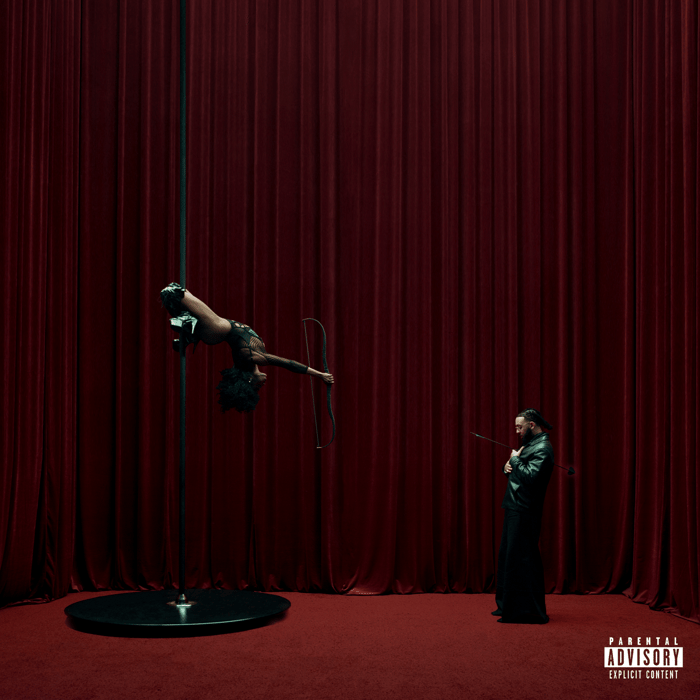
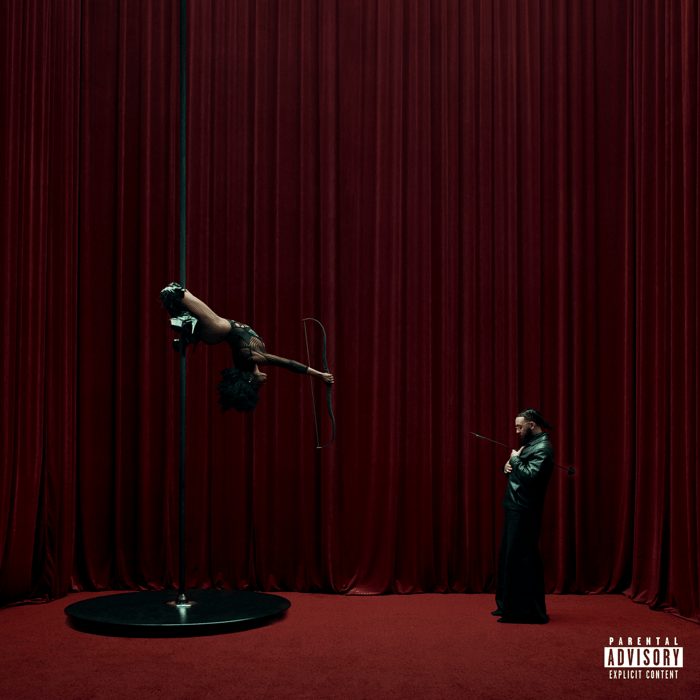
Isaiah Falls’ LVRS PARADISE (Side B) treats love like room service—available, curated, and oddly anonymous, until a few songs actually bleed.
A quick warning: this “paradise” is mostly indoors
Isaiah Falls doesn’t build worlds on LVRS PARADISE (Side B). He books them. You can hear the hinge of the door, the soft lighting, the “don’t ask too many questions” energy. It’s intimate in the way a private room is intimate: close enough to feel warm, detached enough to stay safe.
He already played this game with The Private Room back in 2023—five tracks, the usual indie R&B route, no big mess on the carpet. Then “FLORIDA BABY” showed up the next year and basically turned him into the guy who can get into nicer places off one clean outfit. He’s from Orlando, and he carries that like a stamp on the boarding pass: a little sun, a little hustle, a lot of late-night persuasion.
And here’s the tell: he writes in second person like he’s texting someone who might not text back. On Side B of LVRS PARADISE, every verse is aimed at a woman who’s either gone, halfway out the door, or about to be convinced she’s better off staying. The songs even feel sorted by what he’s willing to say about her—sometimes he’ll hint at her past, sometimes he’ll only talk about how she looks, and sometimes he’ll dodge both and just sell the vibe.
That’s a choice. And it’s not an innocent one.
“TABOO” and “LAVISH”: the sales pitch dressed as tenderness
After that setup, the album slides into its most familiar tactic: make the listener feel like the romance is happening, without actually telling you who it’s happening to.
On “TABOO,” he drops the kind of line that’s supposed to sound like emotional wisdom but really works like a bouncer:
“Stripping off your clothes leaves your past outside the door.”
It’s laid-back, clean, almost sleepy—and the hook circles her desire like it’s a riddle he’s patient enough to solve. He promises he’ll “find her there,” wherever “there” is. And that’s basically the whole offer. No name, no history, no risk. Just the room and the tone.
“LAVISH” uses the same strategy but widens the net: it’s a group invite. Her and her friends, partying until she’s over it, canceling plans, coming back to him every time. He keeps asking if he can persuade her—“no pressure,” of course, which is usually what someone says right before applying pressure in a softer font.
LATENIGHTJIGGY shows up and at least brings some scene-setting with him—late-night flexing, Cubans, rough chains, a city-overlook request, fate calling his “bestie” right on time. It’s not exactly character development, but it’s more physical than Isaiah’s approach here, which often stays in that foggy “you know what I mean” zone.
The refrains on both tracks are built to stick. Repeat listens make them feel catchier, almost automatic. But I can’t ignore the emptiness underneath: neither hook tells you a single thing about the woman being addressed that couldn’t apply to someone else next weekend. It’s romantic in the way a nice cologne is romantic—effective, but not personal.
“FLAWLESS”: Isaiah steps back, and the guests do the describing
“FLAWLESS” is where Isaiah puts the most distance between himself and the moment. He grabs the first verse, then hands off the rest like he’s hosting a party he doesn’t want to clean up after.
His verse is basically questions strung together—does she have a man, does she have a friend, should they get tan on an island—and then he lands on an ending that feels like he ran out of emotional vocabulary and just decided to call it fate: there’s “no logical reason” for her to be that attractive. It’s a compliment, sure, but it’s also a dodge. He doesn’t have to say what he actually feels if he keeps it hypothetical.
Then LooseKannon Takeoff comes in and suddenly the camera focuses. He’s clocking the details: nails done, hair styled, her money handled, bills paid. He even catches the way she drinks—something to her head, no chaser—and the way she walks like she’s stepping for Vogue. That’s not love; that’s observation with appetite. But at least it’s specific.
Yakiyn follows and takes a different angle—he’s across the room watching her like the room itself is part of the tension. And then he flips it: she’s that way because of the rumors about him, the streets that raised him, and the contradiction of a woman “too fine” for that street. That’s the first time on this stretch where the song admits the fantasy is built on conflict, not just attraction.
If anything, “FLAWLESS” accidentally proves Isaiah’s limitation on Side B: other voices come in and give the woman shape, while Isaiah keeps her as a silhouette he can sing at.
“MARIA, MY LOVE” and “ANYWHERE WITH YOU”: where he stops performing and almost prays
This is the turn. And I didn’t expect it, honestly.
“MARIA, MY LOVE” plays like he already decided the ending before the first line—like the song was “written by God” and he’s just reading it out loud. He talks about praying to be with her, telling her he sees her maturity through the sun on her. The important part is what he doesn’t do: he doesn’t ask her anything. He states it. He declares it. He makes it fate again—but this time it sounds less like an escape and more like devotion.
“Even if I lost you in another life, I don’t need a reason to love you twice.”
That’s such an enormous claim it makes the earlier pickup tracks feel like warm-up reps. But it’s also weirdly small—because he doesn’t build a big theatrical chorus around it. The chorus stays intentionally tight and domestic: getting along, not being alone, being “at home on the road,” only comfortable when certain parts of him show because she’s there. That’s intimacy as permission, not conquest.
“ANYWHERE WITH YOU” reduces that same feeling even further—phone off, her feet in the sand. He admits he waited a long time and found peace in a friend, which is a quieter kind of romantic than the “come back to my room” stuff. Near the end, he slips in the moon coming out and revealing who he really is. That’s the album briefly dropping its lighting tricks and letting you see the face.
I’ll admit something: on first listen I thought these songs were going to be the same soft-focus thing again. On second listen, they’re the ones that actually stick, because they stop trying to “win” the woman and start admitting she has weight.
“OUT THE GAME” and “BACK IN MY ARMS”: contradiction as a personality trait
The next shift is messier—and that’s why it’s more believable.
In “OUT THE GAME,” the woman leaves with him instead of the man she walked in with, and Isaiah spends the rest of the track tracing what that does to his head. He asks her how she feels now that she’s with the guy who made her “deal with him” in the first place. He calls himself a lover who surrounds himself with killers, which is a dramatic detail to toss into a romantic conversation like it’s breath mint.
But then he turns the chorus into a plea:
“I’m tired of playin’, baby, take me out the game.”It’s an exhaustion anthem—until the second verse walks it back. Suddenly he’s doing parallel flexes: Pirelli references, blue tint gliding through “like in Belly,” a phone full of women’s numbers, and the line that cancels the sincerity with one shrug: “You fuckin’ with a big dog, not a pup.”
That contradiction isn’t a mistake. It’s the point. He wants absolution, but he also wants to keep the lifestyle intact. He’s asking to be saved while holding onto the things that require saving him.
“BACK IN MY ARMS” wants the same kind of forgiveness, but it strips the furniture out of the room. No big flexing, no extra cast. It’s basically a phone call and an apology: she got mad, he was wrong, and there’s nothing else to decorate it. That simplicity almost feels like relief—like he finally stopped trying to impress the mirror.
If I’m nitpicking (and I am), sometimes Isaiah’s plainest writing hits harder than his cinematic lines, and it’s mildly frustrating that he doesn’t trust that more often.
“HONEYBUTTER” and “MAYDAY”: romance as doubt, romance as injury
Now the album starts showing its cracks—real ones, not aesthetic ones.
“HONEYBUTTER” feels like a betting app: odds, uncertainty, the quiet panic of not knowing what you’re signing up for. Mahalia comes in focusing on how she can’t find new words to say she’s unsure, how many times she has to end up at his place, and later she points at who’s been forcing endurance through the drought—who kept it going when it should’ve dried out.
Isaiah circles a question he clearly doesn’t want answered:
“Is it mine? / I can’t be sure / We both are mature, let’s be this way / Promise I’m not insecure.”
That’s the album saying the quiet part out loud: the paradise has consequences. The room isn’t just sexy; it’s complicated.
Then “MAYDAY” goes in the opposite direction—no interaction, no dialogue, just him alone in the aftermath. He describes being mortally wounded by an angel, shot at a crossroads where she turned the way his heart goes. There aren’t “safe goals,” only pain like a river. The whole song rides one texture and just lets it carry him.
I’m not totally sure whether “MAYDAY” is catharsis or just a really polished wallow. But either way, it commits, and commitment is rare on a project that often prefers suggestion.
“FLORIDA BOI”: the most honest flex is the one that forgets her
“FLORIDA BOI” is the centerpiece for me, mostly because it’s a mess in a revealing way.
In the first stanza, he says it plainly: he’s a flirt, and he’s sure there’s never going to be a “them.” He tells her she still has to smell the rain, go through tough times, get lost in a city—then he drops an image about the city healing him, like nobody had “rest in ice.” It’s proud and slippery at the same time.
Then he calls her once—and after that he starts talking about everything else. Long nights, trying to get his bread right, his mama doing better, his granny doing better, a plan to hit the mall and spend when he wins. It’s almost funny how the verse gets more detailed the moment he stops talking about her. Like his real intimacy is with his own trajectory, not the relationship.
And then the song hits its most specific offering, the one he doesn’t hand out to “any girl”:
“You don’t have to say you’re sorry for doing the things that you do / I’m trying to be better for you.”
That’s not a pickup line. That’s a self-indictment dressed as care. Later she’s “back again,” and he says he knew it wouldn’t take her too long—which is charming if you like arrogance, and alarming if you don’t.
“PLAY YA CARDS”: professional courtesy, slammed doors, and a beautiful miss
“PLAY YA CARDS” is Isaiah trying to explain himself while also refusing to stop being himself. He asks her not to judge him for how he plays his cards, adds that a “playa knows a playa too well,” and what he’s really asking for is professional courtesy—like cheating is a trade and she’s supposed to respect the craft.
He doesn’t get it.
She’s heard rumors from her friends, and the image that lingers is her shutting a door on him. That door-slam is the most vivid relationship detail on the whole track, which says a lot about where his love stories actually end.
Then 03 Greedo comes in at what feels like exactly the wrong hour—3:56 a.m. energy, studio fatigue, yawning, drunk and high, hoping she’s drinking and using drugs too. He assumes she’s probably lying with someone else, asks her to sneak away, admits he’d be wrong, and says he’s putting her name in the song anyway.
Here’s the part that surprised me: this is the one song where both of them miss the pitch, and it’s more interesting than the tracks where everything lands perfectly. Because the imperfection matches the situation. A clean vocal would’ve been a lie.
So where does that leave LVRS PARADISE (Side B)?
I land slightly above the middle on this one—not because every song is airtight, but because the album accidentally tells the truth whenever it stops trying to be smooth. The best moments aren’t the seductive ones; they’re the ones where the seduction fails and something human shows through.
If you want a quick map of what actually hits hardest for me, it’s this trio:
- “FLORIDA BOI”
- “MARIA, MY LOVE”
- “OUT THE GAME”
Not because they’re “the biggest,” but because they reveal the angles: ego, devotion, and contradiction—three sides of the same man, rotating under the same dim light.
Isaiah Falls uses LVRS PARADISE like a controlled environment: he can make women into muses, temptations, saviors, or rumors depending on what the song needs. The trick is, the album’s best moments happen when the control slips and the room feels lived in. That’s when Side B stops being a fantasy brochure and starts sounding like a real person trying—and sometimes failing—to mean what he says.
Our verdict: People who like slick indie R&B with late-night hooks—and don’t need every woman in the lyrics to feel like a real individual—will sit comfortably in this. If you want character-driven storytelling and names with fingerprints on them, this album will feel like flirting with a very handsome voicemail.
- Is LVRS PARADISE (Side B) more about love or temptation?
Temptation first, love second. When love shows up (“MARIA, MY LOVE”), it’s quieter and hits harder. - Does Isaiah Falls actually sound vulnerable here?
Sometimes. “BACK IN MY ARMS” and parts of “HONEYBUTTER” drop the mask more than the “lavish” talk does. - Which track feels the most personal?
“FLORIDA BOI,” mainly because he gets more detailed about his life than the romance—and that’s the point. - Do the features add anything meaningful?
Yes. LooseKannon Takeoff and Yakiyn give “FLAWLESS” actual specificity, and 03 Greedo’s messy presence makes “PLAY YA CARDS” more alive. - What’s the biggest downside of the album?
The hooks are replayable, but the women sometimes feel interchangeable—like the songs are written to fit whoever walks in next.
If this album’s mood is your thing, a poster of your favorite cover can make that “private room” feeling oddly permanent—grab one at our store: https://www.architeg-prints.com
 | DISCOUNTGET 30% OFF*Use code on your next order:
|
* This post may contain affiliate links, meaning we earn a commission if you make a purchase through these links, at no additional cost to you.