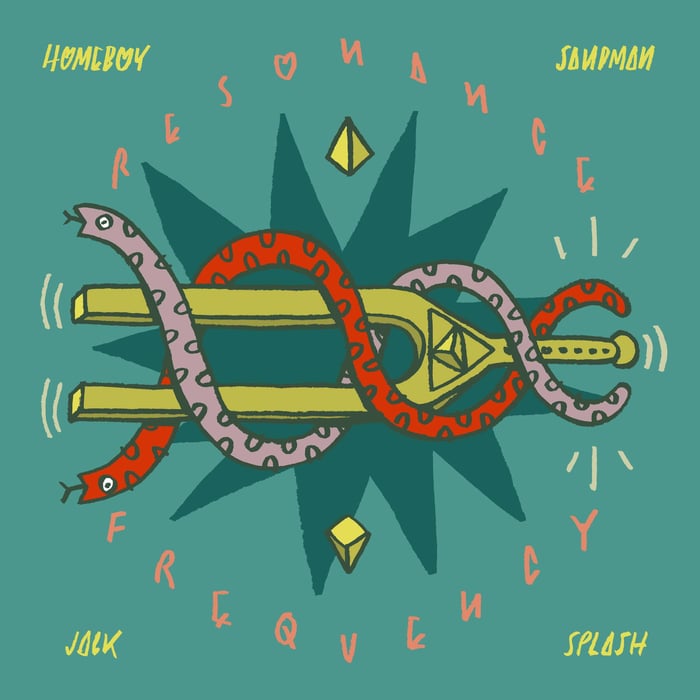
Resonance Frequency Review: Sandman & Jack Splash Make Weird Sound Normal


 See more Architeg Prints stories on Google.
Resonance Frequency Review: Sandman & Jack Splash Make Weird Sound Normal
Resonance Frequency turns everyday anxiety into grooves—like a spreadsheet learning to dance. Here’s why this Resonance Frequency album hits harder than it admits.
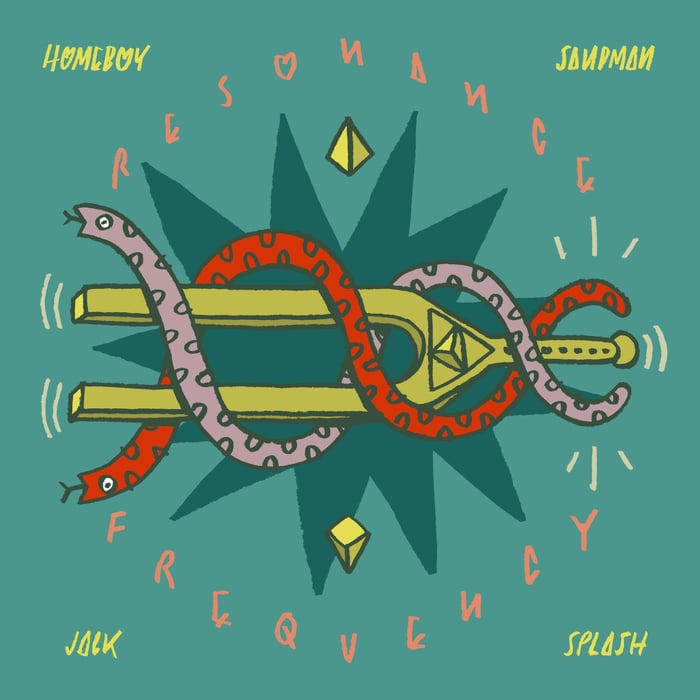
This album isn’t “eclectic”—it’s a controlled burn
Some albums want your attention. Resonance Frequency wants your habits. It’s not trying to flatter you with big emotional crescendos; it’s trying to stand next to your daily routines and quietly make them look ridiculous.
Homeboy Sandman has the kind of output that only happens when somebody treats writing like brushing their teeth. The pace of releases across his career gives this record a specific kind of confidence: not the “I’m the best” confidence, but the “I’ll outlast your attention span” kind. And Jack Splash’s production doesn’t “support” Sandman so much as build a room around him—a room stocked with live instruments and classic hip-hop bones, then wired up so Sandman can pace around and mutter theories about money, consumption, and the weird systems we call normal.
Arguable claim: this duo doesn’t sound like they’re chasing a vibe—they sound like they’re trying to prove they can make any vibe sound like a choice.
The running theme: consumption as personality (and a trap)
Here’s what kept sticking out: Sandman keeps circling spending, goods, distribution, appetite—not in a preachy way, more like a guy who can’t stop noticing how everyone’s brain has been turned into a shopping cart.
I kept hearing the same itch under different masks: who gets paid, who stays broke, who pretends not to care, who actually doesn’t care, and who’s lying about all of it. The production helps because it doesn’t flood the songs with filler. It gives him space to stack observations like receipts.
On first listen, I thought the record might be mostly playful—clever scenes, funny lines, a little flexing. But it didn’t stay playful. The album Resonance Frequency isn’t “about money” so much as it’s about how money trains people to talk.
“TWENTYFOURSEVEN” is Sandman’s origin story, but with a smirk
The track “TWENTYFOURSEVEN” plays like a rebuttal to anyone who ever labeled him “strange.” And he doesn’t defend himself with some heroic narrative; he just lays out the difference. Other kids played video games; he read books or did math. That detail matters because it explains why his rap brain often feels like it’s solving a problem you didn’t know you were assigned.
He also ties that “strange” label to the money conversation—what rappers get paid, what they chase, what they claim not to chase. The line about not needing the money lands like he’s not even bragging; he’s diagnosing the hunger:
“Even for the mill’, ain’t no run-of-the-miller/Figures, it ain’t never Miller time.”
— Homeboy Sandman
That’s not a tidy moral. It’s more like he’s saying: you can keep your little jackpot; I’m not built for your casino.
Arguable claim: the song isn’t a chip-on-shoulder moment—it’s Sandman reminding you he’s always been out of sync on purpose.
“Arrow” and “Signal” turn random thoughts into a stress test
The pivot into “Arrow” feels like Sandman playing with identity as costume. He calls himself a “small fry turned Big Sam,” tied to Ryan Gosling in the video game movie “Fall Guy.” That’s such a sideways reference that it almost dares you to ask, “Why this?” And I’m not totally sure I can answer. But it sounds like he’s pointing at the way pop culture gives people templates for growing up—like you can level up into a new version of yourself if you pick the right avatar.
Then he drags in the scarecrow from The Wizard of Oz—not for nostalgia, but for the idea of seeking knowledge like it’s a missing organ. That’s Sandman’s whole posture on this album: half scholar, half guy yelling into the void because nobody’s reading the instructions.
“Signal” is where the record starts acting like it has caffeine in its bloodstream. He compares rappers to clowns cramming into a clown car. He complains about his phone barely functioning and the bizarre links his friends send him—little modern-life irritations that sound small until you realize they’re about how noise replaces meaning. Then he drops one of those “only Sandman” scenes: he’s out on the town as “Saturday night, the only sober man on Ludlow.” He’s got a live cat in a box. He’s getting caught in a library. None of it is explained like a plot, because the point isn’t plot—it’s the feeling of moving through a world where everything’s slightly malfunctioning.
Arguable claim: “Signal” works because it refuses to be inspirational; it’s a portrait of attention fracture that still manages to swing.
Masta Ace shows up and quietly steals oxygen
Masta Ace’s appearance matters because it shifts the album’s temperature. He doesn’t come in trying to match Sandman’s jittery lens; he just tells history—gypsy taxis before Uber, being mistaken for Southern Californian at twenty-four, and the sting of feeling like his life as a young, Black, intelligent person should’ve earned a Grammy.
It’s a flex, but not the corny kind. It’s more like: I was there, I did the work, and the world shrugged.
Toward the end of “Signal,” Sandman circles back to the subject of performative intelligence—people who treat wisdom like a headline. The line “Who actually thought that wisdom was news?” hits because it’s both a joke and a bruise. It makes you wonder how many people collect “knowledge” just to decorate themselves with it.
Arguable claim: this is one of those rare features where the guest doesn’t “add variety”—he adds gravity.
“Weed Stores Everywhere” and “Gas” are about freedom… and the price tag
“Weed Stores Everywhere” is Sandman doing what he does best: using a specific modern detail as a doorway into bigger questions. He touches food, medicine, and how news gets reported—and then he nails the part that most people skip: the cost of having opinions at all.
He thanks God for having choices—what to eat, how to speak, how to frame reality. Then he admits the ugly side of choice: it separates you from friends who don’t have it, or don’t want it.
He says he’s grateful, but it creates a chasm. That’s the album in miniature: awareness as isolation.
Then he flips the party angle—friends betting he’s fun at parties, and him basically saying they don’t even know what a party is. That’s funny, sure, but it’s also a refusal to play along with other people’s definitions of “alive.”
“Gas” keeps the pressure on. He questions people who call themselves soldiers but can’t stay sober. He pokes at phone addiction with a nasty little metaphor: folks think they’re Rome while glued to their screens. And then he turns it inward—what happens when those people finally have time to think? He answers with a bleak kind of generosity: they can have anything in their minds, but they’ll never have anywhere they actually want to go.
Mild criticism, though: the concept is sharp, but I wanted one more moment of musical escalation here—one extra switch-up or a hook that bites harder. The ideas are doing heavy lifting; the music could’ve shoved a little more.
Arguable claim: “Gas” doesn’t need to be catchy, but it does need a slightly nastier turn to fully pay off.
“Uh Uh,” “Yeah Yeah,” and “A1” feel like Sandman flipping channels
After all that thematic focus, Sandman starts tossing experiences like he’s emptying his pockets onto a table. He mentions mixed crowds, turning down a school play, drag racing, teaching young kids—then on “Uh Uh,” he doesn’t really tie them into a neat message. And honestly, that feels intentional: life doesn’t link itself up just because you want it to.
Still, I’m torn. Part of me likes the refusal to “make sense.” Another part of me kept waiting for a thread to tighten—and it never fully does. Maybe that’s the point: you don’t get a moral, you get a mind.
“Yeah Yeah” swerves again: advice to a young woman about keeping her virginity and testing the waters in new situations, right next to a friend fighting a personal civil war when he sees Doritos in a corner store. That contrast is pure Sandman—serious guidance beside snack-food temptation, like all human battles are equal-sized when you’re the one fighting them.
Then “A1” comes with a chorus that’s basically four “What?”s. It’s almost obnoxious, but it’s also strangely effective—a chant of confusion. His verse drops in a quick memory of a high school recital with students playing recorder, which is exactly the kind of detail that makes you smell a gymnasium for a second.
Arguable claim: these songs aren’t “filler”—they’re Sandman showing you that meaning is something you impose, not something you find.
“World On Fire” is triumphant, but it’s not comforting
“World On Fire” is the big obvious statement—CeeLo Green singing about the world being on fire and nowhere to run. It should feel like a generic apocalypse anthem. It doesn’t, mostly because Sandman’s verse refuses to be cinematic. He goes microscopic: he’s protecting his garden from the universe, like survival is a domestic chore. He invites people who want fantasy into his “family,” which sounds warm until you realize it’s also a boundary: you can come in, but don’t bring your fake reality management with you.
He flips perception like it’s a party trick: puddles become bubble baths, black clouds turn into hovercrafts. It’s playful imagery, but it’s also survival technique—relabel the world so it doesn’t crush you.
Arguable claim: this track isn’t about catastrophe—it’s about refusing to let catastrophe control your imagination.
“Inner Realm” is the album’s sharpest warning shot
“Inner Realm” might be the moment where Sandman stops sounding quirky and starts sounding like he’s pointing directly at you. He says listeners are always hunting for something else to pay attention to besides themselves—and that it blinds them. That stings because it’s true in a way that doesn’t feel poetic; it feels like being caught.
Then he takes a shot at his peers:
“Every rapper wanna be a movie star till somebody true decide to throw you from a moving car.”
That’s not just a tough-guy line. It’s him mocking the fantasy of fame—how people want the glossy version until reality shows up and gets violent.
The ending spirals into bigger questions: shaking people up, waking them up, asking whether humanity has evolved or if it’s all just a vision in his mind. I’m not fully sure whether he means that literally or as an artistic exaggeration, but either way, it lands like insomnia.
Arguable claim: “Inner Realm” is where the album stops entertaining and starts interrogating.
“Natural Hue” and the quiet pride of being the odd kid
“Natural Hue” feels like Sandman looking back without begging for sympathy. He talks about how the kids who skipped class still had dates to school social events, while he showed up on half-days for those events. It’s not a tragic confession; it’s an accounting.
He insists those years weren’t wasted. The only way it becomes a mistake is if he breaks his own rules for the music—like the real failure would be betraying his method.
Then he drops a social rule that feels like a dare: nobody should talk about someone in front of him unless that person is himself—because then he wants to hear their version of the truth. That’s not politeness; that’s control. He’s saying gossip is cheap, and he doesn’t buy cheap.
He also claims he’s never met a snake that wasn’t sweet. That line is slippery—either he’s been lucky, or he’s admitting he tends to romanticize danger. I can’t tell which, and that uncertainty is part of why it sticks.
He ends up walking city avenues listening to classical music, waiting for his foot to recover after a night of walking. It’s such an un-rap detail that it becomes a flex anyway: the flex is having a life that doesn’t need to look cool.
Arguable claim: “Natural Hue” is the album’s real emotional core, and it wins by not trying to win.
“Take Time” is the long track that earns its length
“Take Time” is the album’s longest song, and it skips a chorus entirely. That choice matters. No hook, no easy repetition—just Sandman stretching out like he’s finally got a quiet room.
He calls himself a “page turner” rather than a “wage earner,” and that line basically explains the album’s whole posture: reading, thinking, observing, refusing the standard grind narrative. He folds in reflections on Sweden, a pack goat, and “the breaking of the night.” It’s not “storytelling” in the clean sense; it’s more like flipping through a notebook while somebody talks.
And weirdly, it’s one of the easiest tracks to sit with. The lack of chorus makes it feel less like a performance and more like time spent.
Arguable claim: “Take Time” proves Sandman doesn’t need hooks—he needs space, and Jack Splash is smart enough to give it to him.
Where I landed: favorites, and the album’s actual “rating”
By the end, I didn’t feel like I’d been given a neat message. I felt like I’d been forced to notice things—habits, money talk, faux-wisdom, addiction, attention rot. That’s the real trick of Resonance Frequency: it doesn’t hand you a theme; it nudges your face toward one until you stop pretending you didn’t see it.
The record sits in that sweet spot where it’s impressive without being polished into dullness. If I’m being honest, I walked in expecting it to feel more like a producer-rapper exercise—good parts, a few skips. On second listen, the threads started tying themselves together in my head, and the album felt less random and more like a single nervous system.
Favorite track(s):
- “Signal”
- “Natural Hue”
- “Gas”
And yes, the overall feeling matches what I’d call great—not “perfect,” not “flawless,” but great in the way a sharp conversation is great: it leaves you slightly altered.
Conclusion
Resonance Frequency doesn’t try to be timeless; it tries to be accurate. It takes ordinary modern life—phones, money, choices, posturing, snack-food temptation—and treats it like the real surrealism. The best moments don’t come from big choruses. They come from Sandman noticing something you also noticed, but never bothered to phrase, and Jack Splash building a beat that lets the thought land without blinking.
Our verdict: People who like rap that actually watches the world (instead of posing in it) will eat this up—especially if you enjoy lyrics that sound like somebody thinking in real time. If you need big hooks, tidy stories, or “turn-up” energy that tells you when to feel good, this album will feel like a smart friend talking while you’re trying to scroll.
FAQ
- What is the core sound of Resonance Frequency?
It’s classic hip-hop structure mixed with live-instrument textures, built to leave room for dense, observant verses. - Is Resonance Frequency more personal or more social commentary?
It’s both, but the personal details feel like evidence for bigger claims about consumption, attention, and how people perform intelligence. - Which track best represents the album’s mindset?
“Signal”—it captures the fractured modern texture while still landing a few lines that sting. - Does the album have standout guest moments?
Yes. Masta Ace brings a grounded autobiographical weight that changes the temperature of the song he’s on. - What’s the most “sit with it” song on the record?
“Take Time.” It’s long, has no chorus, and works because it feels like uninterrupted thought instead of a format.
If this album’s imagery stuck with you, a poster of your favorite album cover is basically the adult version of keeping liner notes on your wall. If you feel like it, you can shop prints at our store: https://www.architeg-prints.com
 | DISCOUNTGET 30% OFF*Use code on your next order:
|
* This post may contain affiliate links, meaning we earn a commission if you make a purchase through these links, at no additional cost to you.