Hardbody Album Review: Nickelus F Turns Drug Money Into a Home Movie

 See more Architeg Prints stories on Google.
Hardbody Album Review: Nickelus F Turns Drug Money Into a Home Movie
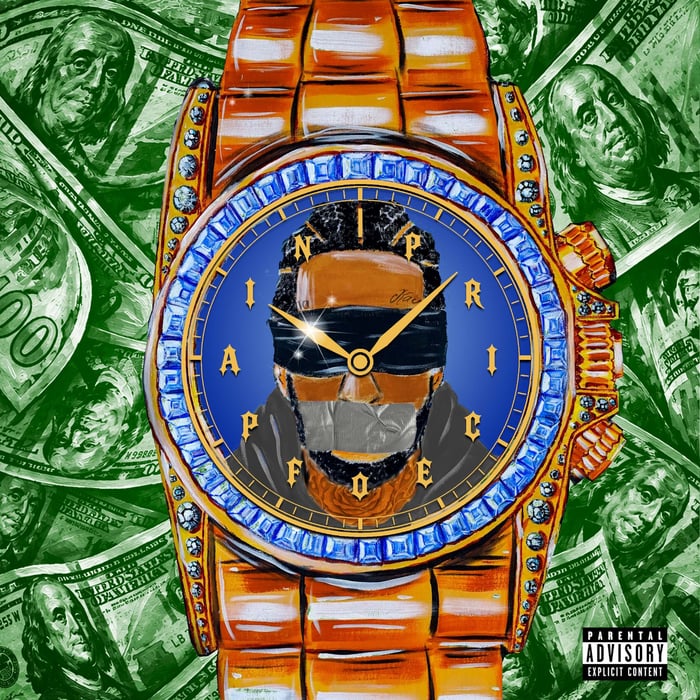
Hardbody album plays like a family budget meeting held inside a burning car.
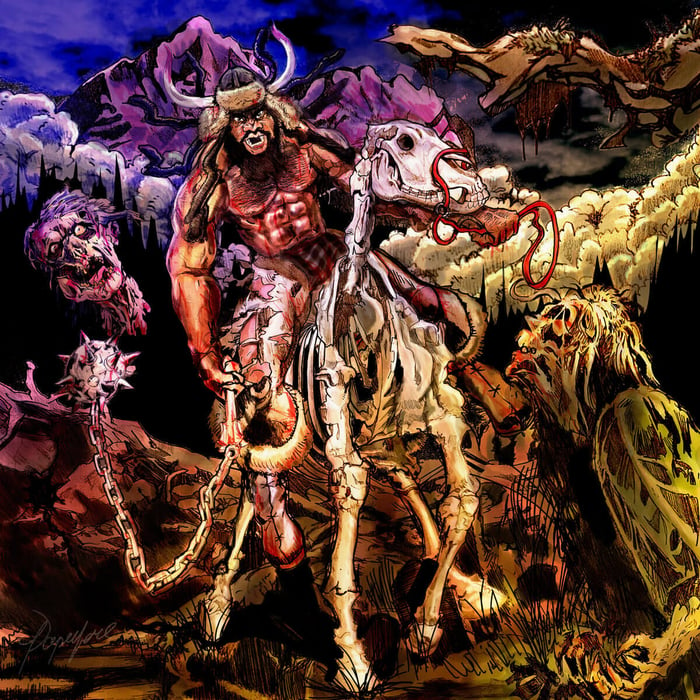
A house built on weight doesn’t stop collecting
This Hardbody album doesn’t open like a “project.” It opens like an unpaid tab. The whole thing carries this blunt premise: the house exists because drug money built it, and now the house itself keeps walking into the verses like, “Cool. Pay up.” That’s the vibe—domestic life as a recurring bill, and the hustle as the only direct deposit.
Nickelus F makes a very specific flex here: he wrote and recorded every beat himself, then drops it through Trick Dice Records as his second album of the year after The Undisputed. And you can hear the point of that decision. These beats don’t sound like he went shopping for the right mood; they sound like he stayed in the same room until the room started talking back.
Arguable take: making every beat himself isn’t just craft—it’s control. He’s not letting anybody soften the message with prettier drums.
Dealing and fathering aren’t two jobs here—they’re the same shift
The album keeps snapping back to a hard truth: providing and poisoning are threaded together so tightly you can’t separate them without tearing the fabric. He’s buying guns “to protect his daughters,” and the line lands because it doesn’t come off heroic—it comes off like a parent doing a grim errand before dinner. He remembers winter coats going on layaway. He mentions cracking a granite countertop in an argument. And he funds the whole adult life package with weight.
Arguable take: Hardbody isn’t interested in confession. It’s interested in showing how a person justifies a routine until it looks like fate.
“Sporting Life” is insomnia rap, not hustle rap
“Sporting Life” hits like someone wide awake at the witching hour, not romanticizing it, just… still up. He’s making beats while the block stays “hot as a lava lake,” and the threats feel casual in the way real threats often do—young men ready to “go up and blow your mom away,” pounds still shipping. The song’s tension isn’t built with cinematic strings; it’s built with the calm tone of somebody who’s seen the same night too many times.
What surprised me is how quickly he switches the counting. First it’s sales—vinyl weight, product moving—then it’s graveyards, like the ledger flips over and shows the human cost on the back.
Arguable take: this track makes the “grind” sound less like ambition and more like a haunted schedule.
“Set the Table” turns profit into a weird kind of harvest
“My life been like a bitch that never ovulate/But still, I bear fruit, just look at all the profit made”
On “Set the Table,” he drops that line about his life being “like a bitch that never ovulate” but still “bear fruit” because the profit proves it. It’s one of those comparisons that’s so blunt it almost sounds thrown away—until you realize he’s using it to describe success without life. Growth without a future.
He also swerves into something touchier: people doubting him because he had a father in the house. That detail matters because it complicates the usual narrative people want to paste onto him. Then he’s back to guns for his daughters, holding back emotion “like the Hoover Dam,” blacking out so hard it feels like the verses should be redacted.
And he tosses off a cold little rule while pouring Louis into a paper cup: if money didn’t change you, you didn’t make enough. I don’t even fully agree with that, but I recognize the mentality—money as proof you were “real” enough to be affected by it.
Arguable take: the song pretends it’s about serving others, but it’s really about serving himself a justification he can live with.
“The Leg Drop” walks the kids through a city that waves back
On “The Leg Drop,” he’s literally walking his kids past junkies jumping in the intersection, women “out working for a dollar,” and police sitting in cars watching it all and waving. That wave is the detail that sticks. It’s polite. It’s casual. It’s the city saying, “Yep, this is normal.”
News crews only show up when there are ratings in it, and then they flatten real life into “black and white” even when it’s a gradient. That’s not a bar trying to go viral. It’s a gripe with how suffering gets edited into something consumable.
Arguable take: this track is more angry at spectators than it is at criminals, which is going to bother people who want a simpler villain.
“Slave Ghosts” weaponizes local history like it’s still breathing
“Slave Ghosts” opens with local broadcast audio about spooky things in Shockoe Bottom—ghosts packaged as a tourist attraction. The album uses that setup to flip the tourism into a personal haunting. He says there are more slave ghosts in Richmond than anywhere else, and he feels them on him, not around him.
And then comes the brutal punch: the only thing he can give in terms of “hugs” is weaponry. That line doesn’t sound cool. It sounds like a person admitting they don’t know how to be soft anymore.
There’s also all this specific self-portrait detail that makes him feel like a real body moving through a real closet: book smarts plus hood sense, a Prada hook stitch on a Woolrich clip being exactly his kind of flex, a missing tooth he doesn’t like showing, yet he’s still a “cheesy” dude anyway. Even the weird little image of “a bush that looks like a big suit of clothes” walking down the street—he recognizes it anywhere. The city becomes a set of private landmarks.
Arguable take: “Slave Ghosts” is the real centerpiece because it shows the album’s core fear—history doesn’t stay in museums, it rents rooms in your head.
“A Mountain of Bones” is stalking as structure
On “A Mountain of Bones,” he tracks your movements over a month “before anything can happen to you.” The patience is the point. The persistence is carved like a canyon—slow, inevitable, almost natural. His gaze feels like it slices the air; the threat isn’t loud, it’s focused.
For rainy days, he’s “ready”—built the ark with his own hands. Then the violence gets graphic in a way that’s meant to unsettle, not entertain: splitting the top of your head “like an onion” to find the most painful place. A woman hands him the jaws of a killer shark, and he swings back at her like Michael Jackson in the Thriller artwork. It’s a surreal image in the middle of a very grounded menace, like his brain is glitching between real memory and pop-culture reflex.
I’m not totally sure whether that Thriller moment is supposed to be funny, horrifying, or both. It kind of works either way, which is probably the problem—it’s hard to pin down, and that slipperiness makes it creepier.
Arguable take: the song’s scariest move is how calm it stays while describing obsession like a hobby.
“Kikkomanm” lets you hear the countertop crack
“Kikkomanm” ends with the sound of cracking granite—literal damage as punctuation. It’s the final moments of an argument with a family member, and it’s not framed as some tough-guy victory. It’s framed like proof that his temper is going to mess up his kids’ relationship with him. He basically says his legacy with them will be unpleasant.
He talks about procrastination, about family communication being terrible, and then drops this almost insultingly simple self-help image: instead of drowning in pain and turmoil, he could “grow” by putting up a pull-up bar over his doorframe. That’s not a motivational poster. It’s a guy trying to convince himself that discipline could replace therapy.
Arguable take: the pull-up bar idea is intentionally small because he doesn’t trust big solutions—he trusts objects he can install.
“Vulcan” is a kid awake under the weight of layaway
The alter ego “Vulcan” comes off like a young boy who doesn’t sleep—just lies awake thinking about jackets and coats his mom put on layaway. That’s a particular childhood worry: not “will I be rich,” but “will I be warm.”
Then the grown-up details hit: Motrin before brushing teeth, liquor mixed with nothing, dividing the pie and surviving off the quotient. Even his defensive swipe—saying the listener’s anger about “how Nick ate” is misplaced—feels like he’s arguing with an invisible jury.
Arguable take: the album keeps daring you to judge him, then acts offended when you actually do.
Features that steal the frame, on purpose
“Tiamat” is the show-stealer, and it knows it. Blu comes in with a fervently enthusiastic verse that jumps subjects and still feels coherent because the energy is so committed. He rhymes about “Mansions in the Sky” while pointing back to the cabins he grew up in, and the contrast lands like a private religion—humble origins turned into a fantasy skyline.
Then “Duffle” gives Rome Streetz a lane to threaten rivals with specific disrespect: what he’d do to a rival’s record, telling other rappers to trash their pens, put Newports on the cover, and he even samples that sound later. It’s petty, it’s performative, and it’s effective because it sounds like someone enjoying the cruelty a little too much.
Arguable take: these features aren’t “assists”—they’re Nickelus F letting other people model different versions of hunger so his own story feels even more boxed-in.
“A Coherent Beam of Pure Energy” is deliberately stuffed with filler
“A Coherent Beam of Pure Energy” is where he basically admits the game: a pile of nouns, things being “notified” and “mobilized,” oversized and notarized, flutes playing, a cobra rising, a party on a yacht. It’s like he’s speed-running rap imagery to prove he can do it while also implying it’s empty.
For a long time he’s wanted to say something to county cops (who “contain people”) and city cops (who don’t care whether you pay them or not). And everything leading up to that feels like padding by design—as if he’s mocking how you sometimes have to dress truth in nonsense just to get it past the door.
On first listen, I thought this track was just him goofing around. On second listen, it felt more like him rolling his eyes at rap as a professional language.
Arguable take: the “filler” is the message—he’s showing how easy it is to hide real anger inside pretty clutter.
“Final Form” is where the writing gets a little too generic
“Final Form” leans into daily affirmations and transformations, and here’s where the album briefly loses its bite for me. The language isn’t especially original, and I could hear these lines sitting on plenty of other songs without changing much. That might be the point—self-talk can be repetitive and plain—but it still lands flatter than the rest.
Arguable take: this is the rare moment where the album sounds like it’s borrowing a tone instead of bleeding its own.
“The Emergence” puts poverty next to luxury and doesn’t blink
“The Emergence” sets an unwrinkled mattress with no bed frame beside “the finest of the executive suites,” and that image tells you the whole economy in one shot. Not homelessness versus wealth as a moral lesson—just both existing in the same hallway.
He goes into detail about wages being garnished off a debt claim, then lists physical scars from events he won’t fully explain. That refusal matters. He’s not turning trauma into content; he’s inventorying damage like it’s paperwork.
At the end, Nelly pops in telling him not to let his head hang, to get on stage and make them headbang. It’s a jarring motivational cameo—like pep talk meets pile of bruises.
Arguable take: the Nelly moment works precisely because it’s out of place; it sounds like the world trying to cheer up someone who isn’t interested in being cheered.
“Dr. Strange” treats work like a mountain and prophecy like paperwork
In “Dr. Strange,” he describes everyday work life as climbing a mountain to reach the top of his field. He’s got “a hundred ways to beat the system,” keeps the lion’s share of the profits, leaves a few drippings for everyone else. It’s a grim version of efficiency—winning by keeping everything.
He calls social media another drug for attention-seekers, which is the kind of line people will argue about because it’s half true and half sermon. Then he says he had a “deep vision,” received a prophecy, and he isn’t adding anything—just reading it word for word. That’s a great detail: revelation as recitation, like destiny is a script you don’t edit.
Arguable take: he doesn’t sound enlightened here—he sounds resigned, which is more believable.
“Acid Rain” turns kids’ plays into profit and calls it life
“Acid Rain” brings his kids to the front—they present their plays while pain and suffering get converted into financial gain. That’s the album in miniature: innocence happening upstairs, monetized damage happening downstairs.
Below that, he’s gathering lumps of coal for stocking stuffers, moving silently through the woods on padded paws like a hunter. He leaves tire tracks for anyone who reaches out for them—evidence as a breadcrumb trail.
The hook circles back to drug money again: someone uses it to “answer” to him. He returns to the skeletons in his closet, and the track plays like a highlight reel of his life—complete with a Nike ad sheen, like even the darkest parts can get packaged if the edit is slick enough.
Arguable take: “Acid Rain” is the album admitting it knows how easily tragedy turns into branding—and it’s not pretending it’s above that.
Conclusion: the album isn’t bragging—it’s balancing a ledger
Hardbody album keeps pointing at the same uncomfortable equation: fatherhood, violence, money, shame, pride—all the same pile, just counted in different units. When it’s at its best (“Slave Ghosts,” “Kikkomanm,” “A Mountain of Bones”), it doesn’t ask for sympathy. It just shows you what the day costs, and how he pays it.
Our verdict: People who like rap that feels like a lived-in apartment—messy, specific, sometimes ugly—will actually like this album. If you need every track to be “relatable,” or you want moral clarity served in neat couplets, this will irritate you fast (and honestly, it might be healthier for you to be irritated).
FAQ
- Is Hardbody album more about crime or family?
It refuses to split them—family is the reason, and crime is the method, and that’s the tension the record won’t let you escape. - Does it sound like a producer-rapper flex?
Yes, but not in a shiny way. Making all the beats feels like him locking the doors and controlling the weather. - What track hits the hardest emotionally?
“Kikkomanm,” because you can hear the domestic damage—cracking granite isn’t metaphor, it’s evidence. - Are the features worth it?
Blu on “Tiamat” and Rome Streetz on “Duffle” don’t just add variety—they exaggerate the album’s hunger in different dialects. - Any weak spot?
“Final Form” drifts into phrasing that could live on a lot of other songs, which stands out because the rest is so sharply detailed.
If you’re the kind of listener who gets stuck on album artwork the way other people get stuck on hooks, you can shop a favorite album cover poster at our store: https://www.architeg-prints.com/ — hang it up like a trophy from a record that didn’t blink first.
 | DISCOUNTGET 30% OFF*Use code on your next order:
|
* This post may contain affiliate links, meaning we earn a commission if you make a purchase through these links, at no additional cost to you.