Black Boy Alternative: Dahi Builds a Confessional Booth (And Hides in It)


 See more Architeg Prints stories on Google.
Black Boy Alternative: Dahi Builds a Confessional Booth (And Hides in It)
Black Boy Alternative sounds like Dahi’s sneaky way of making grown men say the quiet part out loud—while he stays behind the drums.

The first thing you notice: he’s famous for other people’s feelings
This album doesn’t walk in like, “Hello, I’m the star.” It walks in like, “Hello, I built the room.” And that’s the whole point. Dacoury Natche—DJ Dahi—has spent the 2010s acting like a producing engineer with a sixth sense for where a voice should land, especially when that voice isn’t his. You can hear that background all over Black Boy Alternative: it’s a debut that behaves like someone who’s been around the block a little too long to bother showing off.
He’s been the guy making space for other people to say the dramatic thing cleanly. The beats that became cultural furniture. The kind of credits list that screams industry cornerstone while the person stays oddly quiet. And on paper, even now, he still looks like the quietest man in his own project.
The title—Black Boy Alternative—isn’t subtle, and it isn’t supposed to be. It reads like a label that got stuck on him as a kid: hip-hop and R&B running alongside alternative and rock that didn’t always get “counted” as his. The album feels like him finally deciding that if nobody’s going to give him the category, he’ll just write the category on the door himself.
And yeah, I’ll say it plainly: this record took years because it needed years. Not for polish—Dahi can polish in his sleep—but because the idea is complicated. It’s not “here are my songs.” It’s “here is the room I wish existed earlier.”
The album opens like a tiny sermon—then hands the mic to the stressed-out
Right away, Black Boy Alternative frames itself like a spiritual intervention. A voice shows up advising the overwhelmed that sometimes you have to kneel to something bigger than you. Then—almost immediately—the album pivots from divine comfort to human panic. It starts recruiting voices.
“Who Are You” sits in that crisis on purpose. Channel Tres runs straight at the disappointment of getting what you thought you wanted and realizing it didn’t fix you. He lands on that sharp little emotional boomerang: the accusation doesn’t come from a critic or an enemy—it comes from inside the house. From childhood. From memory. From the old version of you that doesn’t let you pretend you’re fine.
Then Vince Staples comes in reading 2 Samuel like he’s looking for a clue that might apply to 2026, not ancient history. He flips the scale of the myth—Goliath biting off more than he can chew—and then says the line that actually matters: some days he’s David, some days he needs a replacement. That’s not poetry class; that’s a man admitting his costume doesn’t fit every day.
Here’s what Dahi is doing, and you can disagree, but I don’t think you should: he’s letting other men perform the interrogation for him while he stays underneath it, literally keeping time. The drums aren’t just rhythm here. They’re a way of staying present without confessing directly.
A line from outside the album explains the album anyway
This record keeps returning to one basic need: men wanting a place to be soft without getting laughed out of the building.
“We become each other’s place of confession and vulnerability.” — Amber J. Phillips
And then Sesali Bowen turns the knife in a little deeper by pointing out how men rarely get that kind of mutual confession—because they’re trapped inside a system where they’re “supposed” to be the masters, while quietly knowing they aren’t.
That’s the engine of Black Boy Alternative. If the traditional options are: confess to a lover, confess to God… then the third option is: commission a room. If you have money and a deep phone book, you build the space where vulnerability can happen on your terms. That’s what this album is. Not a diary. A facility.
I’m not totally sure if that’s brave or just resourceful. Maybe both. But it’s definitely intentional.
Obongjayar turns “who are you?” into care instructions—and it’s oddly tender
After all that interrogation, the album slides into something that feels like an instruction manual for not ruining your own life.
Obongjayar comes in over a soulful groove that sounds practiced—like he’s said these lines to himself in the mirror so many times they’ve lost their embarrassment. The hurt is embedded in the language: hard head, hard heart, hard body; love running him rugged. When he says “Love me easy / love me gentle / love me carefully,” it almost sounds flimsy… until the fine print arrives: “Take me as I am,” “Handle me with care.”
A grown man dictating care instructions to a partner is a strange thing to hear in pop-adjacent music, mostly because men are usually trained to pretend they don’t need instructions. This track refuses that training. It’s tender in a way that’s almost bureaucratic, like he’s filing paperwork for his own well-being.
Hot take that I stand by: the “weak-sounding” commands are the point. They’re supposed to sound exposed. If they sounded tough, they’d be useless.
“How to Pray” collapses God and a lover into one address
The album’s most telling move is how it keeps blending devotion and romance until they’re basically the same phone number.
In the duet with Amber Mark, the lover and the Lord collapse into one addressee. The coda lands on a line that’s both devotional and a little reckless: being love-drunk, calling her name, then calling God, both one and the same. That’s not romance; that’s outsourcing your spiritual stability to a relationship and hoping nobody notices.
The proposal in “How to Pray” is blunt: teach me how to pray and I’ll love you for now. It’s transactional in a way that feels honest instead of sleazy—like he’s admitting he doesn’t know how to ask for help without attaching a promise to it.
His little résumé hits fast: the city raised him, blood spill changed him, the world blamed him, but she never shamed him. There’s a bar that lies flat on purpose—“I seen violence, you seen love / I suffer in silence, you open up”—and it’s basically an entire social arrangement in two breaths.
Amber Mark answers without rushing: it could take a lifetime. No schedule. No neat redemption arc. Just time. And the song leaves him exposed to the terrifying possibility of wasting time with someone—which, honestly, might be the most intimate thing the album offers.
I’ll admit: on first listen I thought this track was going to be melodramatic. On second listen, it read as practical. Like someone finally admitting they don’t know how to do “peace” without a tutor.
The band chemistry is the real narrator—even when the snares act weird
Underneath almost everything here: Danny McKinnon’s guitar and John Key’s bass. Ely Rise on keys. Dahi stays in the drum chair. And the grooves lean soulful and alternative, with that slightly sideways posture where the rhythm keeps you alert.
Sometimes the snares skitter in patterns that feel intentionally unorthodox—like the beat is tripping where a steadier hand would sit down and behave. And I think that’s Dahi telling on himself. If the subject is instability, why would the drums be perfectly polite?
That skittering pattern shows up under jealousy that can’t even find its target. Moses Sumney and Mez take turns addressing a person already half gone. It starts with a line that sounds almost petty—heard you callin’ him daddy—but the chorus makes the real problem clear: “I’m stuck in the middle, you so sentimental.” The ground gives out. The imagery gets physical: run down, swim, drown; hold your breath before you get down.
Then the person being reached for turns to vapor: body made of smoke, I grab it but it flows right through my frame. That’s one of the most accurate descriptions of chasing someone emotionally unavailable I’ve heard in a while, and it hits because the groove doesn’t overreact. The music stays cool while the lyric panics.
Arguable claim: the calmness of the band is what makes the desperation believable. If the production got bigger and more cinematic, it would feel like theater.
Childish Gambino falls, then suddenly becomes “Daddy,” and it’s unsettling in a good way
“Running” puts Childish Gambino inside another one of those open, off-kilter snares. He sounds like he’s already dropping from somewhere high. There’s a flash of compassion that arrives mid-fall: he was gonna float away forever, but there was no hang time; mama tried to braid mine; they said seventh grade was gon’ be better. Those details feel like they were pulled out of a drawer he didn’t open often.
Meanwhile the chorus keeps asking: why would you leave me when I got too high? It’s repetitive in a way that borders on irritating—and that’s my mild criticism here. The insistence is emotionally correct, sure, but it slightly flattens the song’s movement for me.
Then the bridge drops altitude and age at once: don’t be scared, I will hold you. And then it goes even plainer: daddy is there to keep you safe, daddy is there to hold you.
That’s the pivot. The same mouth asking why it got left is now promising not to leave. “Running” saves that firsthand holding for a child—the one person in the song too young to have learned the detour of pretending you don’t need anyone.
If you think that’s sentimental, fine. I think it’s Dahi forcing a grown-man narrative to answer for a kid narrative without escaping into metaphors.
Fousheé brings the consequences—then Dahi finally sings
“Square Up” is where the album stops politely empathizing and starts warning people.
Fousheé’s verse is quick and physical: filthy slides, bloody eyes, searching trouble you’re bound to find. The world’s gonna uppercut, mess you up. She traces the hardness back to its origin—eating destruction with a spoon, then making it a shiv. She even grants the excuse: they forced you to do it. But she doesn’t let him hide behind it: you still gotta live under that cloud.
The imagery gets tactile: when all of the color gets drowned out, watch it wash down that drain. That’s not “sadness.” That’s someone watching their own life desaturate and still acting tough about it.
And then: the chorus is Dahi himself. One of the only places across the whole album where his own voice appears under his own name, actually singing a warning about what the tough version costs.
I kept waiting for him to step out earlier, honestly. When he finally does, it’s not a victory lap. It’s a caution sign.
“Stand for Something” is three voices trying to build a bridge mid-fire
When the album leans into unique collaboration, “Stand for Something” feels like the clearest example of Dahi treating musicians like characters in a shared argument.
Bekon and Loshendrix trade production duties. Ely Rise shows up on piano. Guitar solos split the track like someone physically cutting the room into sections. Jesse Boykins III sounds like he’s asking for a principle and settling for weather: wishing we could stand for somethin’, wanting your love to bring the rain if bridges burn.
Ant Clemons opens with that dazed admission: didn’t even realize… till no one was around. That’s loneliness described as delayed processing.
Then comes the bargaining: promise me no matter what we will figure it out. And the song ends circling the question that keeps haunting the men on this album: who’s gonna catch you when you’re fallin’? The last vocal leap goes up octaves and makes a vow that’s romantic and slightly terrifying: if you ever leave we’ll leave together.
Arguable claim: this song isn’t about love. It’s about fear of being the only one left holding the story.
“Drowning” closes with conditions—and one brutal confession
For the last words, Elmiene and Ravyn Lenae don’t offer comfort. They offer conditions, like they’re testing reality for lies.
If you could reach the top without tears. If you could feel the Lord without prayer. Then we’re drowning, misguided. Then Lenae adds more: raise a child without care; sell the world a lie without fear.
And then she drops the detail that answers every man who came before her: the pressure is following me—it’s like my mama told me it would. Somebody told her in advance. That’s the difference. The men on this album sound surprised by their damage, like mirrors and strangers had to scream it at them. Here’s a woman walking in briefed by her mother, already aware of the trap.
The song closes with a first-person confession that stings because it’s so clean: Elmiene owning, “I fell for everything I sold.” No metaphor. No escape hatch.
I’m not 100% sure the album earns that level of finality—part of me wanted one more messy, unresolved moment—but the choice to end on that sentence feels like Dahi locking the door behind you. Session’s over. Take it with you.
So what is Dahi actually doing here? He’s giving the boy an audience
By the end, the shape becomes obvious: the commission gives Natche an audience. Other men are there. A request in the dark—next to a partner, or on somebody’s knees in a pew—stays between two parties. This album pushes those requests out loud, in voices men already sing along to.
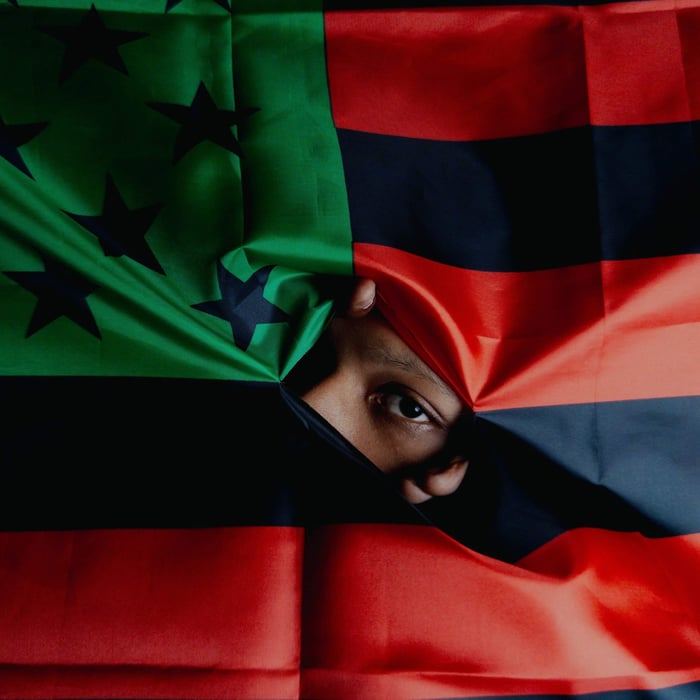
And the addressee has been on the cover the whole time.
Natche was that boy. And the room he can now afford to build is full of grown men saying, at full volume, everything a boy like that grows up waiting to hear.
Dahi didn’t make Black Boy Alternative to prove he can make “alternative” music. He made it to prove that “alternative” can be an emotional category, not just a guitar setting—and that men will tell the truth if you build them a safe enough groove to stand on.
Our verdict: People who like collaboration-heavy albums where the features are the therapy session will actually love this—especially if you’re drawn to songs that admit need without dressing it up. If you want a producer debut where the producer dominates the spotlight, you’ll get annoyed fast. This isn’t a selfie; it’s a well-lit waiting room with feelings magazines.
FAQ
- What does “Black Boy Alternative” mean in the context of the album?
It feels like Dahi naming the in-between space he grew up in—hip-hop and R&B alongside alternative and rock that didn’t always get treated as “his.” - Is this album more about Dahi as an artist or about the guest vocalists?
The guest vocalists carry the confessions, but the through-line is Dahi’s: the drums, the grooves, and the way the songs are staged like conversations he’s been avoiding. - What’s the emotional center of the record?
The recurring question of identity and care—“Who are you now?”—and the repeated attempt to ask for gentleness without feeling weak. - Does Dahi actually sing on the album?
Yes—his voice shows up notably on the chorus of “Square Up,” and it lands like a deliberate decision to stop hiding for a minute. - Which songs feel like the closing statement?
“Drowning” feels like the final lock-click, with conditions, pressure, and a confession that refuses to soften itself.
If you want something tangible to match the album’s “room you can walk into” feeling, consider picking up a favorite album cover poster and make your wall do some of the talking: https://www.architeg-prints.com
 | DISCOUNTGET 30% OFF*Use code on your next order:
|
* This post may contain affiliate links, meaning we earn a commission if you make a purchase through these links, at no additional cost to you.