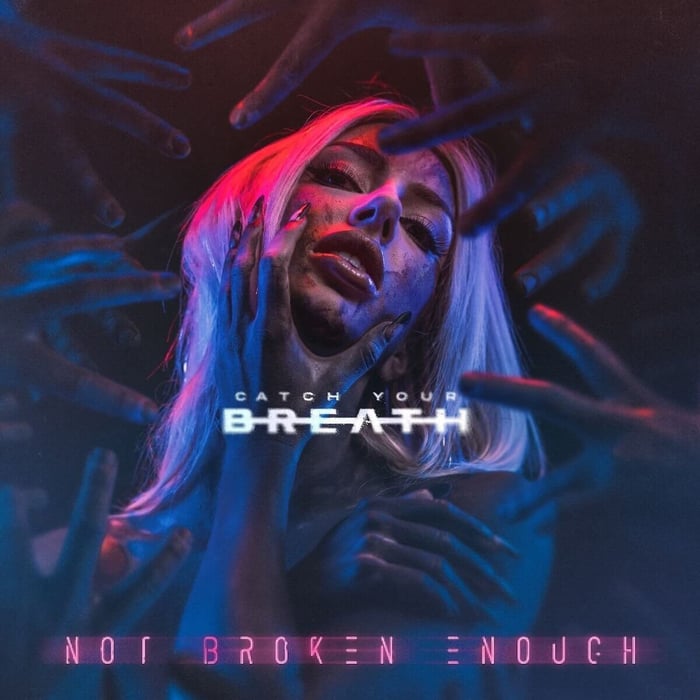
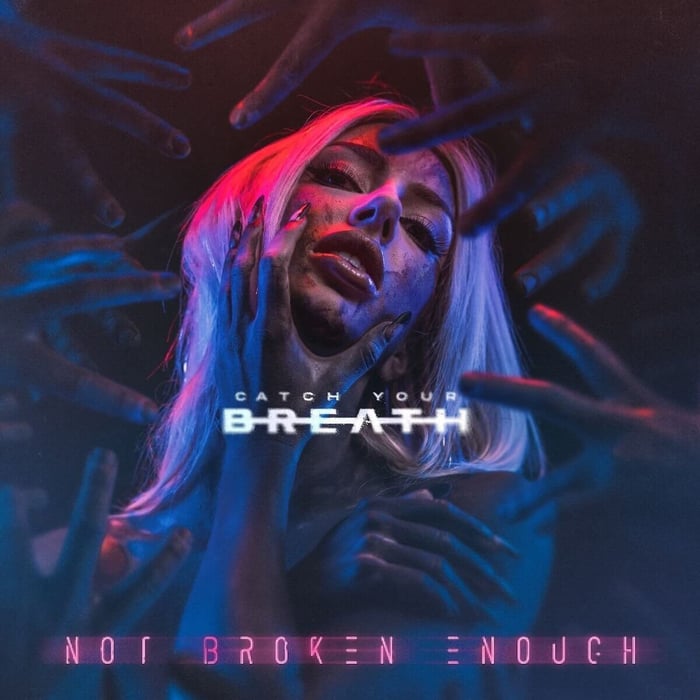
Not Broken Enough Review: Catch Your Breath Turns Pain Into a Neat Spreadsheet


 See more Architeg Prints stories on Google.
Not Broken Enough Review: Catch Your Breath Turns Pain Into a Neat Spreadsheet
Catch Your Breath weaponizes Not Broken Enough—heartbreak, rage, regret, and that awkward “maybe I was the problem” aftertaste. It’s confronting on purpose.
Here’s the trick this album pulls right away
Some albums “explore emotions.” This one drags them into the kitchen, turns on the bright light, and starts naming ingredients. Not Broken Enough isn’t revolutionary for choosing a relationship autopsy as its subject—plenty of records do that—but it feels oddly confrontational in how plainly it says the quiet parts. Not in a poetic, floaty way either. More like someone blurting the truth and then immediately hating themselves for being that honest.
And yeah, I get the appeal: who needs therapy when you can just let CATCH YOUR BREATH do the spiraling for you? The album’s basically a guided tour through heartbreak, rage, regret, and the reluctant little hallway that leads toward acceptance. What surprised me is how little it tries to distract you from the mess. It doesn’t dress the feelings up. It points at them.
“Contaminated” sets the mood: airy, wounded, and suspiciously calm
The opener, “Contaminated,” doesn’t kick the door in—it exhales. It’s airy and atmospheric, like the music is trying not to make any sudden moves. That’s not softness; that’s tension. It feels like the moment right before the argument becomes the argument, when you already know what’s wrong but you’re still pretending the room isn’t filling with smoke.
As an opener, it does something smart: it frames the emotional origin point instead of jumping straight into the peak meltdown. The song “explains” without over-explaining, and that choice matters because the album stays remarkably linear after this. No chaotic pacing flips, no jarring “now we’re angry / now we’re fine” whiplash. You can trace the emotional trajectory cleanly because the band lets the rawness show and doesn’t hide behind randomness.
That said, I wasn’t sure at first if the restraint meant the album was going to blur together. On a first pass, the steadiness almost felt too tidy—like pain arranged alphabetically. But that concern doesn’t really hold once the songs start sharpening their edges.
The album’s storytelling is almost too readable—and that’s the point
A lot of records confuse mood swings for plot. Not Broken Enough doesn’t. It moves forward like someone replaying a relationship in order, scene by scene, trying to catch the exact moment it went unrecoverable. The “linear” approach is a gamble: it risks predictability. But it also makes the emotional punches land harder because you feel the build, not just the outbursts.
This is where the album feels “confronting” in a specific way: it refuses to let the listener dodge the timeline. You don’t get to skip ahead to empowerment. You sit in the ugly middle.
“Carnivore” is the moment the record stops being polite
If you want the track where the album shows teeth, it’s “Carnivore.” The synths give it lift—almost like the song is trying to float above its own anger—while the drums keep it pinned to the floor. Then the guitars come crashing in and out like they’re arguing with the idea of calm.
Vocalist Josh Mowery sells the emotional volatility with melismatic runs that stretch words across multiple notes, which sounds pretty on paper but feels unhinged in practice—in a good way. He’s not just singing frustration; he’s prolonging it, like he can’t stand arriving at the end of the sentence. The whole thing plays like breakup stages stacked into one track: anger, frustration, hurt, reflection, and that last little flicker of “wait, was I wrong too?”
A reasonable listener could say it’s overdramatic. I’d argue that’s the entire intent: this track is where the album admits it’s not trying to be mature. It’s trying to be accurate.
“Rewind” doesn’t want closure—it wants the relationship erased
Then “Rewind” comes in soaked in hurt. The tones feel ghostly, like the song is haunted by its own memory. It’s steeped in reverie and desire, but not the sweet kind—the bitter kind that wishes the whole thing never happened.
And that’s a nastier emotion than “I miss you.” Missing someone is romantic. Wishing it never happened is scorched-earth. “Rewind” makes that distinction clear, and it’s one of the album’s sharper choices: it’s not begging for repair, it’s fantasizing about undoing time.
I kept waiting for it to soften into nostalgia, but it doesn’t. It just stares at the bruise and describes the color.
“Control” is the album admitting love can be a prison with nice lighting
The record’s emotional thesis gets spelled out in “Control.” Mowery frames it with a line that’s a little too real to be comfortable:
“who’s ever given their whole world to someone, only to realise they’ve accidentally handed over the keys to their own prison” — Josh Mowery
That’s not subtle, and it’s not supposed to be. Not Broken Enough works hardest when it turns the protagonist’s internal logic into a room you can stand inside. This song doesn’t just say “I’m hurt.” It explains the mechanism: devotion turning into captivity, intimacy turning into leverage.
Someone could argue it’s melodramatic language. Maybe. But heartbreak is melodrama when you’re living in it. The song understands that and doesn’t apologize.
The penultimate “[Gen]inside” feels like the last conversation you rehearse in the shower
The album’s penultimate track, “[Gen]inside,” brings in KAMI KEHOE, and her presence matters. Her voice has an angelic clarity that doesn’t “save” the song so much as it changes the lighting in the room. Suddenly the record sounds less like a fistfight with memory and more like the exhausted aftermath.
What “[Gen]inside” really feels like, though, is a final conversation with the specter of the other person—the one you’ll never actually have, so you stage it internally. There’s acknowledgment here that both people were imperfect, which is a risky move this late in an album that’s been so emotionally charged. It could’ve undercut the rage. Instead, it makes the rage sound less performative and more human.
I’ll be honest: part of me wanted the feature to go even harder, to create a bigger contrast. But the restraint is the point—it’s not a duet for spectacle. It’s a moment of uneasy recognition.
“Hollow Dreams” closes the book, then stares at the cover for a minute
“Hollow Dreams” is the embodiment of closing a book you didn’t enjoy reading—but needed to finish anyway. It opens with a slow, reversed swell that sounds like entering (or exiting) a different mindset, like the album is literally rewinding your nervous system.
And then: clarity. Not happiness. Not triumph. Just the heaviness lifting enough to create space. The subconscious weight that sat over the earlier tracks dissipates, and there’s room to breathe again—almost like the album finally earns the band name.
The best twist is how it flips the emotional stance from “Rewind.” Earlier, the fantasy was erasure: I wish this never happened. Here, the question becomes more contemplative and strange: if I could do it all again… would I? That’s not closure; it’s emotional fatigue making room for curiosity.
From the stinging entry point of “Contaminated” to the drained, inquisitive tone of “Hollow Dreams,” the arc actually feels complete. Not “fixed.” Complete.
What the album is really saying: the things people don’t say during breakups
The core of Not Broken Enough is confession—stuff people want to say mid-breakup but either swallow to seem composed or unleash and regret instantly. It walks a thin line between vulnerability and emotional restraint. The harsher lyrics get softened by the music’s levity in some moments, while other lines get amplified by gritty, emotional screams.
That balancing act mostly works. Mostly.
Here’s the mild criticism: for all its strong moments, CATCH YOUR BREATH still doesn’t fully lock into a signature sound that feels unmistakably theirs. The album has identity as a story, but sonically it occasionally feels like it’s borrowing familiar shapes. That doesn’t ruin it—it just keeps the band from sounding inevitable.
And yet, the evolution is obvious. Compared to their 2023 album Shame On Me, this feels more confident—like a band that stopped asking permission to be messy. The emotion doesn’t feel sanded down for palatability. It feels like they finally trusted the discomfort.
On second listen, I realized my initial worry about the album being “too linear” was backwards. The linearity isn’t a limitation—it’s the knife. You don’t escape the timeline, so you don’t escape the consequences.
Release details (because yes, timing still matters)
Not Broken Enough is set for release on August 28 via Thriller Records.
If you’re the type who likes keeping up with the band’s updates the old-fashioned way, they’re on Facebook (searching their official page is enough—no need for extra link clutter).
Conclusion
Not Broken Enough doesn’t try to reinvent breakup music. It tries to stop you from lying to yourself while you’re listening to it. The best songs don’t chase catharsis—they recreate the ugly loop: anger that collapses into regret, tenderness that curdles into control, and the exhausting little calm that arrives when you finally accept the story already happened.
Our verdict: People who like emotionally direct, storyline-heavy alt-rock/metalcore will eat this up—especially if you’ve ever replayed an argument in your head like it’s a favorite movie you hate. If you need a band to sound instantly “iconic” or hyper-unique from the first chorus, this album might feel like a brutally honest diary read over familiar chords—and you’ll get bored before the wounds even scab.
FAQ
- Is Not Broken Enough a concept album or just a collection of songs?
It plays like a single relationship narrative with a clear emotional timeline—way closer to a concept arc than a random grab bag. - What’s the best starting track if I don’t want to listen in order?
“Carnivore” is the quickest proof the album has bite, while “Contaminated” explains the emotional premise cleanly. - Does the album ever shift out of heartbreak mode?
It doesn’t “move on,” but “Hollow Dreams” does bring a noticeable change: less weight, more clarity, and a rare willingness to reconsider. - How does the feature on “[Gen]inside” change the album?
KAMI KEHOE’s vocal adds a softer texture that makes the penultimate moment feel like reflection instead of just impact. - What’s the main weakness of the record?
Even with strong songwriting and performance, the band still feels like they’re a step away from a truly unmistakable signature sound.
If you’re the kind of listener who judges an album by its cover almost as much as its chorus, you can shop a favorite album cover poster at our store: https://www.architeg-prints.com/ — it fits the whole “hang your feelings on the wall” vibe.
 | DISCOUNTGET 30% OFF*Use code on your next order:
|
* This post may contain affiliate links, meaning we earn a commission if you make a purchase through these links, at no additional cost to you.