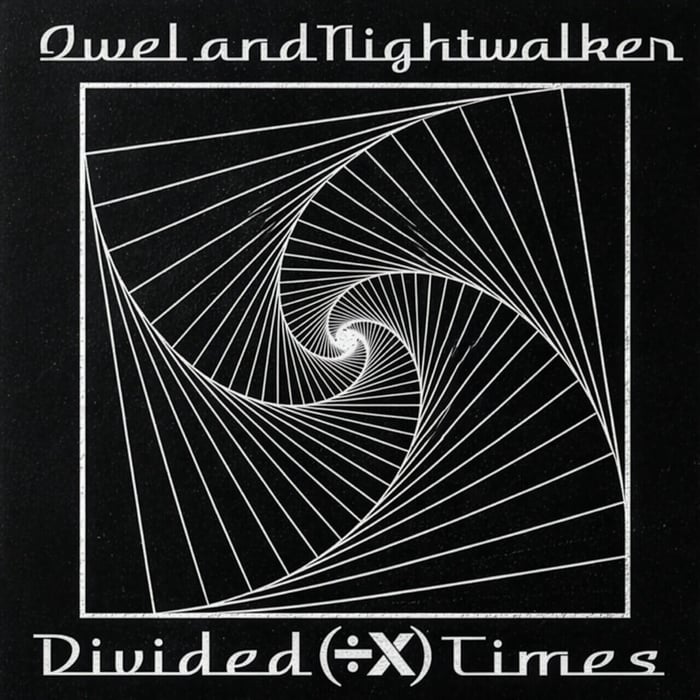
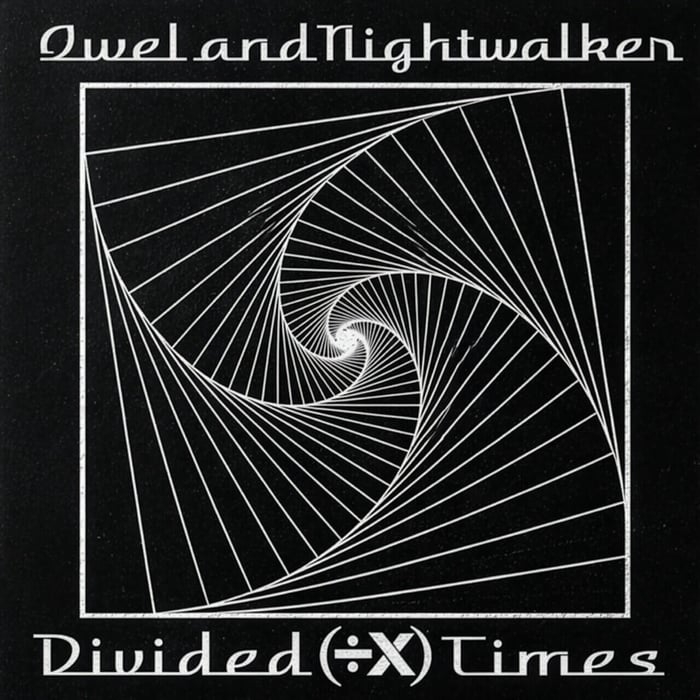
Divided Times Review: Qwel & Nightwalker Turn Rage Into a Blueprint


 See more Architeg Prints stories on Google.
Divided Times Review: Qwel & Nightwalker Turn Rage Into a Blueprint
Divided Times isn’t “socially conscious rap” so much as a work schedule for your conscience—tight drums, tighter bars, and no excuse left standing.
Start Here: This Album Doesn’t Want Your Weekend
Divided Times doesn’t ease in. It kicks the door, checks your pockets for excuses, and then starts itemizing what you’ve been trained not to notice. Qwel and Nightwalker aren’t making “a vibe.” They’re building a pressure system—one that keeps tightening until you either listen closely or turn it off because you’d rather keep your day intact.
A Quick Reality Check: This Comes From a Specific Chicago DNA
There’s a certain strand of Chicago rap that came up around the early 2000s where the whole point was to steal the oxygen out of a bar—dense syllables, jazz-dust textures, crews trading verses like they were trying to outwork each other rather than out-charm each other. That’s the lineage Divided Times taps into, whether it says so out loud or not.
Qwel has always sounded like he’s carving language into something load-bearing. On this album, that “corner-end” bluntness—those brick-by-brick syllables—feels unusually sure of itself. And the big decision here is obvious: he hands the entire production slate to Nightwalker. No producer carousel, no aesthetic tourism. One world, one mood, one steel-colored stare.
That choice matters because it pins Qwel in place. He can’t hide behind a different beat palette when he wants to soften a point. Nightwalker keeps the tracks brooding and hard-edged, and Qwel stands up straighter inside them. It’s not versatility; it’s commitment. You can argue that’s limiting. I’d argue it’s the whole thesis.
“Hologram”: Letting Someone Else Strike the First Match
The first creative flex is that Qwel doesn’t even take the opening verse. “Hologram” starts with Denizen Kane—Typical Cats kin, same general ecosystem—over a tense, tightened loop that feels like it’s been pulled too far and might snap.
“Here eye come in alone, a witness and a digger of graves, a killer of giants and a runaway slave, a filler of chasms and a builder of bridges.”
Kane comes in talking like someone who’s not trying to “set the tone” so much as set the terms. He frames himself as a witness, a grave-digger, a bridge-builder—big language, sure, but it lands because it’s delivered like a work order. Then he drags the phrase “in these divided times” into the center of the room and starts pointing: pipelines, prisons, systems that manufacture outcomes while pretending they’re accidents.
What hits is how rapping gets treated like labor. Not art-as-freedom—art-as-contracting. Sixteens as construction materials. “Spill actual facts,” rip them open, build synapses. The verse keeps returning to cause-and-effect, like he’s trying to rewire the listener’s sense of time: futures you “can’t see” but that “already happened.” It’s almost rude how quickly it asks you to keep up.
And honestly? It’s a smart move to let Kane go first. It leapfrogs the project past the usual “here’s the main character” intro and throws you right into the record’s real obsession: systems—how they grind, how they recruit, how they normalize.
If you came for a rapper-centric showcase, this opening basically says, “Not today.”
“Buy More Clocks”: Wage Slavery, But Make It a Hook You Can’t Unhear
From there, “Buy More Clocks” is where Qwel shows the album’s other trick: turning a tiny phrase into a trap. The track moves with a treadmill rhythm—mechanical, hungry, relentless. And Qwel opens with a line that sounds almost comically plain: “Got me a job, bought me a clock.” Simple. Too simple. Then it starts to rot in your mouth.
Because once the beat’s in motion, the words start coughing up what that clock actually buys:
- your thoughts
- your sleep
- your peace
- your breath
- “every little bit of me, but let me keep the rest”
That’s the point: the workplace doesn’t just rent your time, it starts collecting your insides. Qwel doesn’t romanticize it. He doesn’t even melodramatize it. He just lays it out like a list of missing items.
Denizen Kane and Jam One push it further, sharpening the language into something openly hostile toward the myth of “work hard and you’ll be fine.” The capitalism framing here is blunt enough to irritate people who prefer their critique served as metaphor: pyramid scheme, anti-poor machine, the kind of line that’s meant to be repeated out loud, not politely appreciated.
The album’s intent shows itself here: it’s not trying to “start a conversation.” It’s trying to make complacency feel embarrassing.
“Indian Burn”: The Map Gets Named, and the Brunch Crowd Gets Called Out
“Indian Burn” runs on the same anger, but it turns that anger outward into geography. The “have-Nots” starving while the “haves” gorge—sure, that’s familiar language. What makes it sting is how the song doesn’t leave it in the abstract. It starts naming neighborhoods. It starts drawing the city like a ledger.
- Harvey.
- Posen.
- Englewood.
- Humboldt Park.
- Pilsen.
- Roseland.
That’s not name-dropping. That’s pointing. And the line that really tells you what Qwel is doing is when he frames the nation as math: “one nation under numerator, monetized.” It’s a nasty little image—people reduced to decimals, value assigned like a spreadsheet function.
Then he takes a shot at the spectators: the people who prefer to be told about inequality over brunch, at a safe distance, as if awareness is a substitute for involvement. That’s a specific target, and some listeners will hate it. But that’s also the record being honest about who it’s mad at: not only the obvious villains, but the comfortable audience that wants the story without the discomfort.
And the chorus lands a line that’s sharper than the usual cliché: money isn’t the root of evil—it fertilizes well. That’s the album in one sentence: it’s not interested in moral theater; it’s interested in how conditions grow.
“Good Morning Jesus”: Border Theater, Biblical Imagery, and a Jackhammer
“Good Morning Jesus” is where the record goes from critique to confrontation. The premise is almost absurd on purpose: Jesus arriving at the Southern border and getting stopped by agents asking for papers. The agents bark for visas, mock “broken English,” and the song doesn’t treat it like satire—it treats it like policy with a soundtrack.
“We gon’ need to see your visas / We no speaky broken English.”
Qwel comes in like someone holding a trumpet the way Joshua held one at Jericho—ready to bring the wall down. And then he clarifies, because he knows exactly how listeners misread things:
“I ain’t talking about Fox.” The line lands like a hard elbow: this isn’t a culture-war wink, it’s a direct hit.
The hook is the most telling part. Qwel admits,
“I don’t even rap no more,” and then reframes what he’s doing as demolition: a jackhammer chiseling rock away. That’s the album confessing its method. This isn’t rapping as display. This is rapping as removal—taking apart the hardened material people have learned to live with.
Then he turns and aims at rappers too—especially the kind who learned the aesthetics online but never earned the grip. All reach, no grasp. He basically calls out performative technique: bars that look impressive until you try to hold them. The verse pulls the camera back from digital posturing to the block, to joints and churches, to actual community physics.
One detail sticks: the kids losing “life, light, and mind” before they even find pride, while the “OGs” steering them “ain’t even old enough to drive.” That’s not a punchline. That’s a bleak little paradox, and it says Qwel isn’t nostalgic about street mythology. He’s irritated by how quickly it gets recycled into another machine.
Nightwalker’s Production: One Mood, Many Angles (And One Spot Where It Blurs)
Nightwalker being the sole producer gives Divided Times its physical weight. These beats have a rough, sampled-down quality—thick, destructive, drums heavy enough to feel in your gut. Nothing here floats. Even the air sounds crowded.
And he does vary the angles:
- “Buy More Clocks” comes off fast and spooky, like work anxiety turned into motion.
- “Golden Plane” sprawls and sky-gazes, the long track that finally lets the album breathe without pretending the pressure’s gone.
- “Good Morning Jesus” makes room for seriousness—not softness, but focus.
- “Indian Burn” feels like pocketgear getting rubbed raw: friction, repetition, heat.
That said, the part that lost me for a minute is how similar a couple of the loops feel when placed side by side. Put “On My Mama” next to “Book of Baby Names (Bang Bang),” and the pounding loop-and-snare patterns start to blur in the darkness. I’m not saying they’re the same song—just that the album occasionally leans so hard into its chosen palette that it risks turning distinct moments into one long hallway.
At first listen, I took that as a problem. On second listen, I wasn’t so sure. The sameness started to feel intentional—like Nightwalker’s forcing Qwel to create contrast with pacing and language, not with beat switches. Still, a little more separation between those two cuts wouldn’t have hurt.
Qwel’s Real Trick: He Bends the Story Where the Beat Won’t
Here’s the thing: the production is heavy, but Qwel is the real difference-maker. His delivery tightens, then suddenly bursts away. He’ll run a line straight into a turn the track doesn’t take, like he’s refusing to be escorted by the instrumental. That’s a risky way to rap because it can sound like you’re fighting the beat instead of riding it.
But it works here because it matches the album’s emotional posture: impatience with tidy resolution.
It’s a lot to ask of one rapper—especially when the beats are consistently dense and the themes consistently loaded. And I’ll admit, I kept waiting for a moment where he’d sound winded by his own mission statement. It never really comes. He sounds like someone who’s decided the only ethical way to deliver these ideas is to not soften them for comfort.
If this record has a flaw, it’s not lack of craft. It’s that it’s allergic to relief. Some listeners will call that “powerful.” Others will call it exhausting. Both camps will have a point.
Where to Start: The Tracks That Explain the Album’s Spine
If you want the fastest route into what Divided Times is actually doing, I’d start with:
- “Divided Times” — the title track anchors the mood and the intent.
- “Buy More Clocks” — the labor critique is the album’s most instantly legible punch.
- “Indian Burn” — the geographic specificity turns political talk into something with addresses.
Not because they’re the only highlights, but because they show the three main pressures this album applies: time, money, and place.
Conclusion: This Isn’t Background Music—It’s a Demolition Permit
Divided Times sounds like it was made by people who are tired of art being treated as decoration. Nightwalker builds a single, grim architecture and refuses to add throw pillows. Qwel walks through it like he’s checking structural integrity, pointing at cracks, and telling you which ones were designed that way on purpose. If you want comfort, this album will politely decline. If you want language that bites down on reality and doesn’t let go, it’s right here.
Our verdict: People who like their rap dense, political, and unflinchingly workmanlike will love Divided Times—especially if you don’t need a chorus to hold your hand. If you need bright hooks, easy replay, or “good vibes,” you’re going to bounce off this like it’s a brick wall (because it kind of is).
FAQ
- What’s the core sound of Divided Times?
Thick, rough-edged sampled production with heavy drums—one consistent mood that forces the rapping to create the movement. - Does the album focus more on personal stories or social critique?
Social critique leads, but it’s delivered like lived experience—especially when the songs start naming neighborhoods and spelling out daily extraction. - Why does Denizen Kane open “Hologram” instead of Qwel?
It feels like a deliberate statement: the album isn’t about a single hero narrator, it’s about a shared set of pressures in “divided times.” - Are there any moments where the production gets repetitive?
Yes—placing “On My Mama” near “Book of Baby Names (Bang Bang)” makes their loop-and-snare shapes feel a little too close. - Who should start with which track if they’re new to Qwel?
“Buy More Clocks” first (immediate impact), then “Indian Burn” (specificity), then “Good Morning Jesus” (the album’s sharpest confrontation).
If this album puts an image in your head you can’t shake, you might as well frame it—shop a favorite album cover poster at our store: https://www.architeg-prints.com.
 | DISCOUNTGET 30% OFF*Use code on your next order:
|
* This post may contain affiliate links, meaning we earn a commission if you make a purchase through these links, at no additional cost to you.