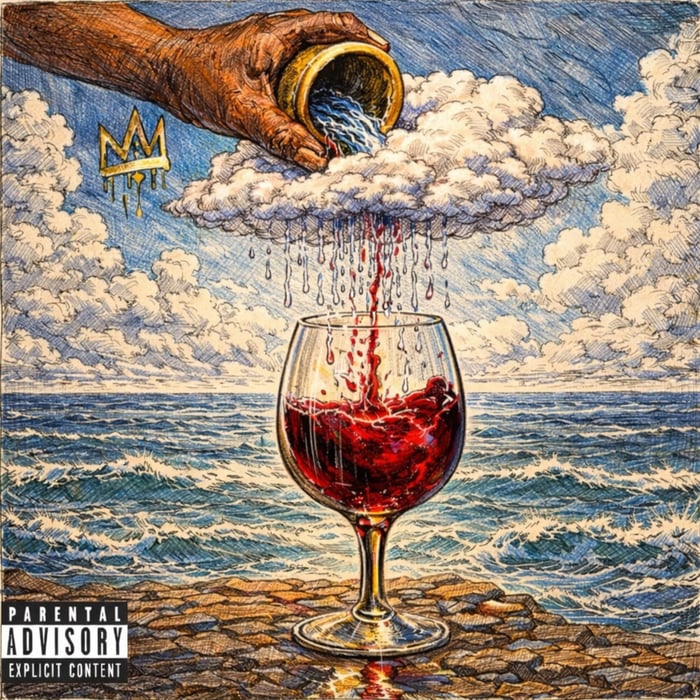
Water to Wine Review: Cashus King & Big O Turn Faith Into a Flood


 See more Architeg Prints stories on Google.
Water to Wine Review: Cashus King & Big O Turn Faith Into a Flood
Water to Wine isn’t “spiritual rap” so much as a pressure test—grief, politics, addiction, and bravado all shoved into the same wet metaphor.
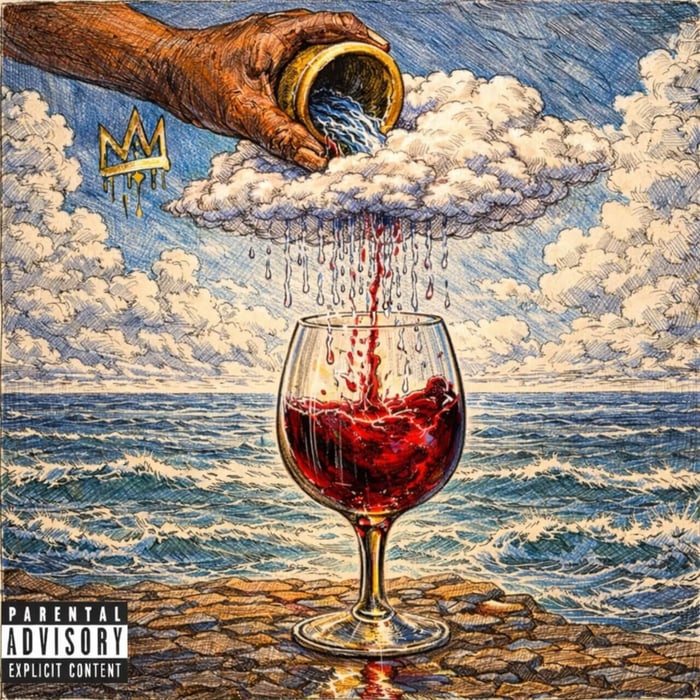
A miracle story, but the album treats it like a chemistry experiment
Here’s the thing: Water to Wine doesn’t use its title as a cute reference. It uses it like a dare. The whole listen feels like Cashus King standing over six stone jars going, fine—let’s see what this turns into when I keep pouring my life into it.
The album opens by dragging in the wedding at Cana—wine gone early, water brought in, transformation happens, the point being you learn who you’re dealing with by what they change and how. And Cashus (a Los Angeles rapper who’s also recorded for years as Co$$) takes that framework way too literally in the best way: water keeps changing costumes—street rain, soda, holy water—while Big O, a British producer, keeps the production world steady enough that you can actually track the transformation.
And yeah, I thought at first the concept would be decorative—one of those “theme albums” where the theme shows up like a screensaver. But it keeps coming back, and it keeps landing in different places. On second listen, the metaphor stops being a trick and starts being the album’s engine.
“Barry Water” is the thesis statement, and it’s not subtle
The first real mood-setter is “Barry Water,” and it pulls a move I didn’t expect: it starts with a spoken sample that plays like a carved-in-stone manifesto over a bass pulse that’s deliberately slow, almost fake-glacial.
Barry White drops the tone like a judge reading a sentence:
“We are all gods on this planet, every man and every woman. We create life. We can take life. We control what goes into the sea, whether the fish can live or not.” — Barry White
That quote isn’t there to sound cool. It’s there to frame the entire record as a question of power: who gets to poison the sea, who gets to drink clean, who gets to claim divinity, and who gets drowned by other people’s choices. If that sounds heavy-handed, it is—but the album isn’t pretending to be polite.
My only hesitation? For a second I wasn’t sure the sample would matter past the intro. Plenty of records drop a grand quote and then forget it. This one doesn’t.
“LikWid (Big Fish)” turns the street into an aquarium
From there, “LikWid (Big Fish)” brings the rapping in, and it’s instantly clear Cashus isn’t doing water as scenery—he’s doing it as an environment you’re forced to adapt to.
The streets flood into a kind of watery future where everybody’s moving in the same current: cartels, junkies, cops. The writing is sweet-tongued but not soft. He’s painting police with cuffs “wired,” a snitch exposed in the crowd—except the snitch is a rat on signal, which is exactly the kind of detail that makes the song feel like it’s happening right now, not in some abstract “urban narrative” fog.
Then he lands the turn that makes the track click: the people stop being “folk” and become something evolved to survive the flood.
“We ain’t got limbs, we got fins, swim with the big fish,” he says, and it’s not a flex so much as a bleak adaptation. The song’s argument is simple and cruel: the system changes the body.
“Precipitation” makes history feel like weather—and that’s the point
The next big pivot is “Precipitation,” and this is where the album stops flirting with politics and just walks right into the room.
Cashus compresses slavery and forced conversion into a couple lines—new god, slave whips, plantations—then keeps going: conquistadors, children in cages, imperial nations manufacturing hate and then stealing it back from the people they first “discovered.” It’s not presented like a textbook; it’s presented like a storm pattern that keeps repeating.
The hook welds it all to the album’s central alchemy:
“Precipitation wet the vine, turn the wet to wine.”
Then Fashawn shows up and refuses to sit patiently in the metaphor. He name-checks COINTELPRO, Jim Crow, Halliburton—less “let’s wait for rain” and more I’m making weather because I’m tired of drought. He raps, “I’m not sitting waiting on precipitation/I’m rain dancing ‘cause I been impatient,” and it works because it challenges the song’s own inertia.
A sampled voice yanks the track back into the idea of slavery as a framework built for oppression and Black survival as the measure that exceeds it. That move—history as weather, survival as the only real forecast—is one of the record’s sharper decisions.
“Dark Agua” widens the blame until it hits everybody
The indictment gets even more blunt on “Dark Agua.” It runs through rigged elections, war corporations, and a system engineered for the elite. What’s nasty about it is that it refuses the comfort of a single villain.
The chorus lands on: “They is you, they is me, they society.”
That line will annoy some people because it denies the cheap pleasure of pointing at a monster across the room. But I think that’s the intent: if you can blame one person, you can stop listening. If it’s “society,” you have to sit there and squirm.
Big Tone takes the last verse into a jail cell—convicted of something the nation was founded upon—then the final sample drags the whole thing back into the present, landing on U.S. policy and the death camps in Gaza. It’s not a tidy ending. It’s not even an “ending.” It’s the album refusing closure.
“Drippin’ (Soakin Poems)” is where the pen turns into a weapon
Now the record gets dangerous.
“Drippin’ (Soakin Poems)” is Cashus at his densest and most threatening. The writing turns physical—like he’s trying to make language conduct electricity. He’s talking voltage and amperes, jamming cleats into sockets, electrocuting feeling, killing the devil with his tongue, folding song and money-gospel and actual gospel into one frantic run.
And then there’s the one line that reads like a sideways commentary jab—he doesn’t stop to lecture, he just spits it and keeps moving:
“Bozos to Bezos to Bushes and the Ellisons/AI wrecks got the humans out there selling skin.”
That’s the album in miniature: vivid, furious, slightly overloaded with meaning, and determined not to pause for breath. The “soaking poems” idea is him naming his own method—writing so saturated it drips, aggressive enough to short-circuit profit motives but still stuck to them.
“Cherry Cola” loosens the collar, then quietly scolds you
After all that voltage, “Cherry Cola” lets air back into the room. Samuel Adeoti’s keys warm the pocket, the bounce relaxes, and P-Rawb and L.O.U. make it feel like a coast-to-coast handoff where Cashus stays the sharpest voice.
The soda metaphor turns into a diss aimed at weak emceeing: “All them raps is flat, I twist your cap, you ain’t got no fizz.” It’s funny because it’s petty, and it’s petty because he’s serious. Then, in the same breath, he crowns himself “Word God,” master of utterance. That contradiction—mocking artificial fizz while claiming divine language power—is exactly the kind of swagger the album keeps testing.
And the intro’s little instruction lands with a quiet authority: kids should put their soda aside and drink water. This isn’t just a metaphor album—it’s also a lecture disguised as a hangout track. Whether you enjoy that depends on your tolerance for being parented by a rapper mid-song.
“Drownin’” is the lowest point—and it doesn’t pretend otherwise
Nothing hits lower than “Drownin’.” The song is built for people who know what drowning actually feels like—water in the lungs, grief as an anchor, the surface always just close enough to be cruel.
Cashus keeps reaching for air and keeps getting pulled back down. When he can’t speak the pain, he writes it, and the writing circles an overdose that might be the last one. The chorus tries to lift—“I can climb on top of the mountain, I’m still drowning”—but the whole point is that elevation doesn’t save you if the flood is inside you.
If I’m nitpicking, this is where I wanted the hook to do a different job. It’s not that it’s bad; it’s that it can’t deliver the relief the words are begging for. Maybe that’s intentional. Still, it’s the one moment where the song’s structure feels less capable than its subject.
“Holy Water” turns the metaphor into a rehab meeting
Then “Holy Water” walks straight into a rehab room and says the quiet part out loud: God is sober, the devil is the drug.
The track plays like a meeting transcript. A man named Troy speaks first; the room responds. Then Cashus introduces himself: “My name is Cash, I’m an addict.” He says he’s three months clean. He thanks the group for helping him find purpose and be of service. He admits he alienated loved ones just to make the meeting.
No heroic framing, no poetic fog. The choice to keep it plain is the power move. Plenty of rappers can dramatize addiction; fewer are willing to sound ordinary inside the most important confession of their life.
“Like Lava for Water” aims at his mother with careful hands
From there, the album shifts into something rarer than outrage: gratitude that doesn’t beg for applause.
On “Like Lava for Water,” Cashus asks his mother’s pardon with a measured penance. He pushes the tribute through Like Water for Chocolate and the warrior Tita—he frames his mother as someone who goes to war like Xena. He thanks her for covering the tab when his dad got laid off, for pulling “a world” out of the war he was handed.
And then he drops the debt in one line that stings because it’s not dressed up:
“When my father went MIA, my mother was there/If my mother disappears, I wouldn’t be here.”
That’s not a clever bar. It’s a truth with the volume turned up.
“Hydration (Reign)” is the album trying to lift you without lying
Next comes “Hydration (Reign),” and it counters the decline with uplift that doesn’t feel corny—mostly because it’s built on a pun that keeps earning its keep: rain/reign.
Adeoti’s piano carries it, and the message is pointed at Black dreamers: doubt is drought, blessing is rain that breaks it. Cashus tells people to keep watering the plants of their fantasy, to anoint doubt for liquidation. It’s motivational, sure—but it’s not generic. It sounds like advice from someone who’s watched dreams die from neglect, not from someone selling a poster.
I’ll admit, I usually brace myself when a rap album goes “inspirational.” Here, it didn’t make me roll my eyes. That surprised me.
“Streams” drifts global, and Blu almost floats out of the song
“Streams” runs the softest current on the album. The ensemble vibe drifts down the Amazon, the Congo, the Mississippi—one long river of shared feeling—while Shari holds the melodic hook so steadily that Blu can barely sit inside the track.
Blu still delivers the kind of pain that doesn’t need dramatic music: burying his people again and again, and the ache of being kept from fathering his daughter, the mother telling him not to bother. The line he lands on is the one that keeps his faith stitched together:
“But God walked water.”
It’s a simple line, but in the context of this album it reads like a survival mantra, not a flex.
“Potions” brings funk into the same water without breaking the spell
“Potions” swerves hardest sonically: a West Coast funk glide where intoxication and medicine pour out of the same bottle. That double-use idea—what heals also numbs, what numbs also kills—fits the album’s obsession with transformation.
G-Holy answers from Philadelphia with a verse out of fourteen-floor projects, crack corners, and the pill era, and he closes with a roll call of the dead. The funk doesn’t make it fun. It makes it feel normal, which is worse.
And this is where Big O deserves real credit: he keeps the world intact underneath everything. Same breakbeat grain, same low-end weight, so the funk never feels like a playlist detour. It’s still the same river—just a different color.
“Swimmin’” moves the fastest and says the least
Then there’s “Swimmin’,” and this is where the writing thins.
Cashus piles on bravado—fish, sharks, Superman, the Flash, walking on water, talking to the Father. It’s kinetic, it’s energetic, it’s built for motion. But it chases speed more than meaning, and for an album that’s been so deliberate with metaphor, this one feels like shadowboxing.
To be fair, that might be the point: sometimes swimming is just not drowning. Still, it’s the track where I kept waiting for a line that would stab through the surface, and it never quite comes.
When the water turns to wine, the album refuses to celebrate
Finally, “Wine” arrives, and the so-called miracle shows up with no confetti.
Cashus is back in an unforgiving desert hunting for a pond—more forsaken than enlightened—stalking the well like it owes him an answer. He prays to Nefertiti to free him from writer’s block. Then the album hands him the produced adage that sums up the whole mission:
“Turn the water to the wine and turn the wine to art.”
But the sophistication isn’t pure. His father’s passing rises again—first loss of childhood—and then the verse halts to name the departed through three metaphors: Charlie Harvey, Arthur Johnson, and Christopher Miras. It’s like he can’t get away from the grave long enough to enjoy the miracle.
And then he asks the question the whole album has been rotating in different lighting: what are you living for, who are you living for?
The miracle, when it finally happens, gets placed right beside the headstone. That’s the album’s real move: transformation doesn’t erase loss. It just gives it a different container.
Where I land: favorite moments, and why they matter
Looping back, I get why the standout moments are the ones that commit hardest to the album’s core trick—turning one substance into another without pretending anything got “fixed.”
If you want my personal anchors on Water to Wine, it’s these:
- “Precipitation” for turning history into weather you can’t dodge
- “Drippin’ (Soakin Poems)” for making writing feel like a live wire
- “Wine” for refusing the easy payoff and putting the miracle next to grief
Not because they’re the “best,” but because they’re the tracks where the album’s intent becomes unavoidable.
Conclusion
Water to Wine keeps pouring the same element into different situations—street, history, addiction, faith—and it never lets you pretend the container doesn’t matter. The trick isn’t that water becomes wine. The trick is that it becomes testimony, and testimony isn’t celebratory—it’s evidence.
Our verdict: People who like rap albums that argue with themselves—political, spiritual, bruised, and stubborn—will actually like Water to Wine. If you need hooks to rescue every heavy idea, or you want your metaphors to behave politely and not mention prisons, overdoses, or policy, this one will feel like being handed a glass of truth and being told to stop complaining about the taste.
FAQ
- What is the core idea behind Water to Wine?
It treats “Water to Wine” like a repeating experiment—everything (rain, soda, holy water) becomes a different version of survival and transformation. - Is Big O’s production varied or repetitive?
It’s consistent on purpose: the same breakbeat grain and low-end weight act like one riverbed, even when the songs change color. - Which track hits the hardest emotionally?
“Drownin’” goes for the throat—grief, suffocation, relapse fear—without dressing it up as triumph. - Does the album ever get too preachy?
Sometimes it gets close—especially when it instructs rather than implies—but it usually earns it by sounding lived-in instead of slogan-driven. - What’s the weakest moment on the tracklist?
“Swimmin’” has the most motion and the least bite—fun energy, thinner writing, like it’s sprinting past its own point.
If you’re the type who wants a physical reminder of an album’s whole mood—concept, pressure, and all—you can shop a favorite album cover poster at our store: https://www.architeg-prints.com. It fits this record’s vibe: bold image, heavy subtext, no small talk.
 | DISCOUNTGET 30% OFF*Use code on your next order:
|
* This post may contain affiliate links, meaning we earn a commission if you make a purchase through these links, at no additional cost to you.