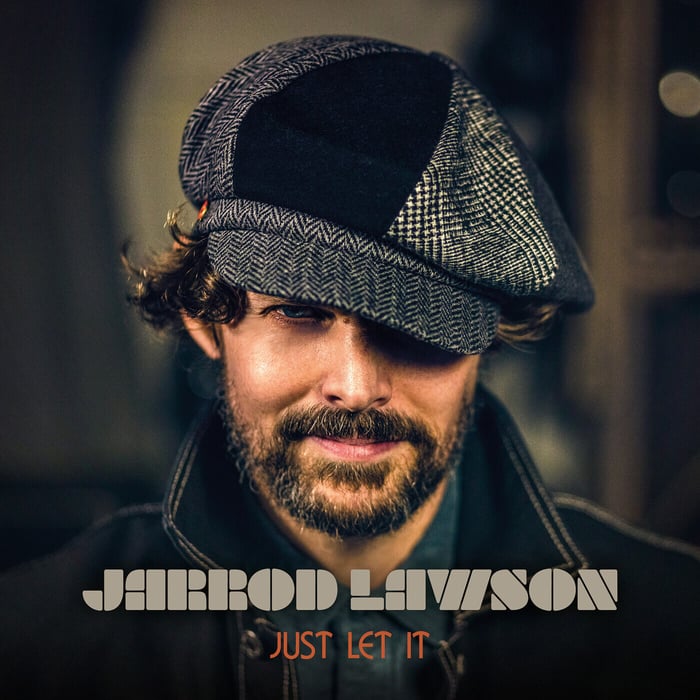
Jarrod Lawson’s Just Let It Review: Soul So Smooth It’s Suspicious


 See more Architeg Prints stories on Google.
Jarrod Lawson’s Just Let It Review: Soul So Smooth It’s Suspicious
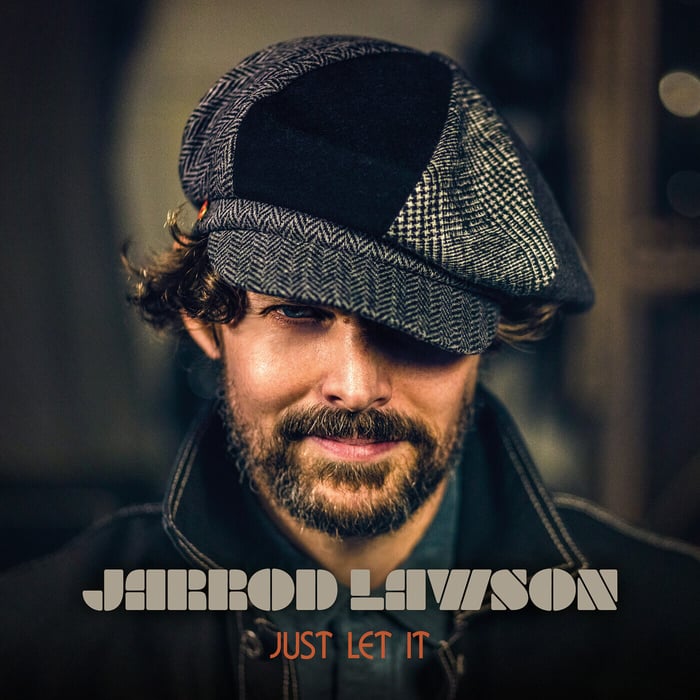
Jarrod Lawson’s Just Let It sounds luxurious enough to hide its flaws—until the lyrics step forward. Here’s what the album is really doing.
Let’s start with the part your body notices first
Some albums enter through your ears. Just Let It goes straight for your ribcage.
The keyboards don’t “sit in the mix.” They sit in your chest like a warm weight—present, physical, almost architectural. Jarrod Lawson produced the whole thing himself, and you can hear that control immediately: the band sounds thick without getting messy, patient without dragging. Chords get to ring out like they’ve earned the right. Nothing rushes, nothing trips, nothing begs. The sound is confident enough to be a little smug.
Lawson’s falsetto floats over all of it like it’s on rails—clean, steady, not trying to prove anything. And when he stacks his own harmonies three or four voices deep, it locks in so tightly it feels like one throat doing impossible math. He plays keys on everything, sings lead and backgrounds, and wrote or co-wrote every lyric. That level of authorship usually results in songs that feel personal, specific, unmistakably human.
Here’s the catch: the playing is precise, but the writing often refuses to be.
A lot of these lyrics are built from good intentions and soft-focus language—big feelings, few concrete images. It’s the kind of “you/baby” universality that makes songs easy to sing along to… and weirdly hard to remember as anyone’s real life.
When he finally gets specific, the album sharpens into a blade
The record keeps flirting with real detail, but it only fully commits on “Smoke Me Out,” and the difference is immediate.
The bass walks underneath Lawson while he sings about growing up on the south side of a town where ten-year-olds are packing heat and the people in charge pretend they’re cleaning things up. He names Mrs. Jones two doors down—her teenage son got gunned down. He wonders how a village can heal when guys like him just decide to leave. People tell him to get out. He basically agrees. But he won’t let them smoke him out.
That’s what I mean: suddenly there are actual humans in the frame. Mrs. Jones. Brothers selling in the streets. Mamas and kids. These aren’t symbolic placeholders; they’re characters with gravity. And it’s not just “social commentary” wallpaper—Lawson’s voice changes when he’s naming something real. The whole performance sits differently, like he knows he can’t hide behind vibe.
Arguable take: if more of Just Let It had this level of specificity, it wouldn’t just sound expensive—it would feel inevitable.
“There Can Only Be One” turns insecurity into a comedy sketch (and that’s the point)
From there, the album swings into a very different kind of honesty: the anxious-funny kind.
“There Can Only Be One” puts Lawson trading lines with Allen Stone over a horn section that sounds like it’s trying to start a parade whether anyone asked for one or not. Lawson introduces the premise with a wink that still lands like a real worry:
“Pacific Northwest grown, just like this other guy that I know,” he sings, calling them “two blue-eyed, curly-haired, soul-singing white boys with something to say.”
Then he goes for it—accusing Stone of combing through his hometown, stealing his musicians, recruiting his people like it’s some Kool-Aid compound. He even drops that Bieber thinks Stone is super cool, which is such a specific modern indignity it’s hard not to laugh.
Stone plays back, calling Lawson’s voice “sweeter than a baby’s smile” and insisting “Even Bieber wouldn’t change the dial.”
On paper, it’s a joke. In the speakers, it’s a joke with teeth.
Because underneath the banter is a genuinely nervous question: is there room for even one of them? Two white guys from the Pacific Northwest making soul music, both aware of how that reads, both trying to charm their way past the awkwardness. The affection works because the comedy keeps brushing up against anxiety. If the humor got any broader, it’d feel like cosplay. If it got any darker, it’d stop being fun.
This track is Lawson admitting—without doing a TED Talk about it—that identity and genre come with weird social math. And he’d rather sing the math than explain it.
The rappers show up and casually outwrite the headliner
Here’s something I didn’t expect: the sharpest writing on Just Let It often comes from the guests, and it makes Lawson’s softer lines sound even softer by comparison.
JSWISS hits “Let Your Heart” with a verse that actually thinks. He raps about playing mental tennis with his own decisions—about how your mind can direct movement, but “the heart make the mouth speak.” It’s clean, it’s human, and it feels lived-in instead of stitched together from inspirational phrases.
Then “I’d Do It Again” gives him another moment: he talks about putting down a deposit “two, three times, or whatever that it costed,” and says if God granted him three more chances, he’d do it just to meet her three more times. It’s not fancy. That’s why it lands.
But donSMITH on “Head-On” is the real scene-stealer.
He raps about wasting his teens trying to be AI until the meaning of AI changed—then drops the line that makes the whole feature snap into focus: “You can’t ChatGPT your way to the league.” It’s funny, sure, but it’s also a thesis: you don’t shortcut your way into being real.
He says he learned to turn his problems into furniture, like he’s been living inside his own obstacles long enough to at least decorate them. He calls his mother “mama’s Mona Lisa in Carhartt,” which is the kind of line that instantly gives you a whole person with one image. He mentions his tailor is Mossi, while his insecurities are what’s curing him—style and self-doubt coexisting like they always do.
Arguable take: those rap verses don’t just add variety—they expose how often Lawson avoids detail on his own songs.
And I don’t mean that as a dunk. It actually works in a strange way: Lawson builds the room—lush, warm, harmonically rich—and the guests bring furniture with sharp edges.
Love songs everywhere, but somehow not a single scene
From here, the record pivots into gratitude and devotion—again and again—and this is where I started to drift a little.
Lawson married Evalee Gertz in 2022, and he’s named a track for her on an earlier record. On Just Let It, she’s somehow everywhere and nowhere at once: present as an emotional center, absent as a concrete person.
- “Gentle Soul” has him fumbling through darkness until a fire comes through the shadow and a face emerges.
- “Nothing to Forgive” brings him home—he drops his phone, cuddles on the couch, because he’s got nothing left to give.
- “Authentically Me” goes furthest: he calls himself a scared little boy afraid to be seen, and says she taught him to forgive himself for thoughtless things he did.
Vocally, these tracks are convincing. The falsetto stays warm. The phrasing is gentle enough that you lean in, even when the words are general. The gratitude sounds real.
But after four declarations of gratitude with almost no specific shared moment—no “this is what happened on that Tuesday,” no odd detail, no little argument, no dumb private joke—the emotional shape starts to blur. He keeps saying she saved him, and I kept waiting for the record to tell me saved him from what room, on what day, while doing what.
Maybe that’s intentional—maybe Lawson wants these songs to function like mirrors, not diaries. I’m not totally sure. But the vagueness is a creative choice, and it comes with a cost: the songs can feel interchangeable if you listen too closely.
Still, the voice carries the sentiment in a way a weaker singer couldn’t. That’s not a small thing. A lot of artists try to sing around vague writing; Lawson sings through it.
Two kinds of letting go—one personal, one politely abstract
The album places two different kinds of release side by side, and you can hear Lawson choosing comfort in one and risk in the other.
“Do Whatchu Gotta” has him telling a partner to leave, and he does it with a line that’s half blessing, half heartbreak: “girl, get your fine ass out there and fly.” It stings because he’s watching her go while admitting he always knew she needed more. That’s a real emotional posture—supportive, bruised, trying to be generous without pretending it doesn’t hurt.
“If We Pretend” is bigger and vaguer: it asks why people walk around with chips on their shoulders, why they can’t look each other in the eye. It’s not wrong. It’s also not as gripping, because it’s about “people” in general rather than someone in particular.
Arguable take: “If We Pretend” works anyway because Lawson’s piano does half the talking the lyrics won’t. The keys imply conflict even when the words smooth it over.
And honestly, I dismissed “If We Pretend” on first listen as another tasteful grown-folk meditation. On second listen, the way the chords hang and resolve—like a long exhale you don’t quite trust—made it stick. The arrangement is doing emotional labor the lyric sidesteps.
Eric Roberson brings the missing ingredient: a personality you can picture
By the time “Laugh at Yourself” hits, the album finally stops floating and plants its feet on the ground.
Eric Roberson is the funniest thing on this LP, and it’s not close. He tells a story about stubbing his toe, feeling sorry for himself, and then God basically roasting him:
“Why you trippin’ on that toe? You got nine more.” — Eric Roberson
Lawson cracks up in real time, which matters. That little human moment—two grown men messing with each other about humility—has more personality than some of the album’s more generic encouragement songs like “Just Let It,” “Let Your Heart,” or “I Got Your Back.”
Those advice-driven tracks aren’t bad. The counsel is fine. The delivery is smooth. But the words could belong to anyone, and sometimes they do that thing where they sound like they were designed to comfort a room instead of confessing to one person.
Roberson’s appearance is proof that Lawson doesn’t need to be vague to be kind. He can be specific and still warm. He just doesn’t always choose it.
The real flex: the hands behind the harmony
Now, even when I’m nitpicking the lyrics, I’m not confused about why this album works.
Lawson can sing, and he can play—ridiculously. You can hear Chick Corea, Oscar Peterson, and Ravel living inside his chord changes. Not as name-droppy imitation, but as muscle memory: jazz fluency, classical color, that sense of harmony as motion rather than decoration.
And here’s the key dynamic: the guests brought the words, but Lawson built the room they’re standing in.
That room—thick, easy, resonant—is why you stay. Even when the writing turns to mist, the sound stays tactile. The album’s main argument is basically: beauty is a form of credibility. And for better or worse, it’s right.
Where I land with it
At the end, I’m left thinking Just Let It is a record that sometimes confuses emotional safety with emotional depth—and then randomly, brilliantly refuses to.
When it names Mrs. Jones, it hits harder. When it jokes about artistic insecurity with Allen Stone, it says something real while pretending it’s kidding. When donSMITH drops a bar about not shortcutting your way to authenticity, it reveals the album’s quiet obsession with being earned. And when Roberson shows up and tells a toe-stubbing story, the whole thing suddenly feels like actual people again.
I don’t love every “you got this” moment here. A few tracks are so gently motivational they almost evaporate as they play. But the musicianship is too physical to ignore, and Lawson’s voice—especially that warm, controlled falsetto—keeps pulling you back like it has its own gravity.
Conclusion
Just Let It is Jarrod Lawson building a plush, meticulously tuned sanctuary—and occasionally letting real life walk in with its shoes on. The album’s best moments don’t just sound good; they get specific enough to sting, laugh, or confess. And when it goes vague, the arrangements still hold the emotional weight like strong beams holding up a pretty ceiling.
Our verdict: People who love grown, keyboard-rich soul that prioritizes feel and finesse will actually like this album—and they’ll forgive the occasional Hallmark fog because the harmonies are that good. If you need lyrics with sharp scenes and messy specificity every time, you’ll get impatient and start yelling “NAME ONE DETAIL” at your speakers like a deranged screenwriter.
FAQ
- Is Just Let It more about vocals or instrumentation?
Instrumentation, even when the vocals are stunning. The keys and chord choices do as much storytelling as the lyrics. - What’s the most lyrically specific song on the album?
“Smoke Me Out.” It names people and stakes, and the whole record feels more alive because of it. - Does the album rely heavily on featured artists?
The features matter because they bring sharper writing, but Lawson’s production is the foundation—without it, the guest verses wouldn’t hit the same. - Which track feels like the album’s funniest, most human moment?
“Laugh at Yourself” with Eric Roberson. It’s humor with actual warmth, not just cleverness. - What’s the main weakness of the record?
Some songs lean so hard into universal gratitude and encouragement that they blur together—beautifully performed, but light on scenes.
If you’re the kind of listener who bonds with album aesthetics as much as sound, it’s worth putting your favorite cover on the wall—taste doesn’t have to stay trapped in your playlist. You can browse album cover posters at our store: https://www.architeg-prints.com
 | DISCOUNTGET 30% OFF*Use code on your next order:
|
* This post may contain affiliate links, meaning we earn a commission if you make a purchase through these links, at no additional cost to you.