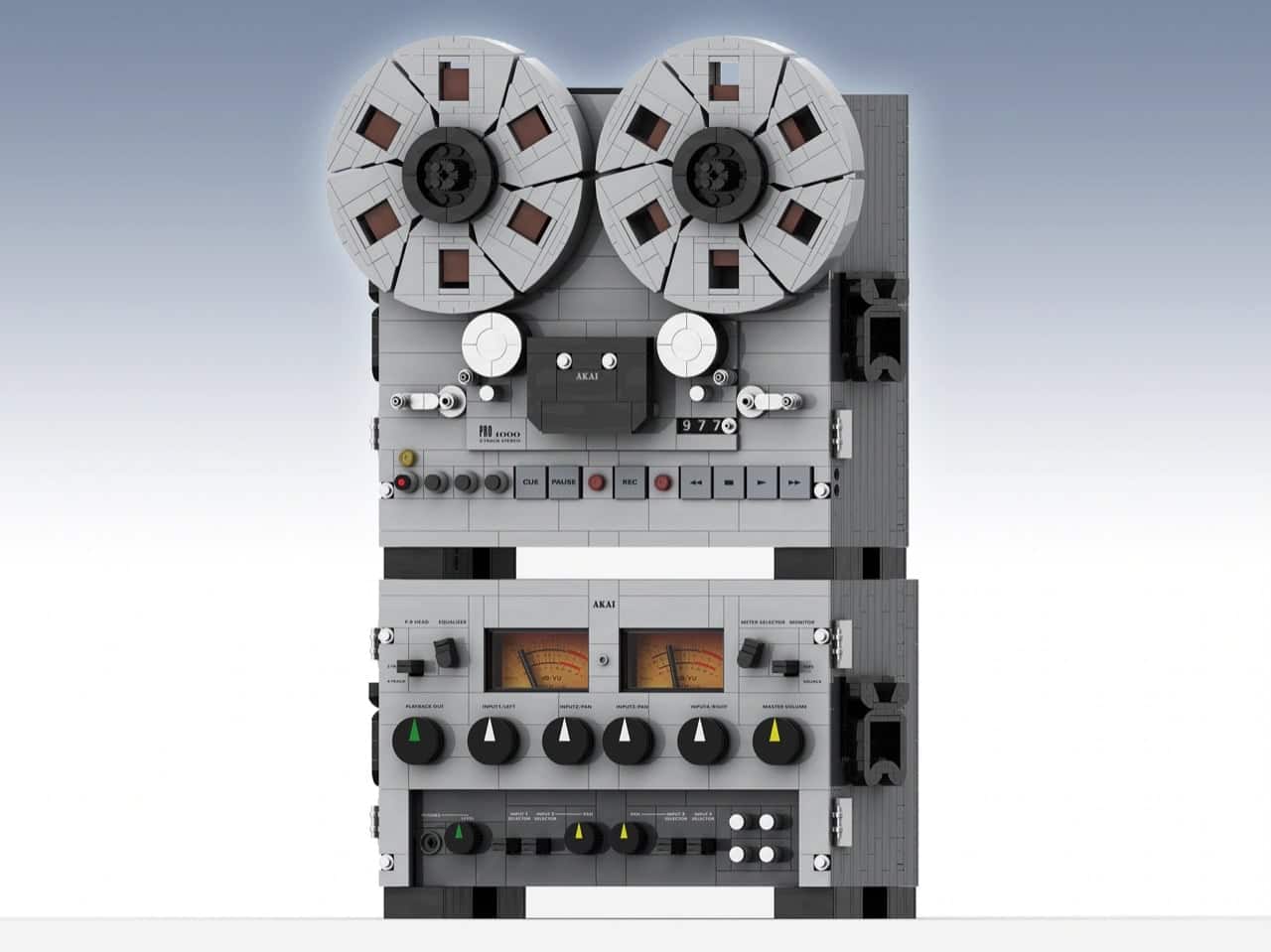
LEGO AKAI Tape Deck Brings 2,680 Pieces of Analog Nostalgia



LEGO AKAI Tape Deck Brings 2,680 Pieces of Analog Nostalgia
This LEGO tape deck recreates the iconic AKAI PRO-1000 with moving reels, swinging VU meters, and serious vintage hi-fi charm.
A Monument to Old-School Hi-Fi
There’s something wonderfully theatrical about a reel-to-reel tape machine. Before the music even starts, those giant reels announce that something important is about to happen. Now, one of the most imposing pieces of vintage audio equipment has been reimagined in a much more manageable form: a 2,680-piece LEGO tape deck inspired by the AKAI PRO-1000.
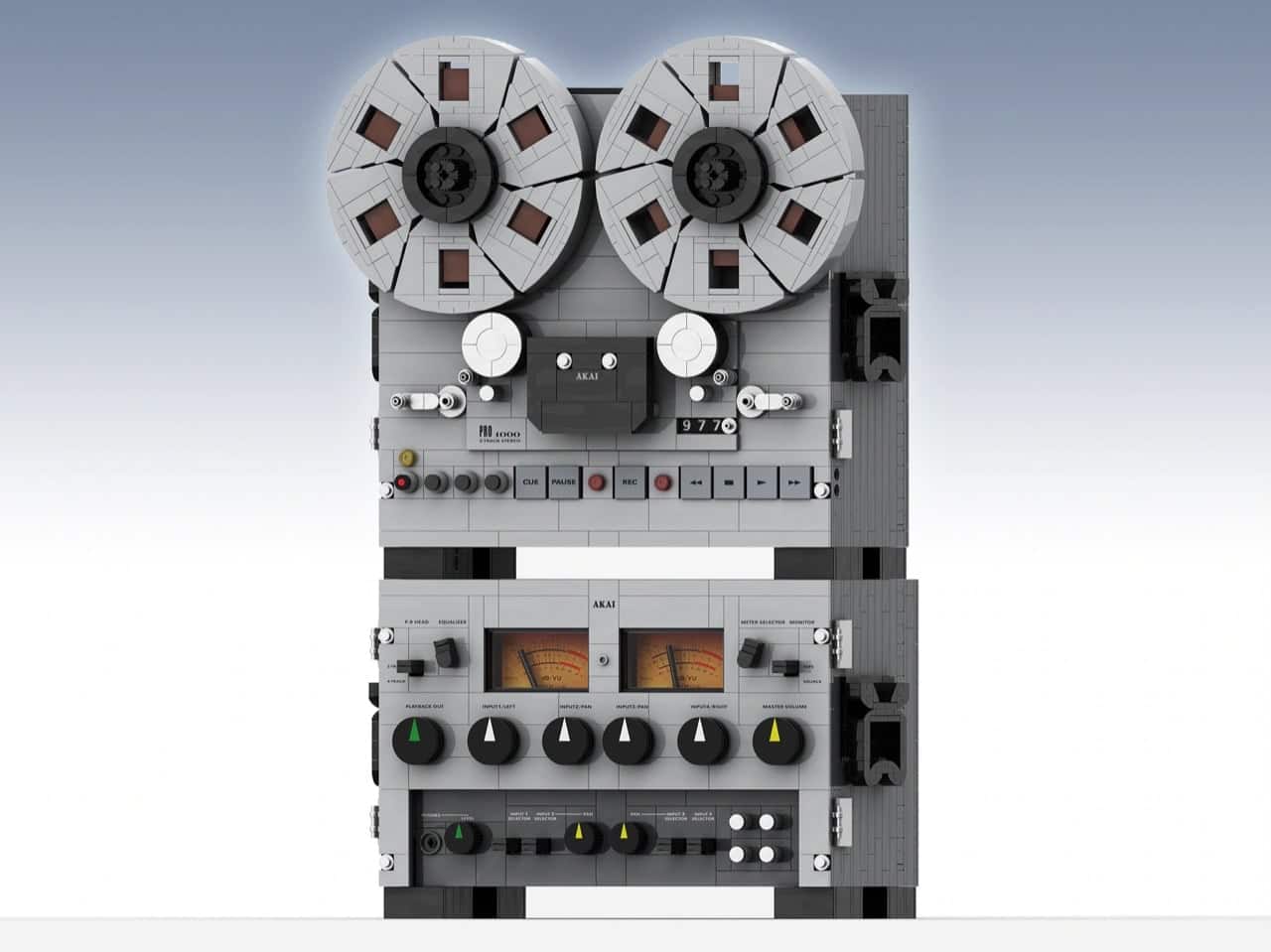
Owning a reel-to-reel deck in the 1970s wasn’t quite like owning a compact stereo system. It was closer to owning a piece of furniture. The original AKAI PRO-1000 arrived in two separate boxes, with published specifications listing the drive unit at around 62 pounds and the amplifier at approximately 22 pounds.
Together, that added up to roughly 85 pounds of serious hi-fi hardware. It’s easy to understand why one UK dealer listing recommended collecting the system in person or arranging pallet delivery. This was not the sort of audio gear you casually tucked under one arm while moving apartments.
And yet, people bought them anyway.
A machine with two enormous spinning reels had presence. It told every visitor that music wasn’t just background noise in your home. It was an event. Nobody hid a reel-to-reel deck in a closet, and certainly not one as visually dramatic as the AKAI PRO-1000.
The LEGO version keeps that bold personality while making the whole concept considerably easier to carry from one room to another.
A Compact Tribute to the AKAI PRO-1000
The project is titled the AKAI PRO 1000 Open Reel-to-Reel Tape Deck, and it was designed by Zo Lee for LEGO Ideas. The build has already earned a Staff Pick badge, giving this wonderfully niche creation an encouraging head start.
The original AKAI machine was a semi-professional deck from the late 1970s. It was sold mainly in the United States, Canada, and Japan, with a 1977 U.S. price of $1,995. That was a substantial investment, but the system offered the kind of visual and mechanical drama that made high-end audio feel almost like industrial design.
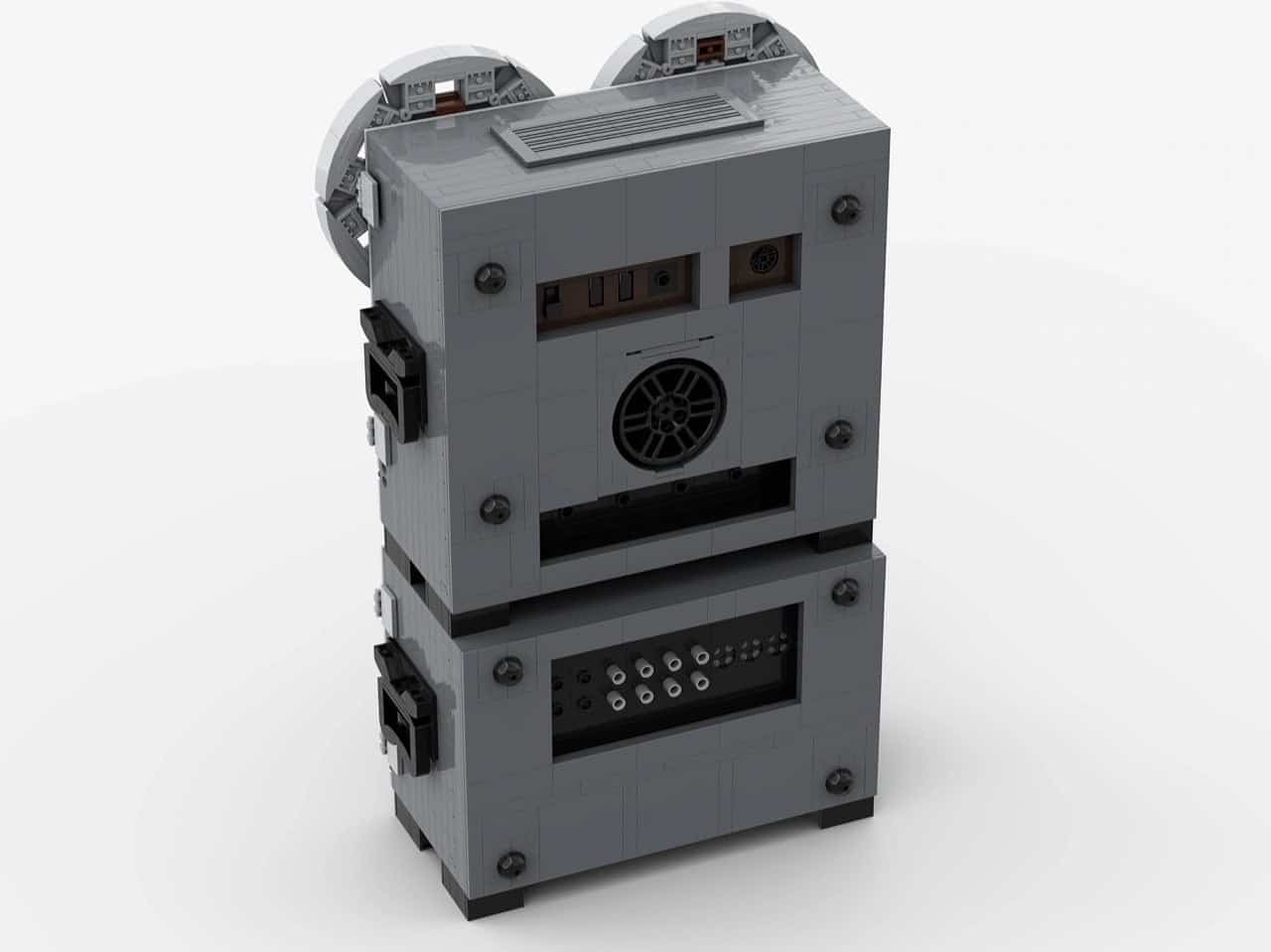
Its two main units were connected by three cables, allowing owners to position them side by side or stack them vertically. The LEGO interpretation chooses the stacked arrangement, which gives it the look of a miniature equipment tower.
At approximately 17 inches tall, 11 inches wide, and 6.3 inches deep—around 43 x 29 x 16 centimeters—the model is far more compact than the original, which measured roughly 19 inches across. It still has plenty of shelf presence, but you won’t need a pallet, a moving crew, or three friends with strong backs to relocate it.
That’s a win in my book.
Designer: Zo Lee
The Reels Are More Than Decoration
Here’s where the project shifts from a static display model into something much more fun: it moves.
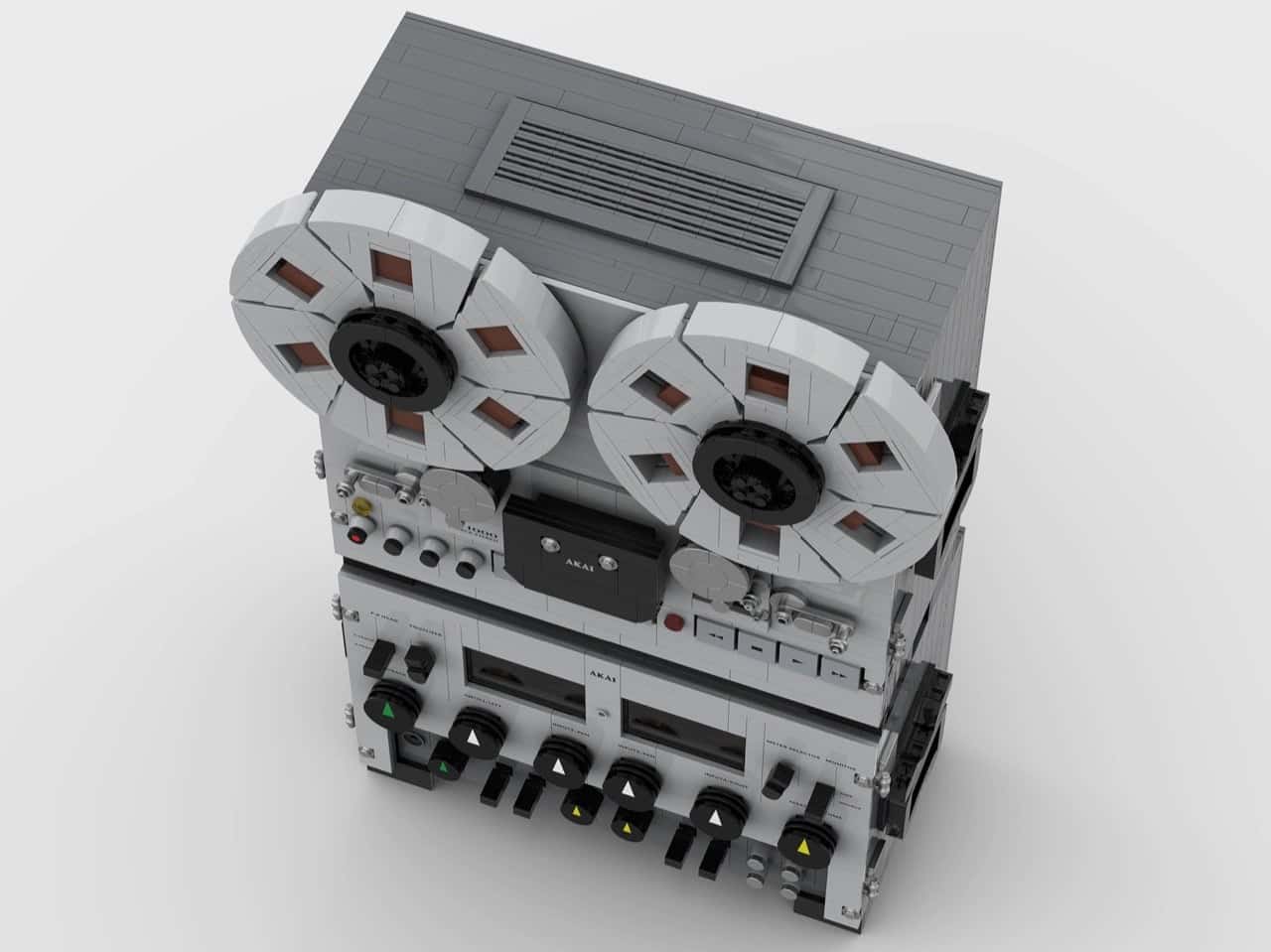
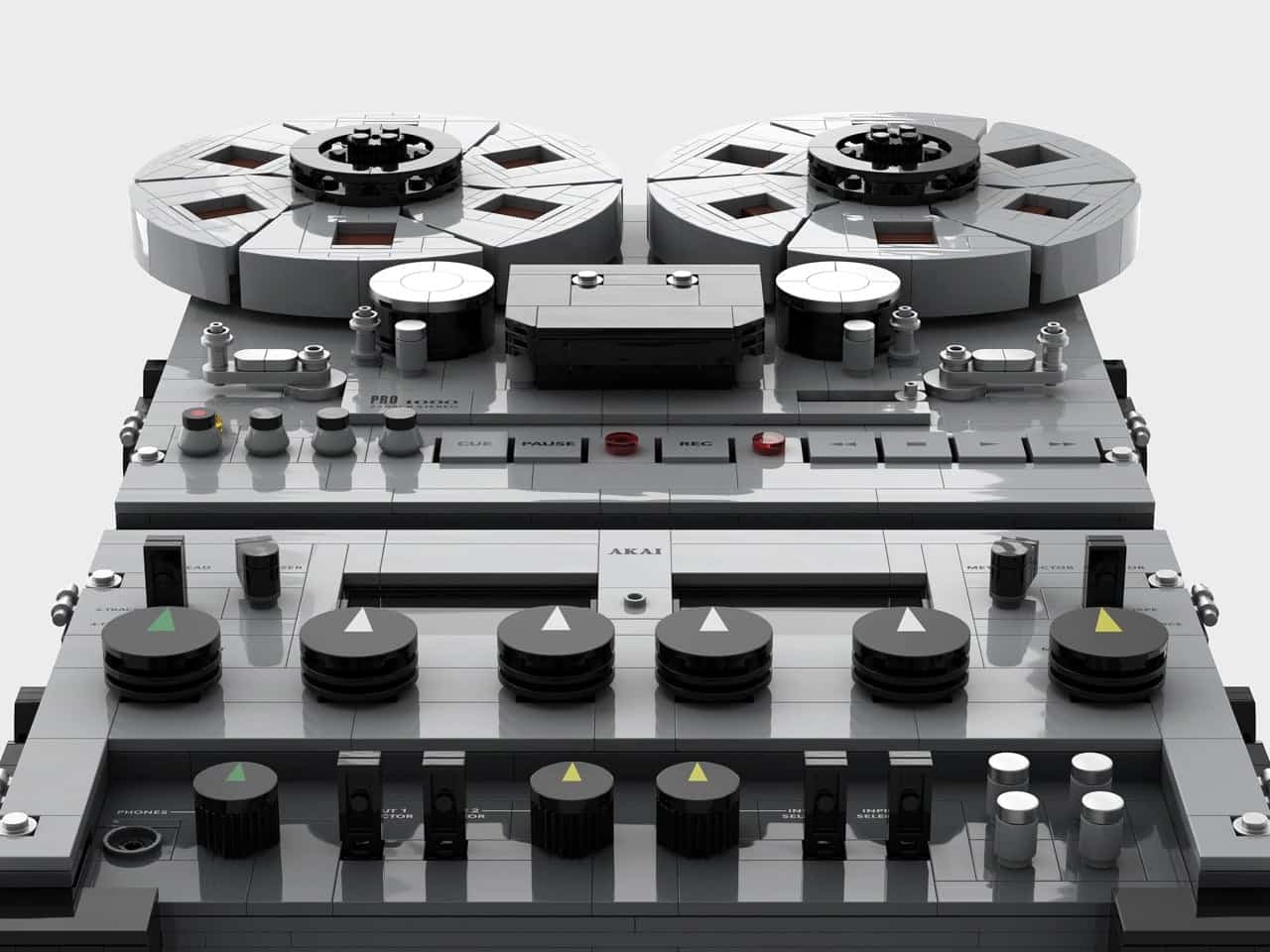
A motor turns the reels, the VU meters swing along with the mechanism, and the large control knobs rotate beneath your fingers. A removable grid on the top of the model lifts away to hold a LEGO battery, allowing the deck to operate on a shelf without requiring a nearby wall outlet.
That detail feels especially appropriate because the reels were always the main attraction on the real machine. Even people who knew nothing about tape formats could recognize the visual appeal of two large spools turning in opposite directions. The motion was hypnotic, mechanical, and just a little bit magical.
The LEGO build understands that perfectly. Powering it up becomes its own miniature performance—a silent concert of spinning reels and moving needles, even before any music enters the picture.
It’s the sort of feature that would make a casual visitor stop mid-conversation and say, “Wait, does that actually move?”
Yes, it does.
A Difficult Build With Plenty of Tiny Challenges
That movement didn’t come easily. Zo Lee describes the build as extremely difficult, and the obstacles sound like the LEGO equivalent of a final-level boss battle.
One of the biggest challenges was creating the unusual quarter-distance spacing between tiles. The large reels also needed to include their distinctive cutout windows, while the internal frame had to be strong enough to support the outer casing. Building a convincing exterior is one thing; making that exterior house a working mechanism is another matter entirely.
Then came the more complicated task of connecting the internal frame to the moving reels and VU meters. According to the creator, that process required plenty of experimentation and repeated attempts before the mechanism came together.
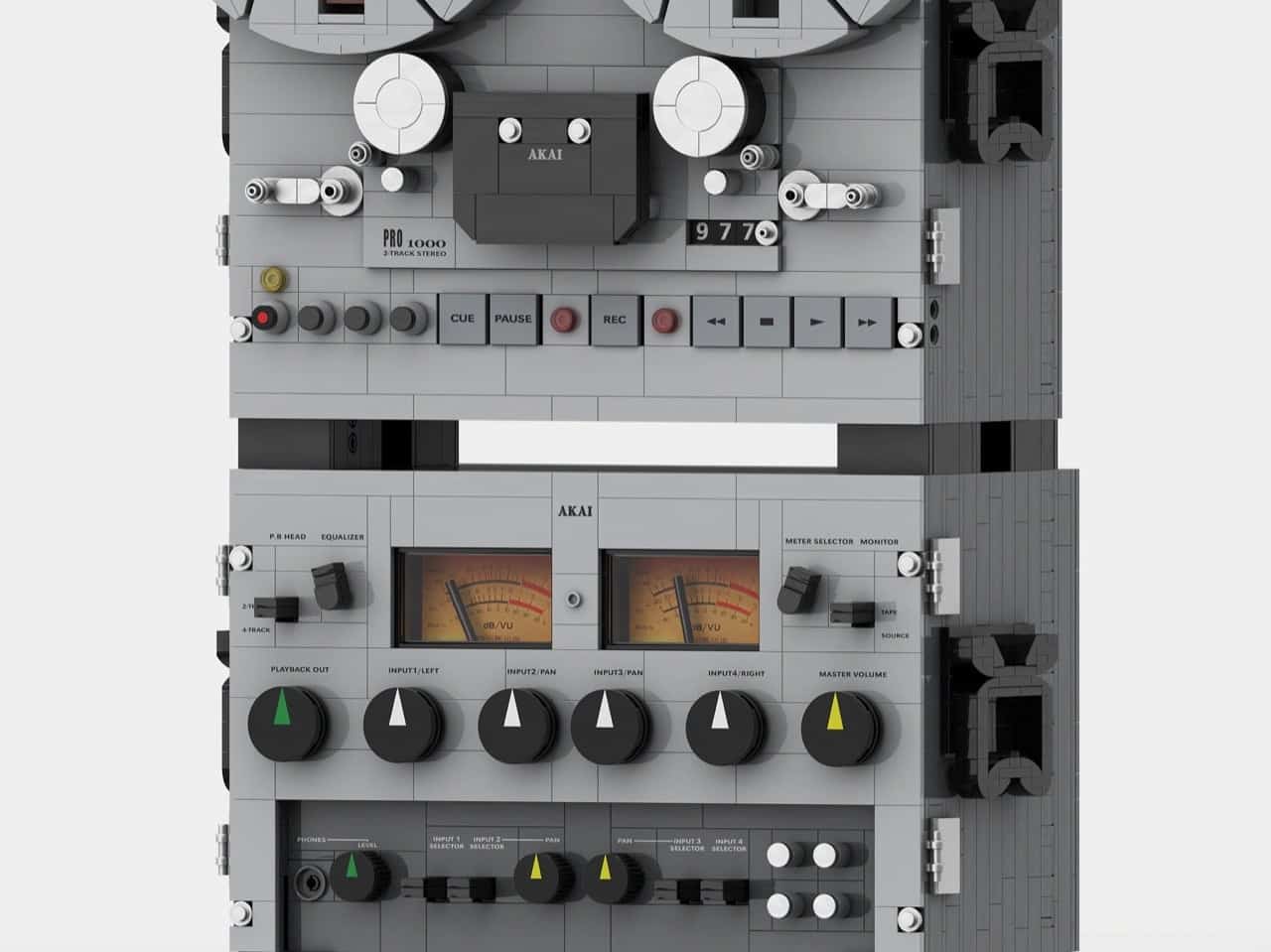
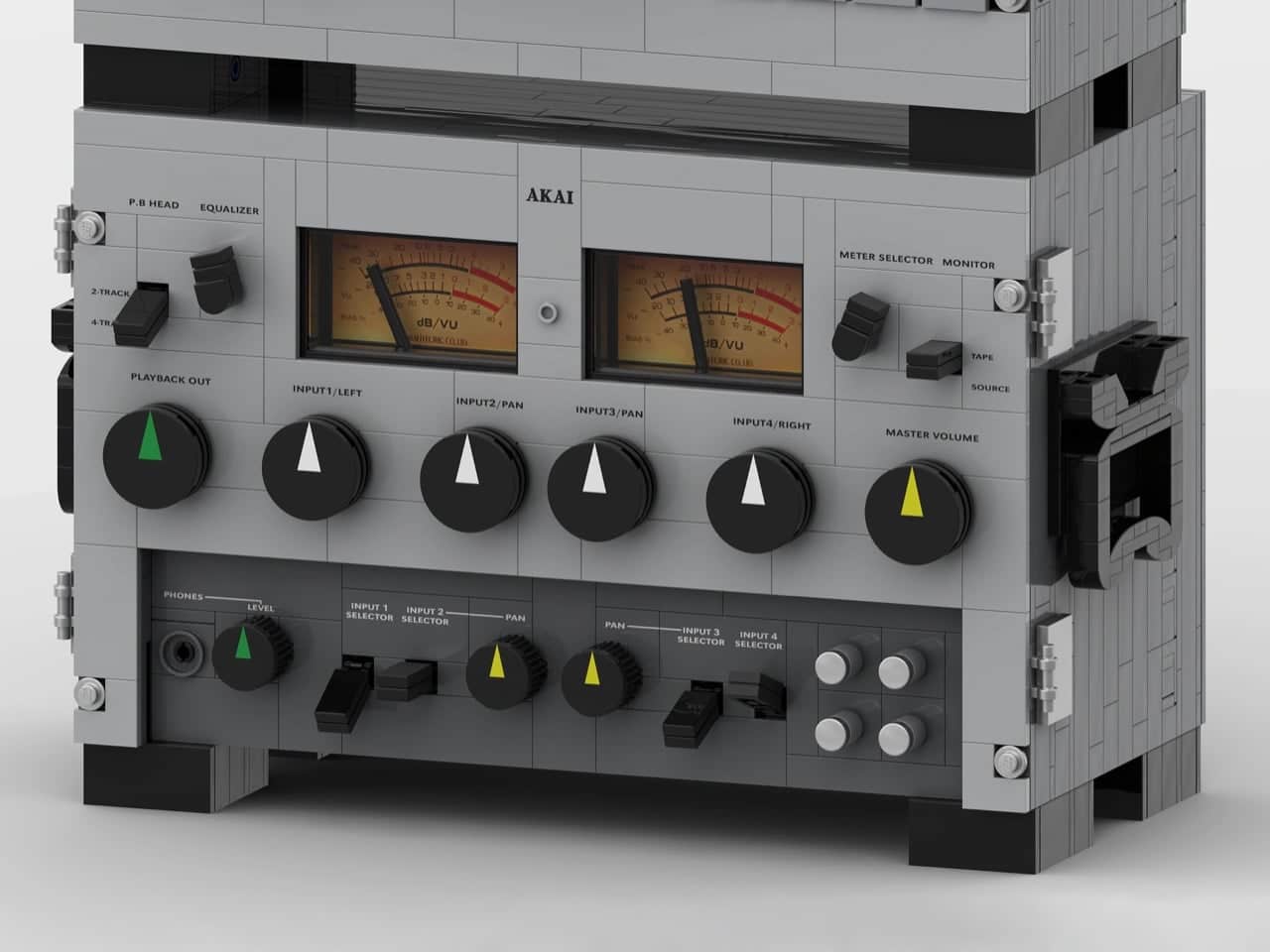
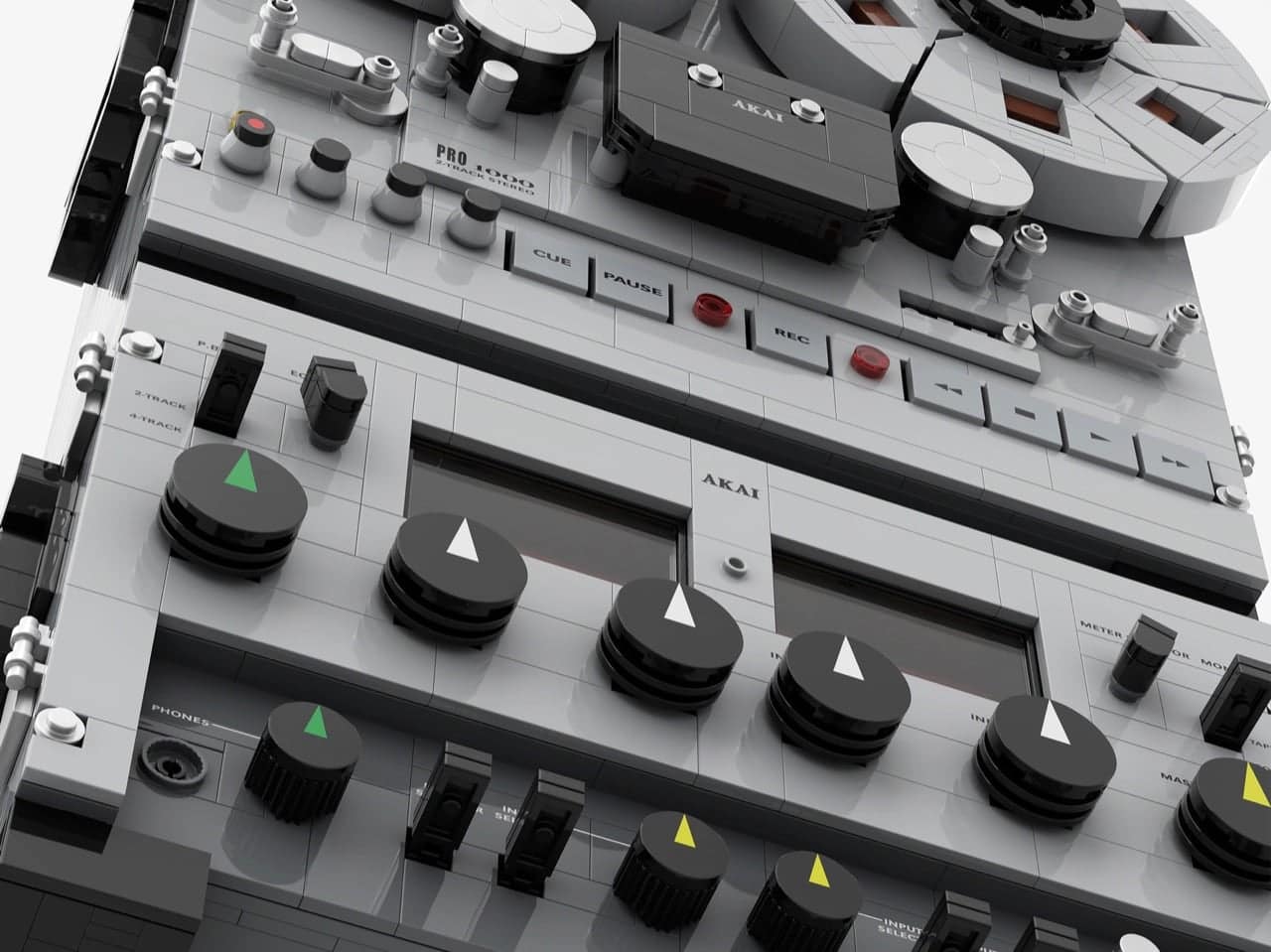
The effort is visible in the finished design. The reels use gray elements with dark red cutouts, echoing the bold visual language of vintage AKAI equipment. Black knobs feature colored pointers, and tiny transport labels mark controls such as CUE, PAUSE, and REC.
Even the tape counter is set to 977.
It’s a small touch, but details like that give the model its personality. From a few feet away, the front panel reads like real hardware rather than a collection of plastic bricks. That illusion is the entire goal of a scale replica, and this one seems to understand the assignment.
The VU Meters Add a Little Theater
My favorite detail might be the pair of VU meters.
Zo Lee says the meters swing in sync with the reels, but not symmetrically. That choice gives the model a more natural, lively feel. Rather than having both needles march together like synchronized windshield wipers, they appear to react independently.
The effect suggests live audio even though the model isn’t playing a tape. It also hides the mechanism behind two warm amber faces, creating the visual impression of a functioning audio system. If the same motor is driving both meters, the design may also achieve that effect without requiring an additional motor.
Either way, it’s clever.
The VU meters help connect this project to a small family of LEGO audio builds, including fan-created turntables and portable cassette players. A reel-to-reel machine, though, has the most dramatic moving parts of the bunch. Cassettes gave music portability, but open-reel tape offered spectacle. You could see the format working right in front of you.
That’s why the LEGO tape deck feels so satisfying as a subject. It doesn’t just represent a piece of audio equipment; it represents the ritual around listening.
Could This Become a Real LEGO Set?
The project currently has 527 supporters on LEGO Ideas, with the next milestone set at 1,000 supporters. It also has 396 days remaining to reach that goal.
The LEGO Ideas process relies on fan support. Builders submit original projects, supporters vote for the concepts they want to see developed, and projects that reach the required threshold move forward for review. A Staff Pick badge provides a welcome boost, but the most important support still comes from people who take the time to vote.
That’s where this build sits right now: full of promise, packed with clever mechanical details, and waiting for more fans of vintage audio and LEGO design to get behind it.
If it eventually becomes an official box set, it could appeal to several audiences at once. Vintage hi-fi fans would appreciate the hardware reference. LEGO collectors would have an unusual mechanical display piece. And anyone who has ever stared at spinning reels while pretending to understand every setting on an old stereo would probably find something familiar in it.
There’s also the practical advantage. You could own the visual drama of a reel-to-reel deck without recruiting friends, borrowing a hand truck, or clearing half the living room just to move it.
Why Analog Nostalgia Still Works
The charm here isn’t only about recreating an old machine. It’s about bringing back the feeling surrounding it.
Modern audio equipment tends to disappear into the background. It’s smaller, cleaner, and more convenient. That’s useful, of course, but convenience doesn’t always create memories. A giant reel-to-reel deck demanded attention. You loaded the tape, checked the controls, watched the reels begin to turn, and waited for the music to arrive.
This LEGO interpretation preserves that sense of occasion in a playful, approachable way. It turns an imposing piece of hi-fi history into something you can build, display, and demonstrate without needing a dedicated listening room.
The AKAI PRO-1000 was built to be admired as well as used. Zo Lee’s project captures that balance with moving reels, expressive meters, recognizable controls, and a structure that looks convincing from nearly every angle. It’s part model, part mechanism, and part time machine.
The LEGO AKAI PRO-1000 proves that analog nostalgia doesn’t have to be heavy, expensive, or difficult to move. Would you build this miniature reel-to-reel deck if it became an official set?
FAQ
- What is the LEGO AKAI PRO-1000 tape deck?
It is a fan-designed LEGO Ideas model inspired by the vintage AKAI PRO-1000 open-reel tape deck. The project contains 2,680 pieces and recreates the original machine’s stacked form and detailed front panel. - Does the LEGO tape deck actually move?
Yes. The design includes a motorized reel mechanism, rotating control knobs, and VU meters that swing as the reels turn. - Who designed the LEGO AKAI tape deck?
The project was designed by Zo Lee and submitted to LEGO Ideas, where it has received a Staff Pick badge. - How large is the proposed LEGO model?
The model measures approximately 17 inches tall, 11 inches wide, and 6.3 inches deep, or about 43 x 29 x 16 centimeters. - How can the project become an official LEGO set?
It needs to reach the required number of LEGO Ideas supporters before it can move into the review process. At the time described, the project had 527 supporters and was working toward its next milestone of 1,000.
Bring a little of that spinning-reel magic home with an album cover poster from our store. It’s a warm, stylish way to keep the spirit of analog listening on your wall—even when the equipment itself stays in the imagination.
 | DISCOUNTGET 30% OFF*Use code on your next order:
|
* This post may contain affiliate links, meaning we earn a commission if you make a purchase through these links, at no additional cost to you.