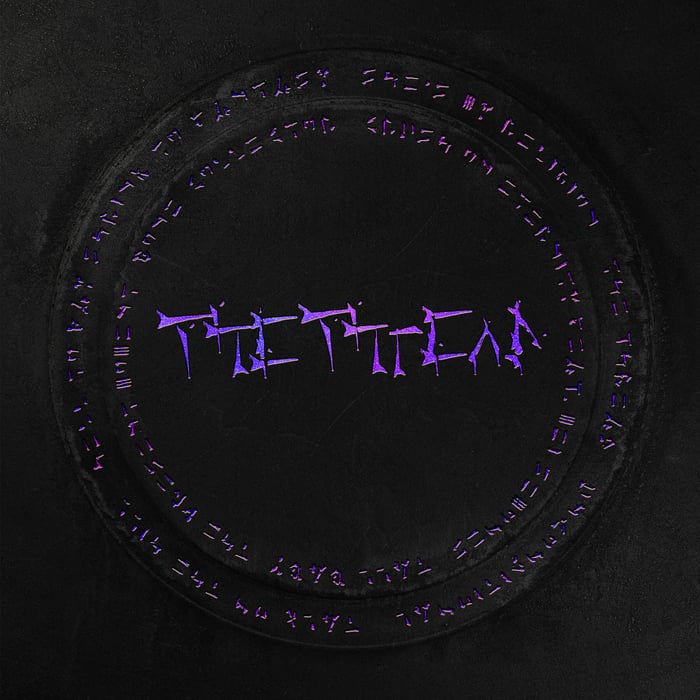
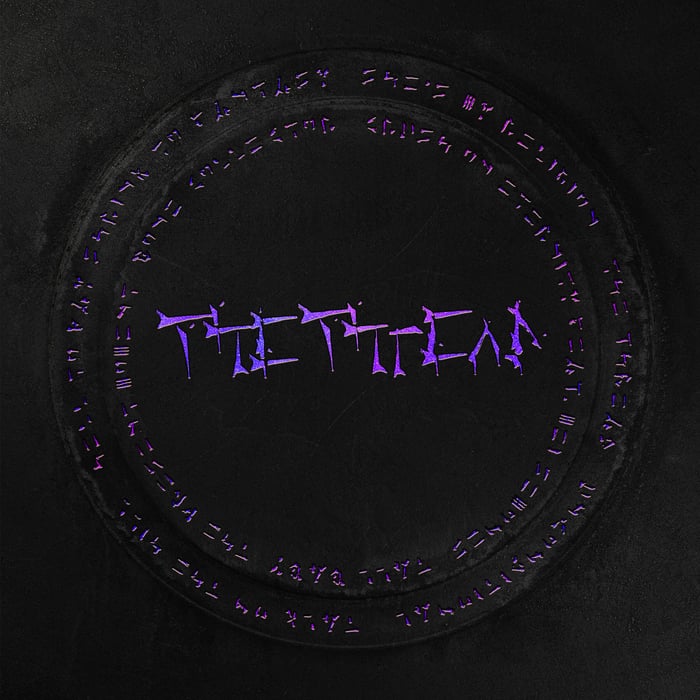
WILLOW The Thread Review: A Goddess Album That Refuses to Behave


 See more Architeg Prints stories on Google.
WILLOW The Thread Review: A Goddess Album That Refuses to Behave
WILLOW’s The Thread plays like a spiritual tug-of-war: divine mother myth, messy love, and self-witnessing—until it slips into haze on purpose.
This album isn’t “personal.” It’s devotional—and kind of demanding
Some albums want you to relate. The Thread wants you to kneel a little. Not in a cringey way—more like WILLOW decided ordinary heartbreak language wasn’t big enough, so she dragged the whole thing into mythology and dared it to keep up.
This is the third stretch of work tied to her collaboration with Chris Greatti, following COPINGMECHANISM (2022) and running through Empathogen (2024), which picked up a Grammy nomination. You can feel that long arc: the sound and the writing come off like the product of someone who’s already tried being “cool,” already tried being “hard,” and now wants to talk about ancient forces like they’re roommates.
And yeah, she goes for the oldest topic imaginable—the Divine Mother—like she’s bored of modern metaphors.
“The Divine Mother archetype is present in almost every culture on Earth from ancient times on, as far as we know… And this song is for her.” — WILLOW
That’s not a casual mission statement. That’s a flag planted in the ground.
“She’s My Religion” sets the rules: nature wins, ego loses
The record’s spiritual center of gravity shows itself early through the way WILLOW frames her—this feminine divine presence—not as comfort, but as consequence. The image that stuck with me is the idea of wearing constellations, with each star acting as “a quiet warning.” It’s pretty, sure, but it isn’t soft. It’s surveillance from the cosmos.
And the warning is blunt: “Nature always wins.” The album treats that line like physics, not poetry.
What’s wild is how fury gets recoded here. It isn’t a flaw to overcome; it’s presented like a cleansing force—almost a blessing. The goddess doesn’t soothe WILLOW, she splits her open “to purify her,” and the grace comes down like a river that’s not waiting for permission. There’s no raft required because, in this worldview, the voice you need is already inside you.
The part that surprised me is how willingly she leans into the wound. She doesn’t sing like she wants closure. She sings like she wants expansion—even if it’s violent. When she asks, “Break me open / So I can keep expanding,” it lands less like a lyric and more like a demand made to the universe. Honestly, it’s more intense than any love confession on the album, because it’s not even addressed to a lover. It’s addressed to the force that rearranges you.
“Unconditional” makes family feel like a strategy, not a sentiment
From there, the album pivots into something more domestic—but it doesn’t get smaller. On “Unconditional,” WILLOW’s version of devotion isn’t candlelight; it’s logistics. Whiskey with her lover’s mother. Crying to her sister. Love stored “in the in-between,” where nobody gets trapped.
That “in-between” idea is doing heavy lifting. She isn’t selling a romance fantasy where two people fuse into one perfect unit. She’s basically insisting love has to allow negative space, or it becomes a cage. And she takes it further: she doesn’t mind if the person needs someone else to fill their loneliness. That’s not a typical pop stance—it’s either radical honesty or a self-protective philosophy dressed up as enlightenment. I can’t fully tell which, and I like that the album doesn’t clear it up for me.
Either way, The Thread keeps repeating one message: attachment isn’t the same thing as ownership.
“Crush On Eternity” flirts with time itself—and somehow gets away with it
Then she widens the lens until it’s almost comically large. “Crush On Eternity” doesn’t just fall in love; it holds hands with time and space. The sensation is less “I want you” and more “I want the architecture of existence to notice me.”
The line “You steal my mind / Bend me like light” makes desire feel like physics again—like attraction is something that warps you. And when Mei Semones shows up in the verse, the song snaps into focus with what might be the sharpest line in the whole album: “I’ve kissed desire and called it grace.” That’s confession and pick-up line in the same breath, which is exactly the kind of double-action the album loves.
If you don’t buy WILLOW as someone who can pull off cosmic flirting, this is where you’ll roll your eyes. I almost did on first pass. But on second listen, the scale started to feel intentional: she’s not exaggerating—she’s refusing to downsize her emotions into something socially acceptable.
“Shrink to Fantasy” is where she stops playing nice
The album’s backbone, for me, is “Shrink to Fantasy.” Somebody gets her truth “straight away,” no games, no performance—just the shape of her heart. And still, they won’t even be her friend. That’s a particular kind of rejection: not dramatic enough to be a breakup song, but personal enough to leave a bruise.
Her response is the opposite of pleading. She draws a boundary with teeth:
- She’s not a fantasy.
- She’s not “filler.”
- She’s not a trophy on someone’s wall.
And she doesn’t follow that up with a threat—she follows it up with a kind of calm independence. She’ll let the other person keep their wings. She won’t trim them. But she also refuses to shrink herself to fit anyone’s daydream. That’s the quiet power move The Thread keeps returning to: if you want her, you don’t get to reduce her.
“Tall Baby” admits the embarrassing thing: growing up feels like guessing
If “Shrink to Fantasy” is the boundary, “Tall Baby” is the self-doubt behind it. WILLOW says the line that feels almost too naked to be stylized: she’s a child trying to be a woman, learning how to hold her own spirit.
I kept waiting for this track to turn into a neat little empowerment bow. It doesn’t. Instead, it sits in the uncomfortable middle where you’re overwhelmed, you want something “sweet to keep ’em quiet,” and the only cure you can name is thinking less. That isn’t inspirational. It’s real.
And it subtly contradicts the goddess imagery from earlier—in a good way. The album sets up this massive Divine Mother force, then admits the person invoking it still panics, still gets flooded, still wants relief. That tension is the point: spirituality here isn’t serenity, it’s pressure management.
“Bone Collector” turns rot into jewelry—and that’s the album’s clearest magic trick
The most vivid writing on The Thread crawls out of decay. “Bone Collector” lingers on holes that look “like a temple or something died,” which is an image that shouldn’t work but absolutely does. The song feels like it’s walking around an abandoned place, touching the walls, deciding what can be salvaged.
She spins silk “every night and day” to transmute the rot. Lust gets watched as it transforms—first into jewelry, then into poetry. That sequence matters: desire isn’t denied, it’s refined. The album isn’t anti-body; it’s anti-waste.
The persona that emerges here is part detritivore, part jeweler—diamond teeth, ancient as land, blooming under whatever weak glow the other person had left. And then the final flex: she’ll preserve what they gave up on and wear it as a necklace on her chest.
That’s a little sinister, sure. But it’s also a statement of value: even your leftovers can become art if you stop treating them like shame.
When the album reaches for urgency, it briefly loses its grip
Here’s where The Thread stumbles—just a bit. On “The Present Moment,” WILLOW starts yelling about destruction right in front of her eyes, insisting there’s no time to take anything lightly. The alarm is real. The stakes feel immediate.
Then, almost as quickly, the imagery loosens: hearts in a water fountain, compassion delivered “strike to the artery.” Those are striking pictures, but they don’t hold the same tight panic the song just lit on fire. For a moment, it feels like the album swaps urgency for vibes—like it couldn’t decide whether to warn you or soothe you.
I’m not saying it fails. I’m saying it blurs itself right when it could’ve cut deepest.
“The Thread” (the song) swallows a bitter pill and keeps walking
The title track, “The Thread,” feels even more indistinct—like a bitter pill taken without water, then the decision to stop moping because moping won’t move anything. There’s a sense of motion, but also this odd detail: steps that can’t follow her. That’s the kind of dream-logic line that either hits you in the gut or floats past you.
The phrase “Blinded by fact and it’s so hard to see” is classic WILLOW: paradox as emotional truth. Still, I found myself wanting one concrete anchor—a face, a name, anything—because the “you” she needs feels intentionally faceless. Maybe that’s the point: the thread isn’t tied to one person, it’s tied to the whole mess of needing.
I’m not totally sure the vagueness earns itself here, but I respect the refusal to spoon-feed.
“Talk On the Hill” turns learning into a ritual (and makes you sit still)
From there, the album climbs into instruction. “Talk On the Hill” is full of injunctions—less “here’s my story” and more “come up here and listen.” Everyone gathers on the hillside where the wind knows all our names. It’s corny on paper, but in the flow of the album it reads like a deliberate reset: get quiet, get receptive.
She sits in silence to learn. She sends smoke signals across the earth and admits she can’t decipher them yet. That’s the part I liked most: the teacher-student dynamic isn’t fake confidence. It’s apprenticeship.
And she wants to make the teacher proud—while already believing the teacher would be proud of her too. That combination is basically the album’s emotional engine: hunger for approval paired with a stubborn belief that she’s still worthy.
“Hell to Pay” is self-blame dressed as devotion
The tuition gets uglier on “Hell to Pay.” WILLOW decides that if there’s fault, it must be hers. That reflex—taking the blame preemptively—doesn’t come off as humility. It comes off as someone trying to control chaos by volunteering as the culprit.
She calls it a “waste of freedom,” drops her plans, applies for another job, and offers herself up as your hands because she can’t move mountains like you. That’s devotion with a bruise under it. It sounds like admiration, but it also sounds like surrendering agency and calling it love.
Then she draws the bleak little map: “To see the path so clearly, lost within the trees.” That’s the album admitting what it’s been circling all along—clarity doesn’t guarantee escape. Sometimes you can name the problem perfectly and still be stuck inside it.
And when plans are already abandoned, hands are all that’s left. So she offers them. Not romantically—functionally.
Conclusion: The Thread is a prayer that keeps interrupting itself
The Thread doesn’t glide; it wrestles. It treats devotion like weather, love like negative space, and growth like something that hurts on contact. When it locks into image and intention—“Shrink to Fantasy,” “Tall Baby,” “Bone Collector”—it feels like WILLOW is speaking in a private symbolic language and somehow letting you understand it anyway. When it goes hazier—especially around “The Present Moment” and parts of the title track—it risks turning real alarms into pretty fog. Still, the album’s core move is brave: it refuses to make spirituality cute or romance simple, and it keeps choosing transformation over comfort.
Our verdict: People who like their alt-pop served with mythology, boundaries, and emotional bruises will actually love this album—and will probably defend its vaguer moments like they’re sacred text. If you need tidy choruses, literal storytelling, or a clear “who is this about,” you’ll get impatient and start checking your phone by track five.
FAQ
- What is the core theme of The Thread?
It treats love and identity like spiritual training—less romance diary, more ritual, consequences, and growth that doesn’t ask permission. - Is The Thread connected to WILLOW’s earlier era with Chris Greatti?
Yes. It follows the collaboration that began with COPINGMECHANISM (2022) and continued through Empathogen (2024), which earned a Grammy nomination. - Which songs hit the hardest emotionally?
“Shrink to Fantasy” for boundaries, “Tall Baby” for honest overwhelm, and “Bone Collector” for turning decay into something wearable. - Does the album stay consistent all the way through?
Mostly, but it briefly slips from urgency into looser imagery on “The Present Moment,” and the title track’s vagueness may or may not land depending on your patience. - Who is this album not for?
Anyone allergic to spiritual language, archetypes, and lyrics that prefer symbols over direct plot.
If this record put images in your head—constellations, temples, smoke signals—getting that feeling onto your wall isn’t a bad idea. If you want, you can shop a favorite album cover poster at our store: https://www.architeg-prints.com
 | DISCOUNTGET 30% OFF*Use code on your next order:
|
* This post may contain affiliate links, meaning we earn a commission if you make a purchase through these links, at no additional cost to you.